
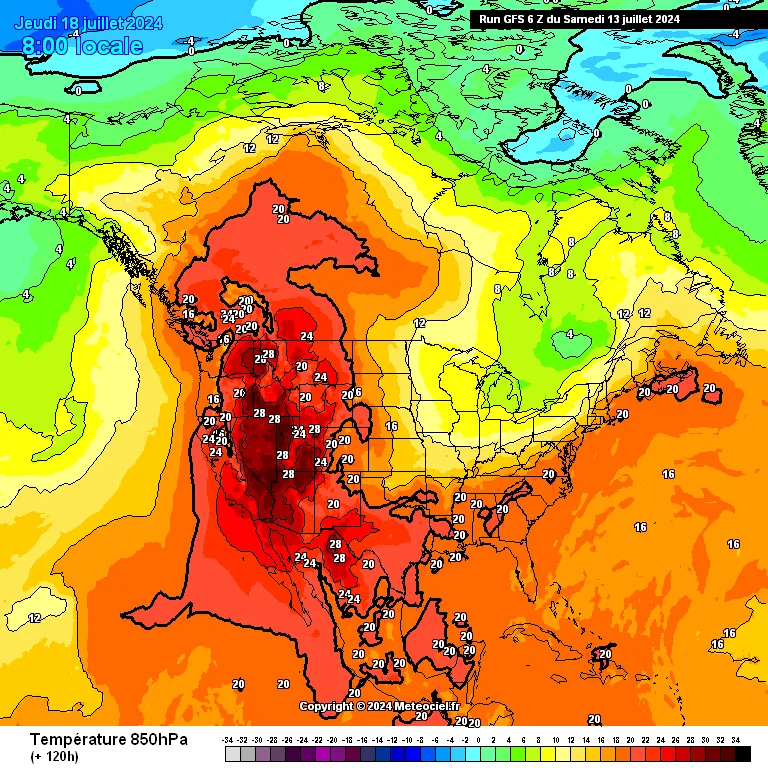
WASM- Various regions around the world are being affected by strong and sharp heat waves resulting from the recent "El Niño climate phenomenon" and its impact on acute temporary atmospheric warming. The Arctic region and northwestern Canada areas are expected to be affected by a sharp heat wave that will result in temperatures exceeding 33 degrees Celsius in those areas, and this figure is considered "extremely high for these polar regions, which exceed their seasonal averages by approximately 16 degrees."
Recent heat waves have concentrated over the European continent, North America, North Africa, the western Mediterranean region, and the eastern region of Saudi Arabia, Kuwait, Iraq, which are expected to continue at the same pace in those areas.
Location of heat wave impact..
With the intensification of the heat wave over the American West and California region, this heat wave is expected to push toward Canadian territories during the coming days. The heat wave will affect most sub-polar and polar regions from central and western Canada, resulting in temperatures in some central areas of Canada approaching 40 degrees Celsius, and exceeding 33 degrees Celsius in its polar regions.
Continuation of the heat wave..
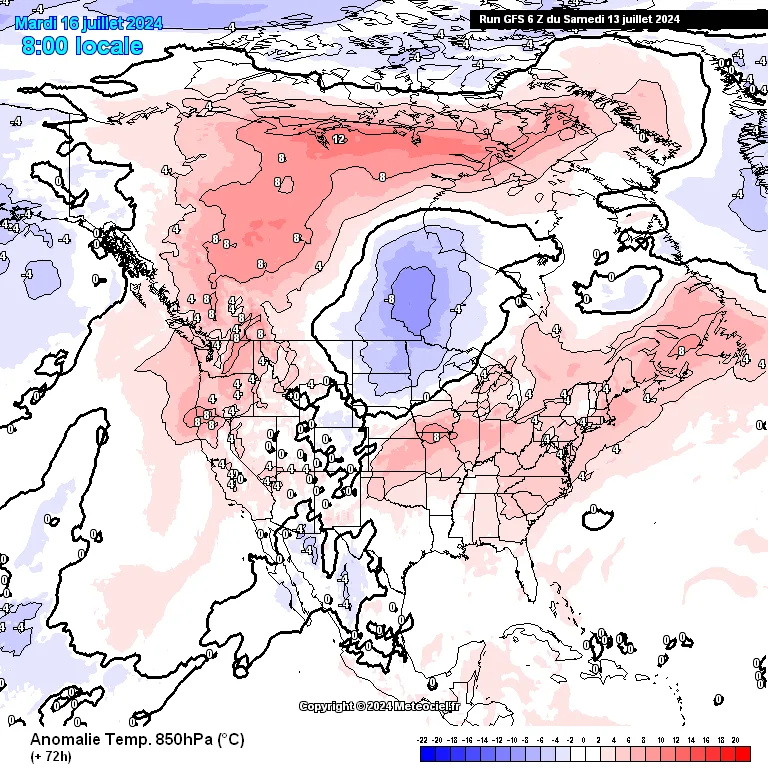
The heat wave is expected to continue for at least two weeks, and coinciding with the intensification of heat waves over the European continent on the other hand, the spread of heat waves toward higher latitudes and polar and sub-polar regions is an indicator of the atmosphere's attempt to relieve the heat pressure occurring as a result of the El Niño climate phenomenon during the previous months.
Results of this heat wave..
The strong heat wave in the Arctic region and from the direction of Canadian territories is expected to cause significant ice melting during the coming weeks, and accelerated ice cover reduction more than usual, coupled with the intensification of storms north of the Atlantic Ocean and then the intensification of strong heat waves toward the European continent, which is a negative indicator especially for western and central European regions during the medium and long-term period.
This leads to (and due to rising temperatures toward the European continent, North America, and Canada) the continuation of mild to normal summer weather in the eastern Mediterranean region, the Levant, and northern Saudi Arabia, the continuation of very hot weather in the Arabian Gulf region, and the continuation of heavy rainfall rates in southwestern Saudi Arabia. These results were released in several studies issued by the WASM Regional Center.
Strong heat waves in the Arctic threaten Atlantic Ocean circulation..
Strong heat waves in the Arctic threaten ocean circulation in the Atlantic, particularly those affecting North America and subsequently Western Europe, as they increase the ice melting process in those areas and increase water freshness. Increased freshwater in the North Atlantic and south of the Arctic region means reduced density, which threatens the water circulation of the warm Gulf Stream current that could lead to its slowdown and cause acute and sudden climate changes in central and northern Europe.
This current may slow down or even recede significantly toward the south due to its density on one hand and the decreased salinity of waters in the North Atlantic on the other hand, resulting from ice melting. This causes sudden climate change and a sharp and dangerous drop in temperatures in large parts of the European continent, and this helps cause acute climate changes in many regions of the world and the Arab world at a later time.