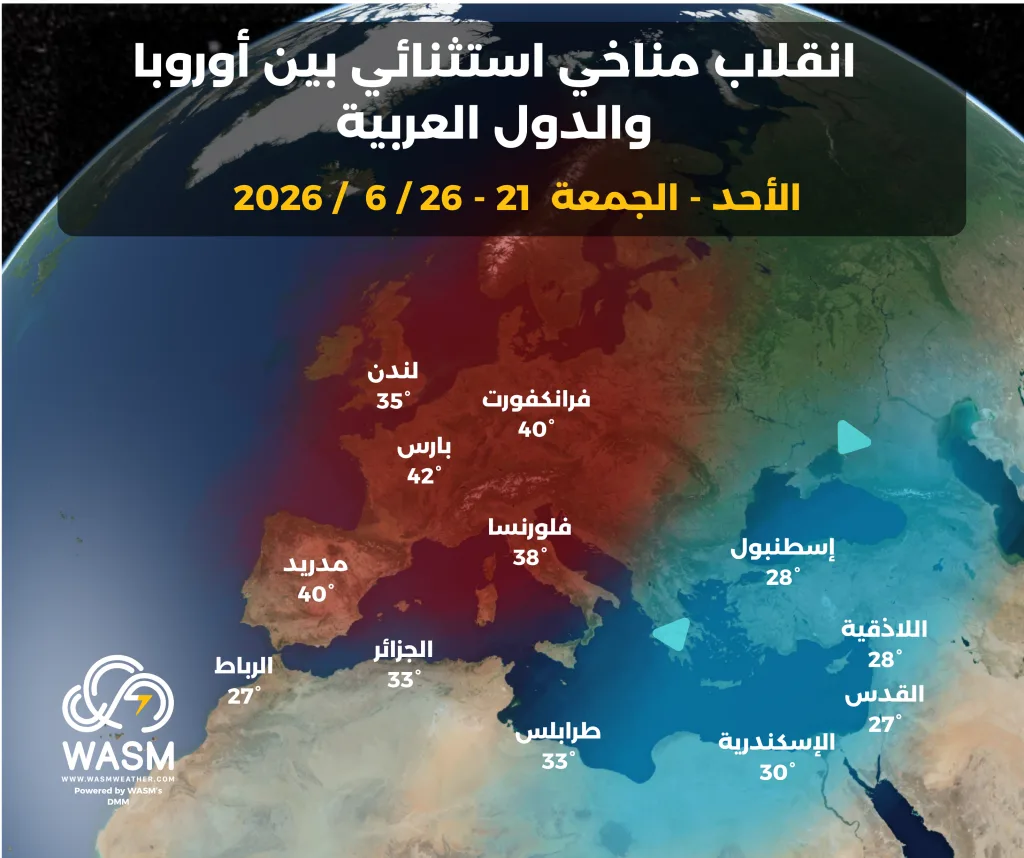
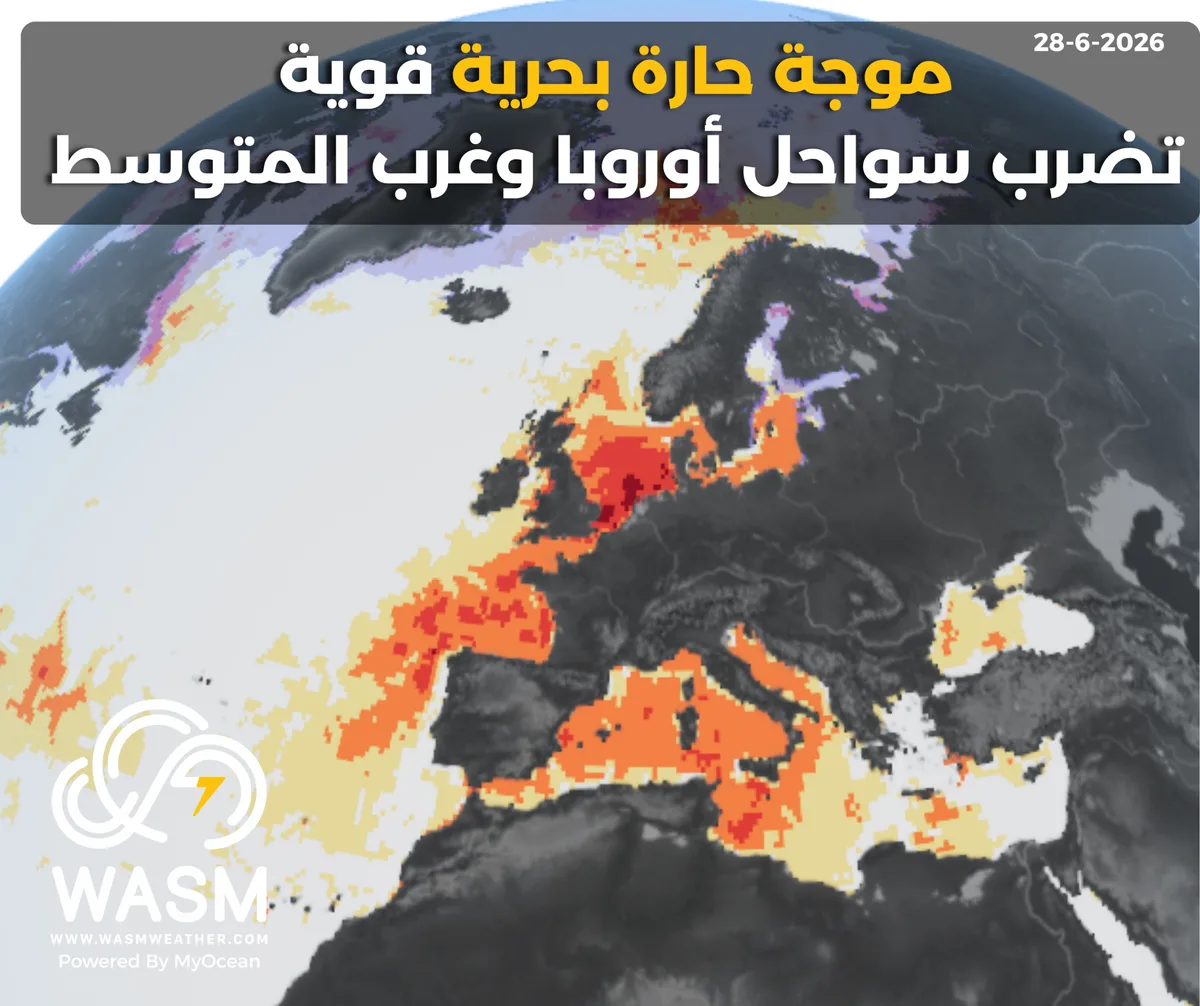
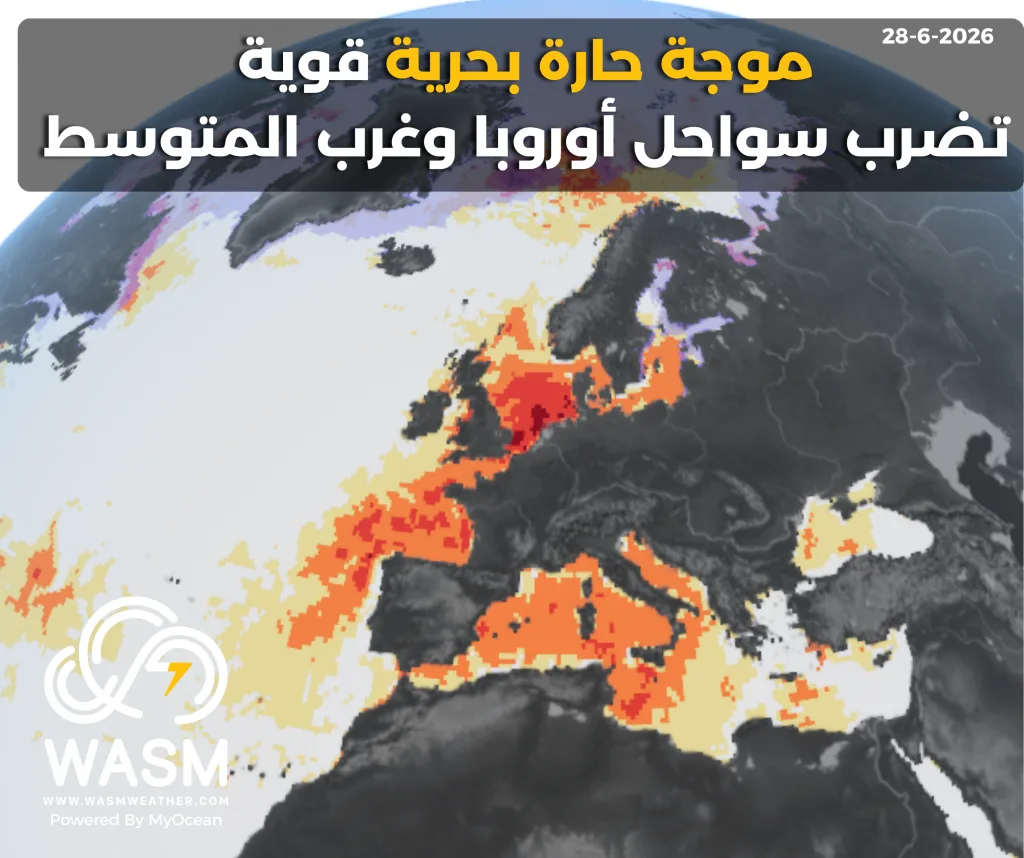
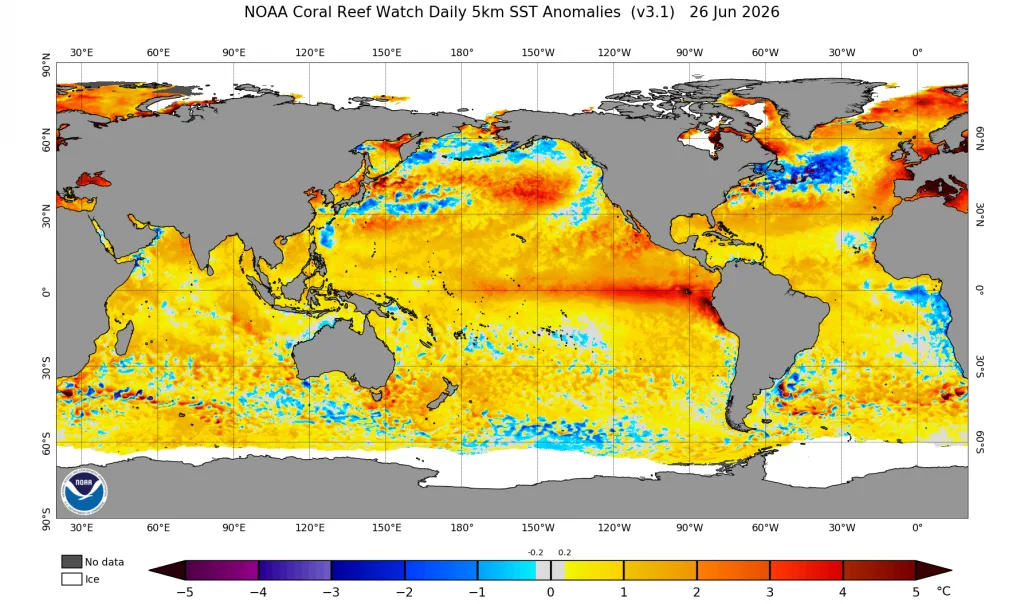
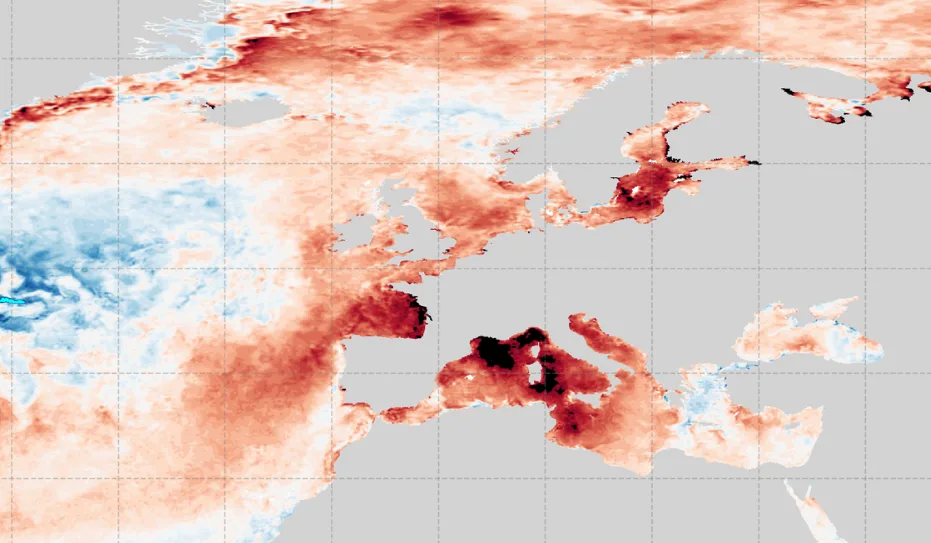
WASM- WASM Regional Center is monitoring an extremely powerful "marine" heat wave with a large area striking the coasts of Europe and western Mediterranean, as a result of the succession of strong heat waves on the European continent for weeks.
Marine heat waves have been classified as "severe" and reached temperature rates exceeding 7 degrees Celsius, which is an unprecedented figure in modern climate records. What amplifies the impact of this marine heat wave is its very wide effect, which extends from the entire western Mediterranean, then the coasts of Spain and Britain, and even the coasts of northern Europe.
These strong marine heat waves will lead to significant changes in the movement of the jet stream, particularly the subtropical one. With the extension of this heat wave to northern Europe, it will likely have a major impact on the polar jet stream as well.
Unprecedented heat waves in Europe|
The European continent is experiencing extremely severe and unprecedented heat waves in modern climate records, which have caused hundreds of deaths in an initial toll, and many European cities have recorded record temperature highs for the first time in modern climate records.
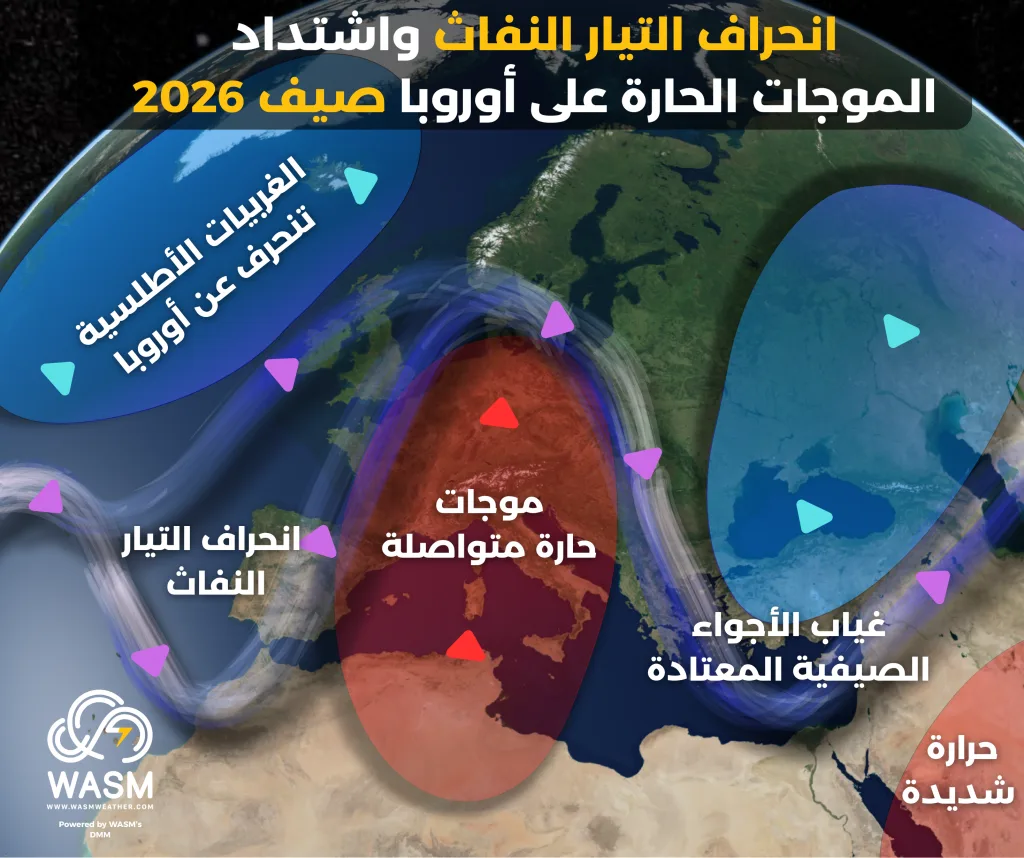
This event resulted from a major disruption in the path of the jet stream in the western Mediterranean region and its deflection towards the east of the Atlantic Ocean. This deflection occurred due to strong climatic factors affecting the atmosphere, most importantly the slowdown of the warm Gulf Stream current as a result of significant ice melting in the Arctic, as well as the strong El Niño phenomenon which directly affects the subtropical jet stream.
The deflection of the jet stream and the collapse of the polar jet stream over the north Atlantic, caused a deflection of Atlantic westerlies away from Europe which would normally lead to moderate weather and heavy rainfall under normal conditions. This deflection opened the way for intense African hot masses to directly affect Europe, with nothing preventing the extension of these heat waves, as the Atlantic-European atmospheric system is currently experiencing near-collapse and significant weakness, with no expectation of recovery in this system soon.
WASM Regional Center was the first to forecast these record-breaking heat waves many months ago through important climate studies issued during the previous summer and over the past years, predicting the development of strong and successive heat waves that would transform Europe's summer for many years to come.
The center will issue numerous climate studies regarding the impact of these climatic conditions on Arab countries, the Middle East region, and rainfall rates.
The European marine heat wave and its impact..
The European marine heat wave and western Mediterranean are clearly linked to an extremely cold area positioned over the north Atlantic resulting from a major weakening of the warm Gulf Stream current which exceeded expectations significantly. This accelerating weakness is likely to reach its peak within the coming few years, which will lead to very dangerous and radical climatic changes (WASM Regional Center will issue a major climate study soon).
The impact of the marine heat wave will lead to very significant changes in the subtropical jet stream, especially when coinciding with cooling in several areas of the Atlantic Ocean, as well as a strong impact on the polar jet stream (which is most dangerous for winter seasons in the eastern and central Mediterranean region and the Arabian Peninsula).
This powerful impact led to the deflection of the jet stream towards European coasts and the eastern Atlantic Ocean, and a severe weakening of the polar jet stream. The El Niño climate phenomenon further reinforced this change, which resulted in intensifying heat waves over Europe and even North America.
The current climatic factors in effect are changing naturally through the climatic lifespan of the Earth, and we do not have sufficient evidence of the additional impact of human activity on these climatic factors. Climate changes are occurring as a result of complex, intertwined climatic factors and through natural climatic cycles, and not from a single or assumed climatic factor. Therefore, we continue to monitor these dangerous climatic changes and how weather conditions will affect them.
Impact on Arab countries|
The impact appears to be more evident in the Levant, eastern Mediterranean, and Arabian Peninsula, with the monitoring of jet stream curvature and the ease of deepening cold masses towards those regions. More abundant rainfall, increasing and more powerful rainy seasons, an additional and clear rise in rainfall rates, and perhaps stronger indicators will emerge on declining temperature rates in the eastern Mediterranean and wide areas of the Levant especially with recording the coldest May since 33 years ago, with the extension of transitional seasons for long periods.
Seasonal rainfall will become more abundant in the southwestern Arabian Peninsula but will be delayed from its usual time (there are many other climatic factors at play as well). Longer and more active autumn and transitional seasons with rainfall, and snowfall events may increase during the upcoming rainy seasons in the Levant, Iraq, and northern Saudi Arabia, which will lead to increased chances of flooding and torrents.
The more complex impact on the western Mediterranean, especially with recording a major weakening of the subtropical jet stream and its division, but with the polar jet stream moving away towards the eastern Mediterranean, so we expect very severe and more scattered rainy conditions in Algeria and Tunisia, large amounts of rainfall expected in Morocco and more regular rainfall, with a rise in seasonal temperature rates.
These climatic changes will become clearer during the coming period as we issue more climate analyses and studies during the coming period.