
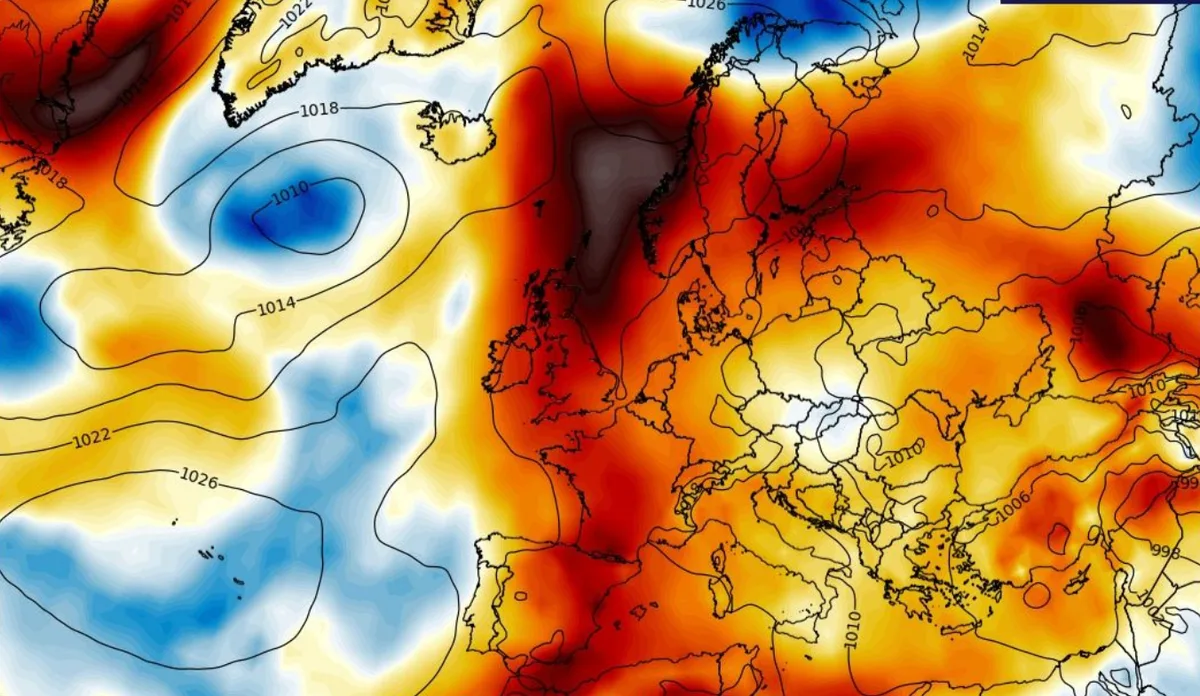
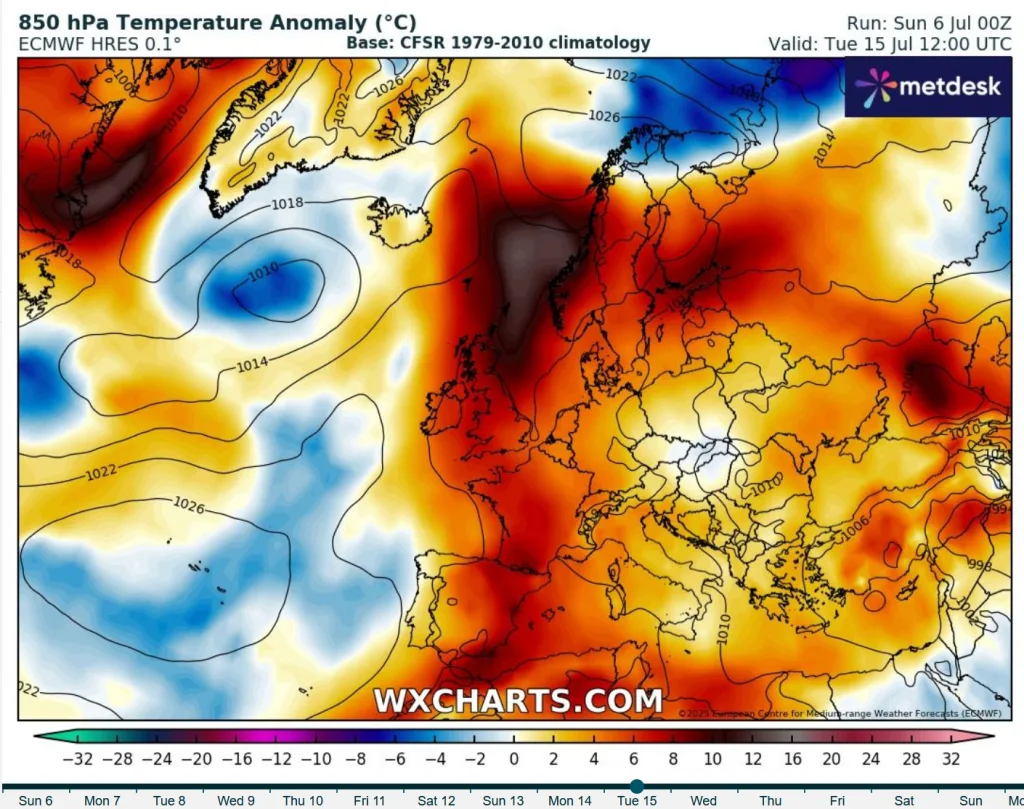
WASM- Successive strong heat waves continue to advance toward the European continent, particularly the western part of it, and as a result of the continued surge of hot air from North Africa, which will cause a significant rise in temperatures for a long period of time.
The anticipated heat wave in Europe will be characterized by a long duration, which will be concentrated in the western part, especially France, Spain, Britain, Germany, and surrounding areas, and the heat wave period may exceed more than 10 days in rare cases, which will increase "heat stress" in most areas of Western Europe and pose a major threat to lives.
Heat wave begins at the end of the week|
It is expected that the strong heat wave will begin at the end of this week in the western part of the European continent and will intensify during the coming week and continue for a long period of time, easing and intensifying from time to time, and it is expected that temperatures will remain around the mid-thirties Celsius to the end of the thirties in some periods, and what will characterize the anticipated heat wave is its long and rare duration compared to the European continent.
The anticipated heat waves will be characterized by their extension to northern Europe and near polar and sub-polar regions, which signals a sharp atmospheric circulation during the coming period and causes more extreme weather phenomena during the coming months.
Long periods of moderation in the Mediterranean region and northwest Arabian Peninsula|
This is accompanied by a surge of moderately warm winds moving clearly toward the eastern Mediterranean, the Levant, and the northwest Arabian Peninsula during the coming few weeks, which results in a moderate summer and temperatures below seasonal averages in a clear and rare manner compared to this hot period.
Reasons for repeated heat waves toward Western Europe|
The reason for the strong heat waves and their repetition toward Western Europe is due to the continued surge of hot air from African desert regions due to the weakness of the subtropical jet stream "which blows in the upper layers of the atmosphere" which resulted in the ease of hot air surging easily, and WASM Regional Center issued a detailed scientific report linking the warming of the Mediterranean Sea and how it increases the chances of heat waves toward Europe.
Heat waves affecting Europe are considered among dangerous climate changes, as the repetition of these heat waves has become evident in recent years, especially during the last 5 years.