
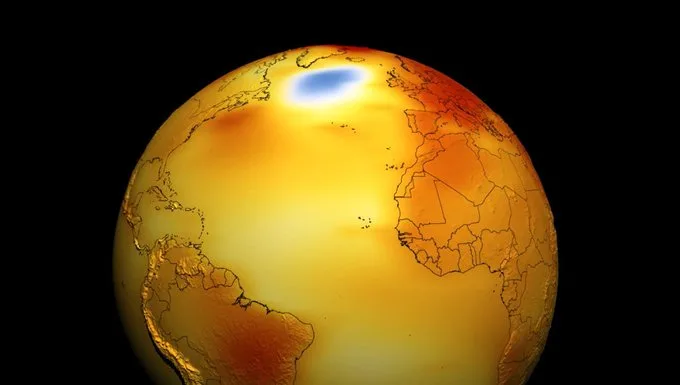
WASM- WASM Regional Center is monitoring continuous cooling in the North Atlantic Ocean, with some areas reaching below 6 degrees Celsius below normal averages, reflecting exceptionally unusual conditions that have begun affecting the Atlantic Ocean.
While tracking scientific reports and analyses issued from various scientific monitoring centers, we found many disagreements about the cause of this sudden and accelerating cooling. However, at WASM Regional Center, we detected the likelihood of this cooling in summer 2025 by observing tropical and subtropical zones in the Atlantic Ocean that were cooling abruptly, and we will provide our own analysis of the cause of this cooling and how we were able to predict it months before it occurred.
Despite disagreements in the climate community about the cause of this cooling as well as rising global temperatures, the rapid cooling in the North Atlantic has become highly accelerated and indicates very dangerous climate changes.
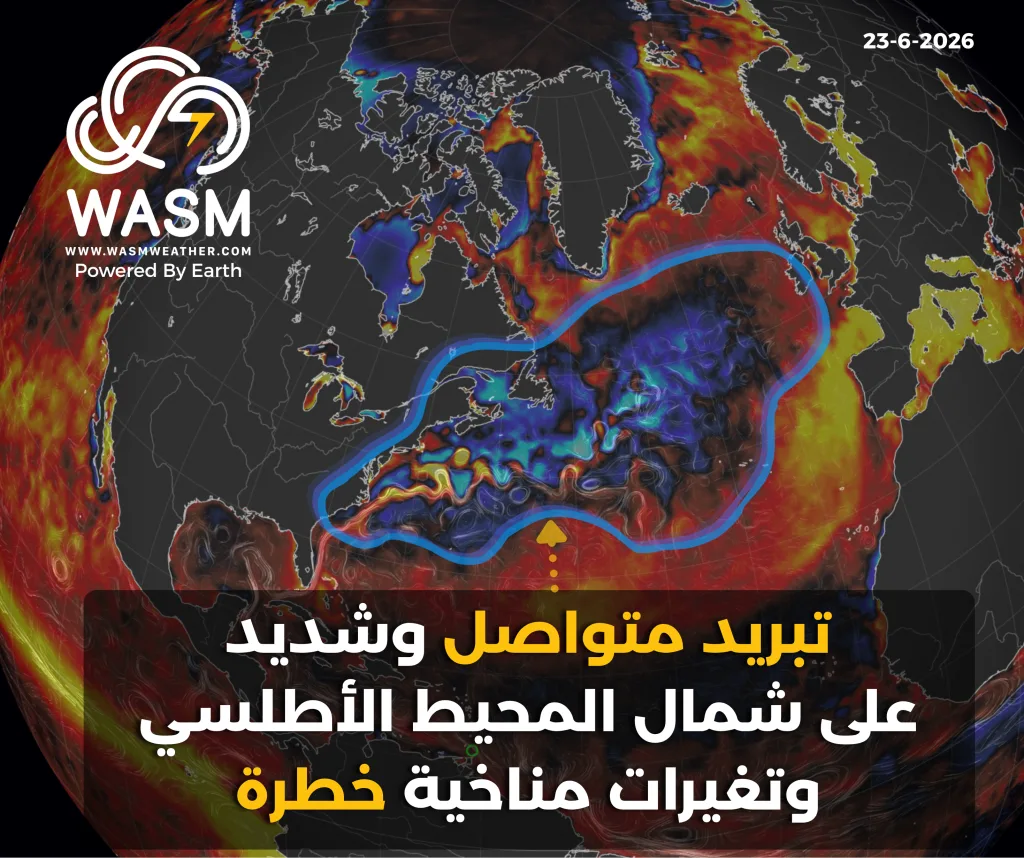
Strong Heat Waves Over Europe|
The strong heat waves over the European continent in recent months and over the last 5 years were due to factors related to an unusual path of the jet stream, which was observed to be sharply divided in the western Mediterranean region and near the eastern Atlantic Ocean, especially with the emergence of scattered cold zones moving in the tropical and subtropical Atlantic Ocean region, coinciding with significant warming of the western Mediterranean, leading to major disruption in jet stream activity.
This caused a split in the jet stream in the eastern Atlantic Ocean, resulting in intensified heat waves directed toward Europe and an increase in their frequency, noting that heat waves have multiplied in Europe by approximately 30 times over the last two years, with expectations to reach 50 times this summer.
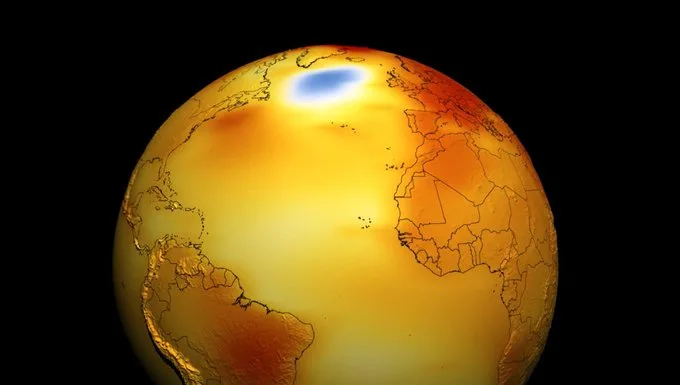
Continuous Cooling Over the North Atlantic|
Cold zones in the tropical and subtropical Atlantic Ocean over recent years have been a dangerous indicator of some disruption in water circulation in the Atlantic Ocean, along with accelerated ice melting in the Arctic region and parts of southern Greenland. This melting caused an increase in freshwater and a significant decline in density, causing major disruption in the movement of the warm Gulf Stream, and its inability to penetrate northward toward the North Atlantic due to its high density.
This caused continuous slowdown of the warm Gulf Stream, which appeared clearly from the intensity of ice melting in the North Atlantic and the cold zones that appeared. We statistically observed their existence before the cold cycles of the North Atlantic, which last 30 years (there may be a strong correlation in the water circulation of the Atlantic Ocean, as statistical results do not provide clear dynamic analysis).
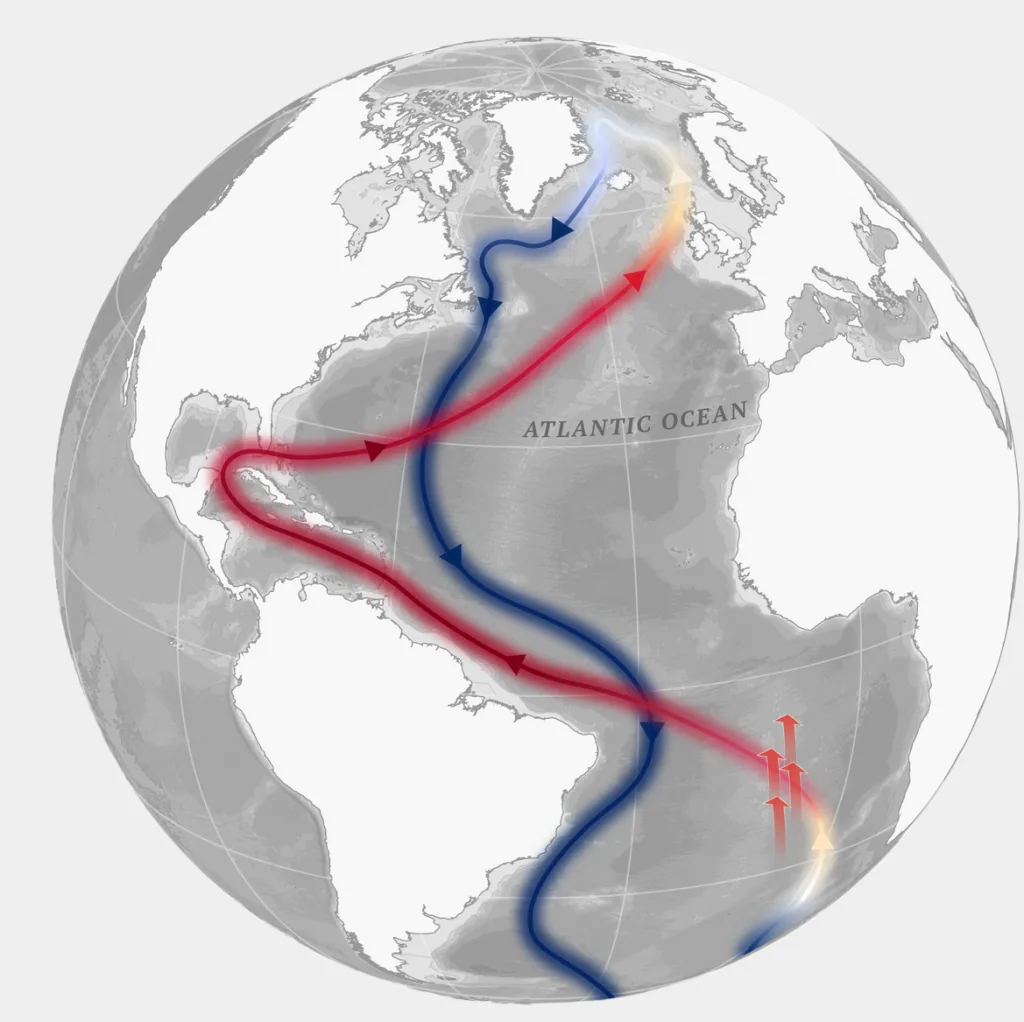
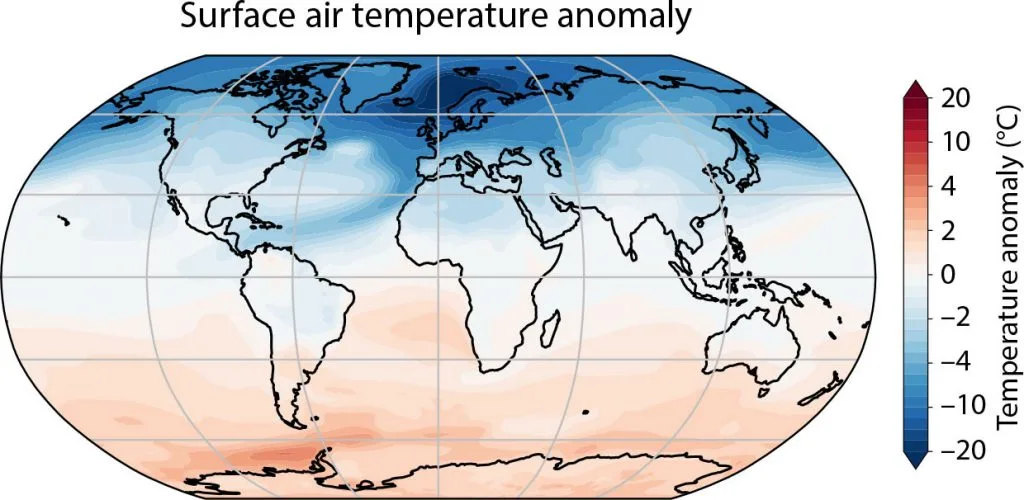
However, the current difference is due to the intensity of the cold in the northern region of the Atlantic Ocean this time. The seasonal thermal anomalies reach very large numbers exceeding 10 degrees Celsius between Atlantic regions, indicating major disruption this time, while noting the direction of the warm Gulf Stream heading slightly northward along the eastern coasts of the United States, indicating major disruption in water density.
This cooling (which is expected to increase significantly) caused a very sharp split in the jet stream and a deviation of its position from the western Mediterranean to the coasts of Britain and Spain and near the Azores Islands. This unusual deviation, coinciding with significant weakening of the jet stream, caused ease of penetration of African heat masses toward Europe and occurrence of severe heat waves, causing milder air masses to push toward the eastern Mediterranean and the Levant.
Potential Collapse of the Warm Gulf Stream|
The slowdown of the warm Gulf Stream has become observable and is not just a scientific theory. However, we cannot directly link the major cooling in the North Atlantic to the weakness of this current alone (the matter is similar to the fact that we cannot link current global warming solely to human activity), as climate factors are very intertwined and extremely complex.
Rising global temperatures caused significant ice melting in the Arctic region, which caused disruption to the warm Gulf Stream. This major slowdown caused a significant decline in pushing warm water toward the North Atlantic, leading primarily to disruption in the jet stream above the Atlantic Ocean.
An increasing slowdown of the warm Gulf Stream is expected over the coming few years, which may lead to its complete and imminent collapse. The imminent collapse of this current will have very major repercussions for the climate in Europe, North America, the Atlantic Ocean, the Middle East, and North Africa, as this could "theoretically" lead to very dangerous climate change.
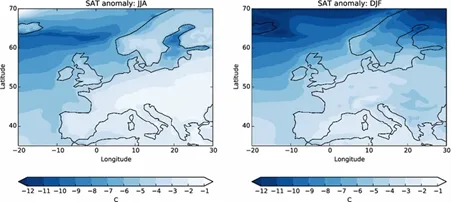
Theoretically and scientifically, the collapse of this current will cause major disruption in the process of heat transport toward Europe and then rapid temperature decline across a wide range of Europe, leading to major and accelerating global temperature decrease, contrary to results issued from previous global climate models that suffer from failure to address accelerating changes in the atmosphere and treat it in an abstract statistical manner.
Incorporating the very cold zone factor in the Atlantic Ocean led to radically different results in global temperatures in some global climate models, providing a completely different simulation, as we began obtaining negative results in temperatures, which may drop several degrees Celsius globally.
Climate changes occurred in Earth's history between temperature rise and decline due to many factors affecting atmospheric movement, and we cannot link any single factor alone to cause rapid radical change. However, the effect of the warm Gulf Stream is expected to be significant because of the enormous thermal energy it carries toward Europe and the North Atlantic (estimated at approximately 1.2 million petawatts per second!). If it stops and collapses, the theoretical impact will be very large and will strongly affect the atmosphere.
Sources|
https://www.met.ie/atlantic-meridional-overturning-circulation-amoc
https://interactive.carbonbrief.org/amoc-explainer/index.html
https://www.noc.ac.uk/discover-the-ocean/oceans-explained/the-atlantic-meridional-overturning-circulation
https://tos.org/oceanography/article/is-the-atlantic-overturning-circulation-approaching-a-tipping-point