
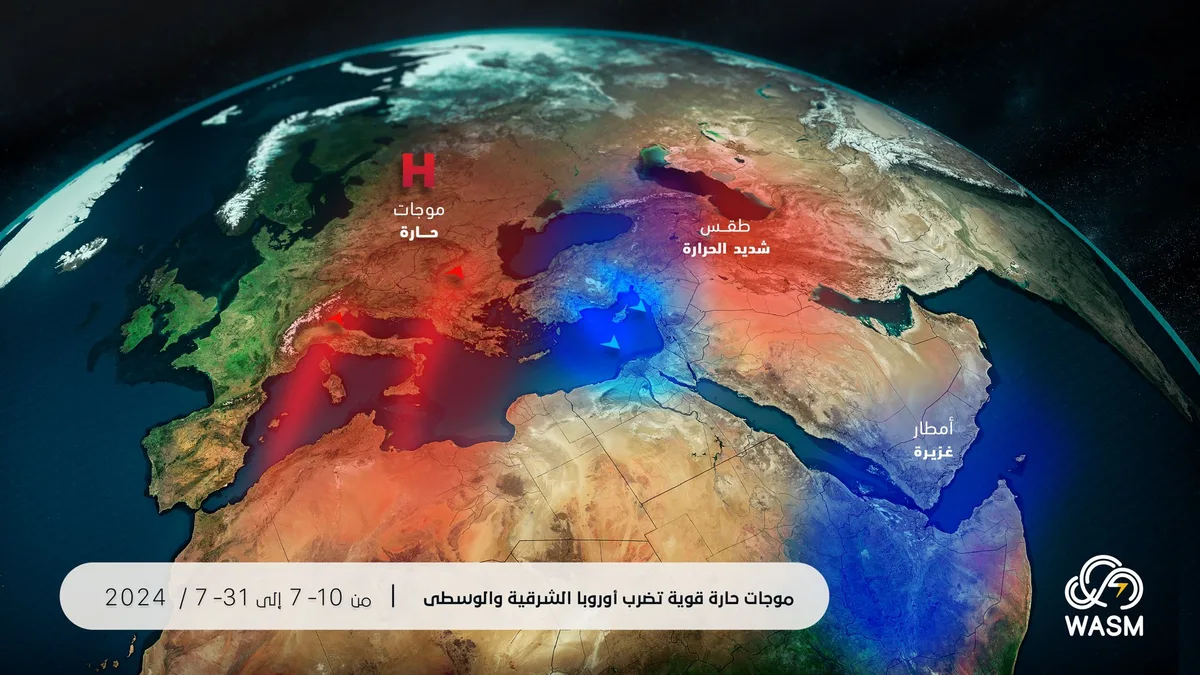
WASM – The Kingdom experienced this summer during July and August with typical summer temperatures along with extended periods of mild and unusually humid weather compared to July and August, due to an unusual atmospheric circulation without the Kingdom being affected by heat waves or any significant heat period, which is a rare occurrence. According to statistical results, this sometimes increases the chances of a good rainy season with varying percentages, and this is the first time since summer 2013.
Introduction|
Despite the Kingdom being affected by a severe heat wave in mid-June of this summer coinciding with several heat periods, the atmospheric circulation changed rapidly with the end of June due to important changes in several key climate factors and temperature variation in the major ocean regions. This resulted in important changes in the path of jet streams in the atmosphere and the concentration of heat waves deflecting towards Europe and North America.
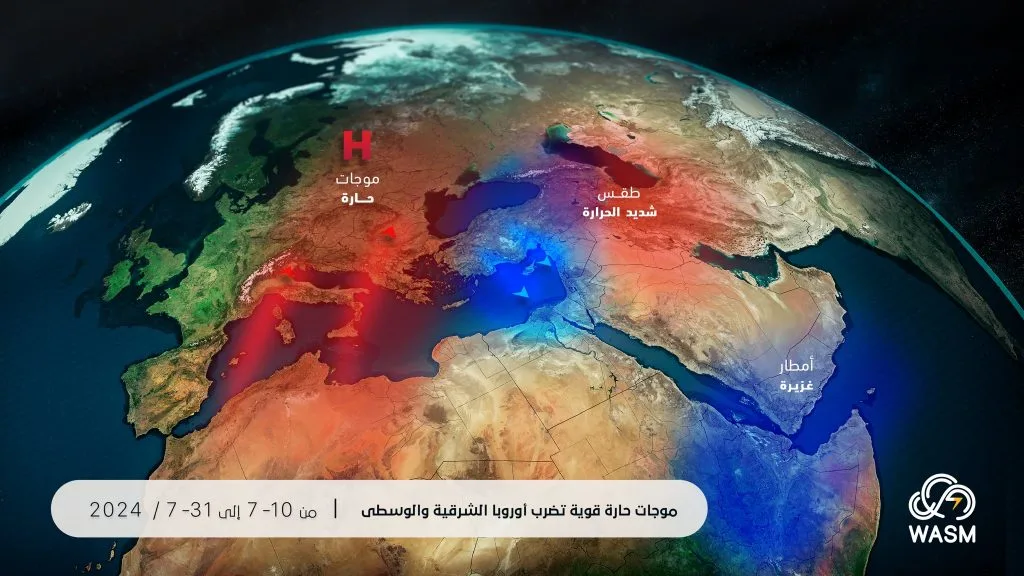
Complete absence of heat waves and heat periods|
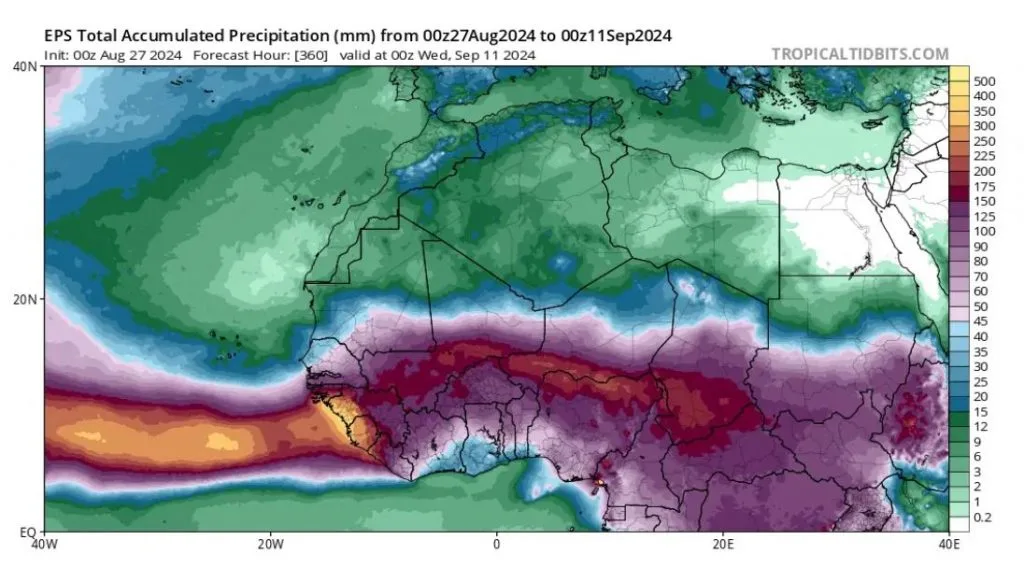
As a result of the continuous impact of northwestern winds across the Mediterranean Sea, this caused the displacement of the center of the Indian monsoon low, responsible for heat waves over Jordan, further northward than usual, heading towards northern Syria, Turkey and Cyprus with greater deepening than usual. This system also deepened over the central Arabian Peninsula, which resulted in very high rainfall rates in southwest Saudi Arabia and the Mecca region.
What is striking about the atmospheric circulation during July and August is the advance of the ITCZ (Intertropical Convergence Zone) further northward than usual, much more than typical due to the activity of tropical Rossby waves coming from the Indian subcontinent, and as a result of the intensification and deepening of the Indian monsoon low.
The advance of the ITCZ is supposed to raise temperatures significantly towards northern Saudi Arabia and the Levant due to tropical-subtropical circulation and high thermodynamic and resulting dynamics. However, another strange behavior of the subtropical jet stream and its sharp weakening caused the Azores high pressure system to shift from the Mediterranean Sea towards the Levant region and intensified northwestern winds, which resulted in mild weather during many periods towards northern Saudi Arabia and the Levant region. This also resulted in an intense flow of moist seasonal winds and increased their impact on southwest Saudi Arabia extending to the Mecca region in a rare occurrence, with the city of Jizan in southwest Saudi Arabia recording the highest rainfall amounts in modern climate record history.
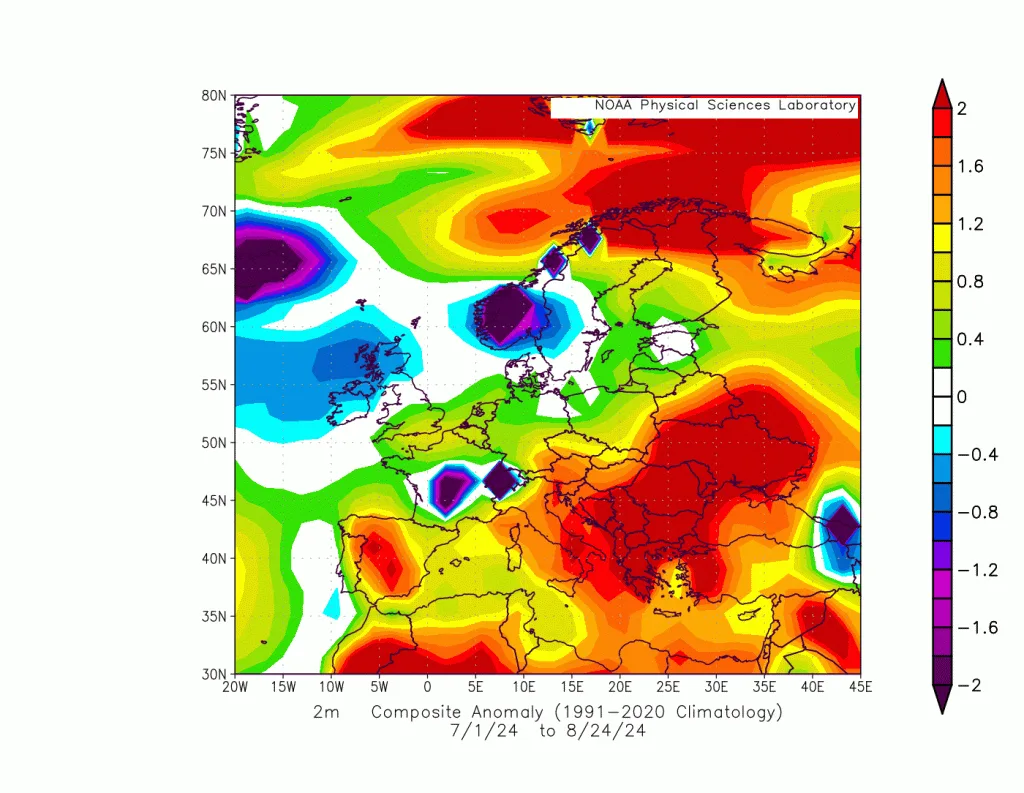
This strange organization in the atmosphere, which contributed to an incorrect reading by long-range climate models regarding the intensity of this summer, which was supposed to be extremely hot for a long period, and as a result of this circulation in the Levant region and northern Saudi Arabia, the changes in tropical Atlantic Ocean temperatures and changes in tropical Pacific Ocean temperatures caused strange disturbances to jet streams and concentration of heat waves towards Europe and North America and the eastern region of the Arabian Peninsula, and intensified thermal exchange between subtropical and polar latitudes earlier than usual, as if it were a process of thermal rebalancing in the atmosphere, which had heated up significantly in the subtropical region and middle latitudes during the previous period when the El Niño phenomenon intensified and coincided with an unusual and strong intensification of the polar jet stream.
Heat waves were distant from Jordan throughout July and August for the first time since summer 2013|
This phenomenon has not occurred for 11 years, which proves its rarity and this requires many recent climate studies in Jordan and the Arab region to be reviewed again, as climate changes appear differently in the Arab region compared to middle latitudes and the European continent.
The Middle East region, the Arabian Peninsula, the eastern Mediterranean and northern Egypt have been experiencing a significant increase in rainfall rates for approximately 15 years due to unusual atmospheric circulation, and with the intensification of heat waves that peaked between 2015 and 2021, then the intensity of summer heat rapidly declined since 2021 in some areas of the northwestern Arabian Peninsula and eastern Mediterranean, and no heat waves were recorded during July and August of this summer in a seasonally rare occurrence, and the repetition of strong heat waves consecutively and in rare occurrence towards the European continent, this signals that climate changes have begun to take a dangerous and completely new trajectory compared to previous years.
Temperatures did not exceed 30 degrees Celsius in the high western highlands of Jordan most days of July and August..
Due to the impact and continuation of moderate northwestern winds, it was observed that temperatures did not exceed 30 degrees Celsius in the high western highlands exceeding 1000 meters, and the highest temperature recorded during this period in these highlands was around 33 degrees Celsius, slightly exceeding its seasonal averages during the beginning of July.
The Kingdom experienced during August a completely mild summer, contrary to the usual situation, which is characterized by high temperatures or increased chances of hot air masses affecting the region, or sometimes a single strong heat wave. This proves the strange behavior of atmospheric circulation in recent weeks.
The region also witnessed a sharp increase in surface humidity levels during the previous period resulting from rising sea surface temperatures in the Mediterranean region, as well as the continued presence of low clouds on many days.
The WASM Regional Center expects signs of autumn to appear early this year, and over several periods that may be separated by temporary and slight increases in temperatures with the continuation of the current atmospheric circulation.
Despite the complete absence of heat waves in July and August, this summer (June-July-August period) recorded a temperature rate higher by approximately 1 to 1.5 degrees Celsius above normal seasonal averages in the eastern Mediterranean region due to the heat periods that occurred during June.
With the absence of weather monitoring stations in the region and their rarity, or their low efficiency, the WASM Regional Center also relies on data reprocessed through NCEP and ERA5 models to increase accuracy and address potential error margins.