WASM – WASM Regional Center issues the monthly bulletin for January through the use of WASM's own climate model, the only one of its kind in the Arab region.
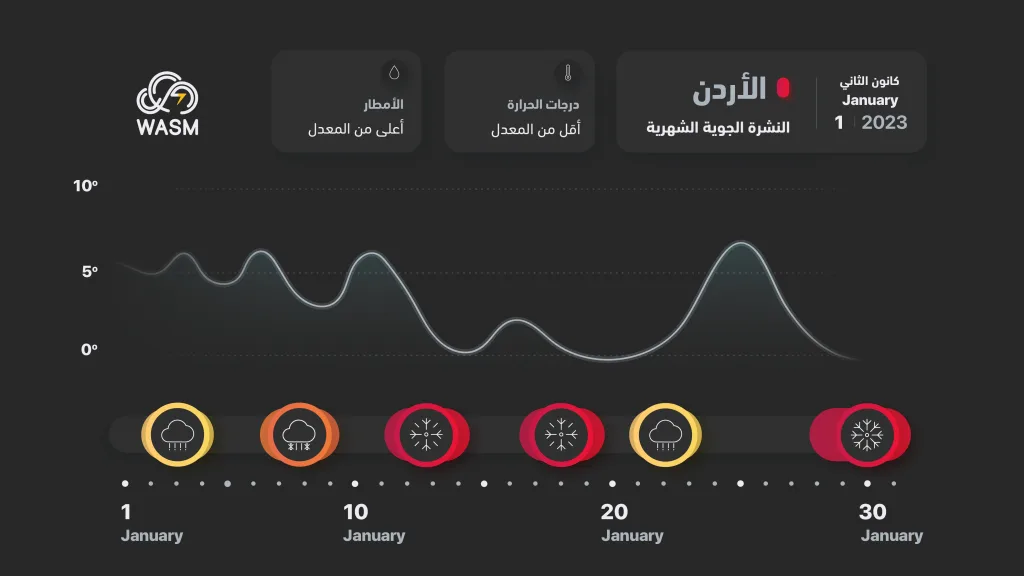
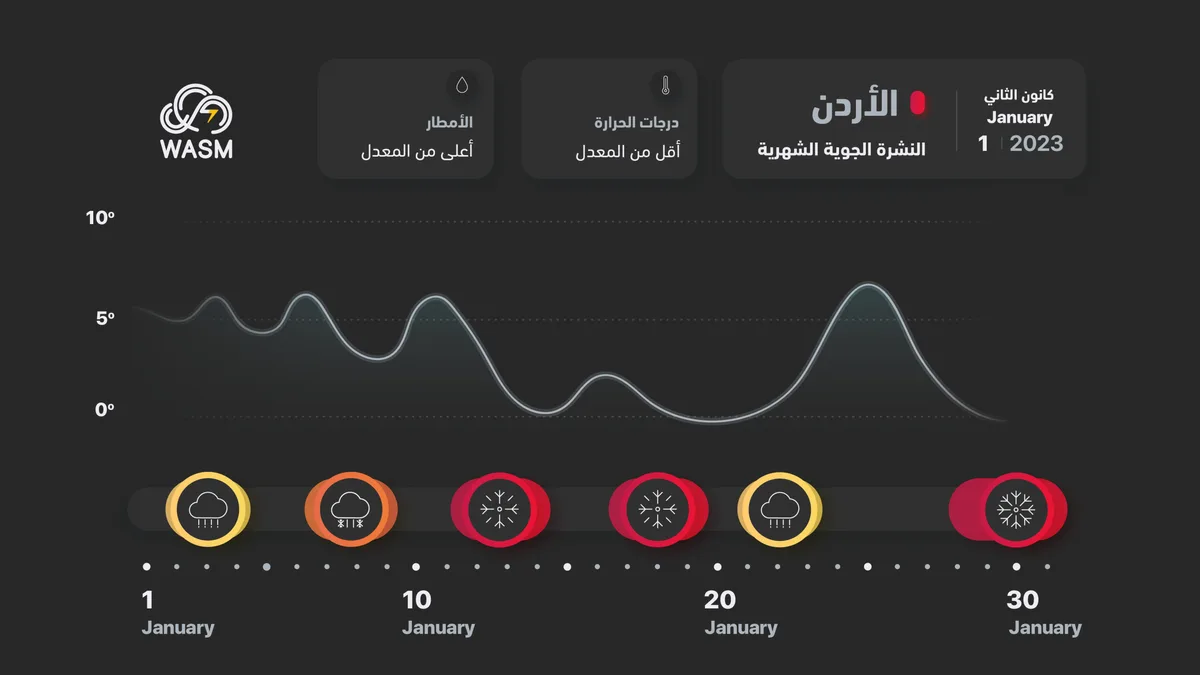
January is expected to be "extremely cold" with temperatures below their normal averages accompanied by few and scattered warm days, with increased chances of snowfall during multiple periods and the continuation of rainy conditions across most areas of the kingdom, which is characteristic of the current season.
Additionally, the chances of frost waves and freezing conditions are expected to rise during several periods, and WASM Center advises the agricultural and electricity sectors to exercise the utmost caution and care during the coming month and through the first 10 days of February.
The kingdom is expected to be affected by rainy conditions and extremely cold weather during the first days of January, followed by a long-lasting polar wave beginning January 6th and continuing until the 22nd of the month, reaching its peak strength during the periods between the 11th and 20th of the month, when chances of snowfall increase across many areas.
Weather condition details|
- Very cold winter rainy weather conditions between January 1st and 5th (Yellow Level)
- Polar wave begins to advance from the 7th through the 20th of the month, rainy and snowy conditions at intervals (Red Level).
- Retreat of the polar wave between the 21st-26th of the month with slight temperature increase and scattered rain showers occasionally.
- A new high-humidity polar wave accompanied by snow and rain at the end of January continuing into early February.
WASM advises the agricultural and electricity sectors to be fully prepared for the expected weather conditions during the coming month, with a significant increase in electricity consumption expected, and the agricultural sector is expected to suffer damage from frost waves.
Caution is advised regarding the continuation of strong flood waves affecting the kingdom and ongoing for 3 months, which have caused damage to infrastructure and posed a danger to lives as a result of acute climate changes affecting Jordan. It is always recommended to follow the warnings of the Jordanian Meteorology Department and the guidance of Civil Defense and Public Security during the expected weather conditions.
Rainfall rates have increased across most areas of the kingdom in recent years due to acute climate changes, which have resulted in an increase in flooding and torrent cases. The European continent is also being affected by rare warm and dry waves that have resulted in an unusual decline in snow in the Alps mountains.