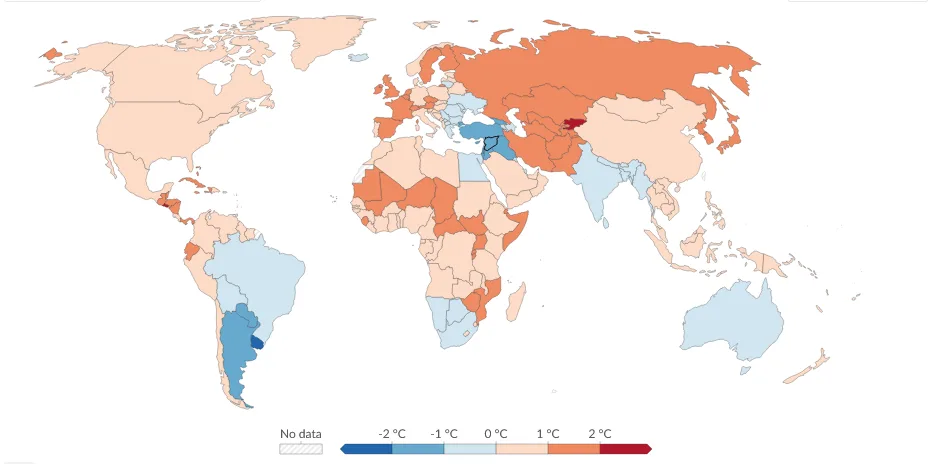
WASM- The Levant region recorded May (Ayyar) as the coldest month in 33 years – since 1993 – in terms of the average for month 5, due to the influx of colder-than-usual air masses from northeastern Europe, according to results from the Copernicus system for monitoring climate change and the management of the atmosphere and oceans by the US administration.
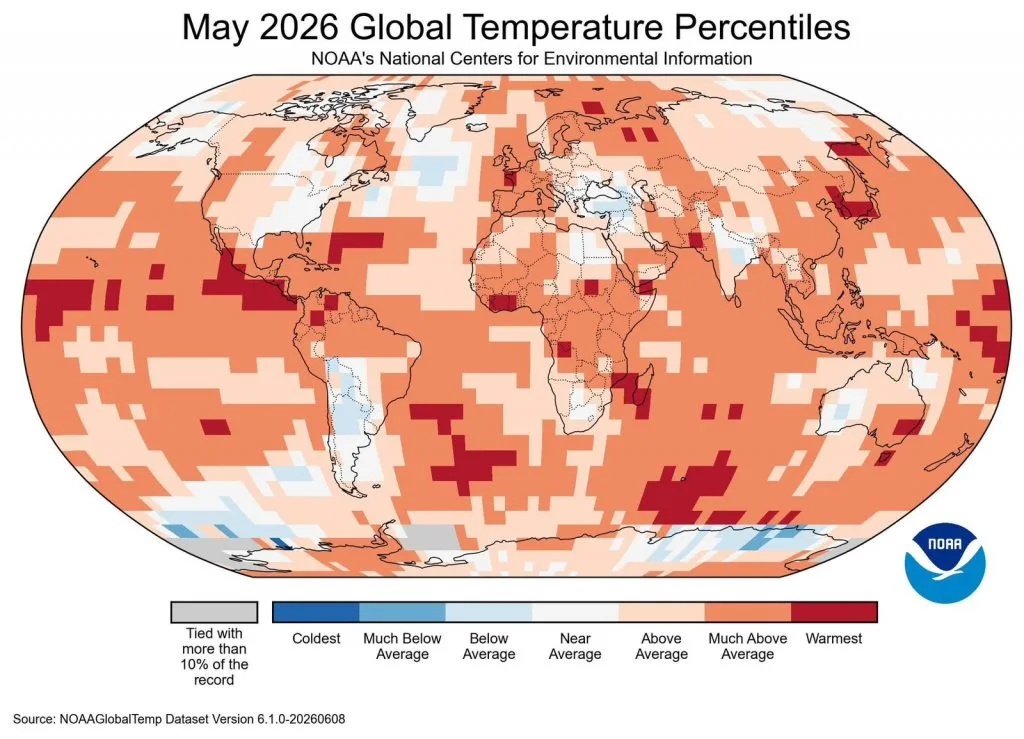
This coincided with very significant results, as the world recorded the second hottest May – as a global average – which proves that the nature of climate changes is qualitative and distinctive for each region in the world.
Month 5 recorded several cold waves in the Levant region, some of which reached winter levels in a rare occurrence, with temperatures dropping to 8 degrees Celsius in the highlands of the capital Amman.
The month recorded temperatures below the averages by around -1.5 degrees Celsius, but it did not exceed May 1993 which reached lower temperatures by around -2.5 degrees Celsius due to exceptional climatic and distinctive geological conditions.
The month also recorded unusually heavy rainfall concentrated over Syria and Lebanon, with weak extension towards northern Jordan and Palestine.
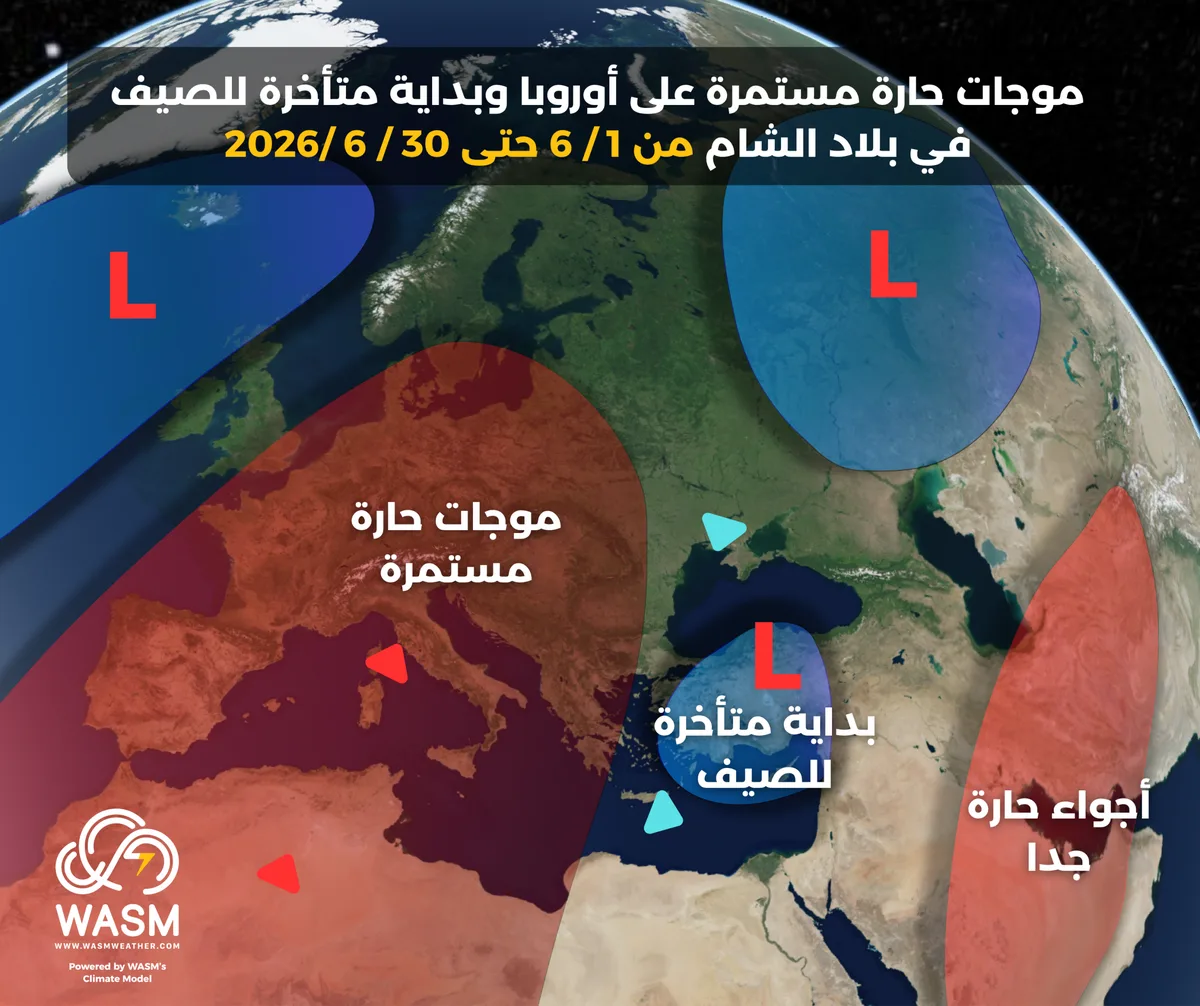
Strong and intense heat waves towards Europe|
May recorded, especially in its second half, strong and intense heat waves towards Europe that were classified as the strongest in modern climate records for Europe.
May 2026 was classified as the second hottest May globally, but the Levant and Eastern Mediterranean recorded the coldest May in 33 years, which reflects distinctive and qualitative atmospheric dynamics.
In contrast, the North Atlantic recorded the coldest temperatures for May in more than 25 years, reflecting distinctive circulation of the atmosphere that could cause weather and climate changes in some regions over others globally.
The El Niño climate phenomenon continues to develop in an accelerated and strong manner, which has begun to lead to abnormal atmospheric circulation that will intensify greatly in the coming months and lead to exceptional global climate conditions.
The study of climate changes for each region is conducted with precision and quality, and not by quoting Western studies on the European continent and then imposing them on the region's climate to reflect inaccurate results.
Is the Levant region and Eastern Mediterranean climatically connected more strongly than we thought to the North Atlantic climate?