
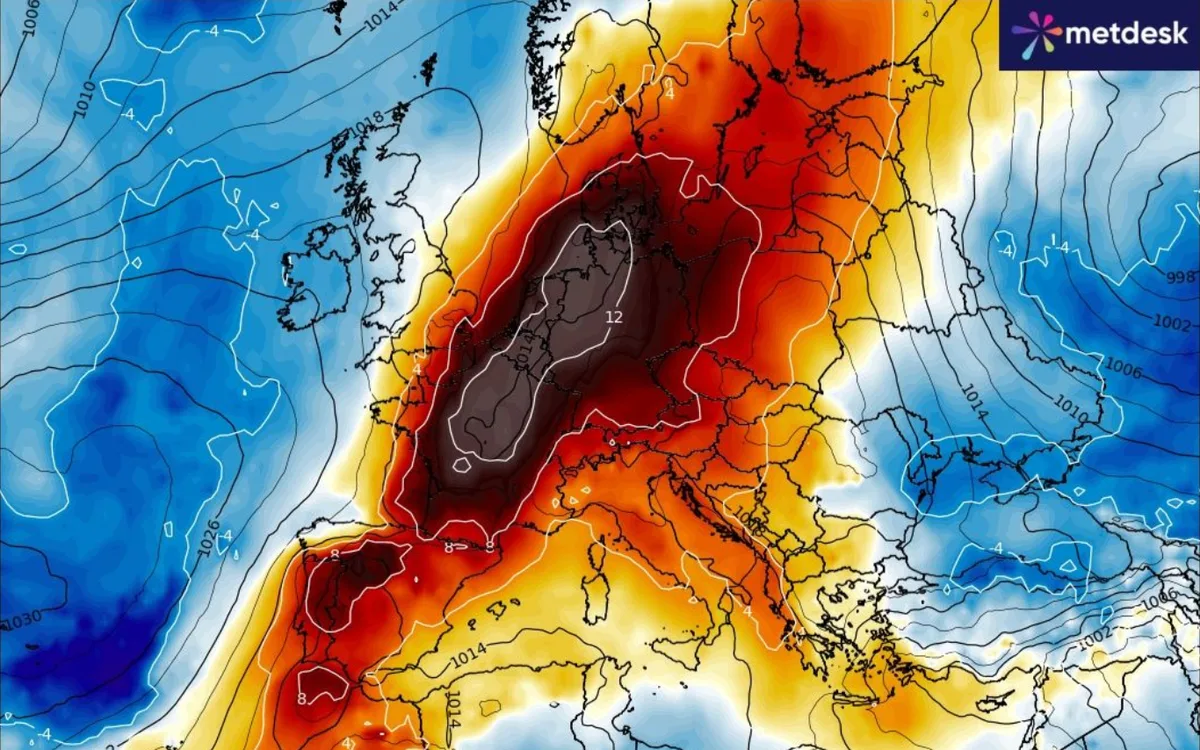
WASM - Unusually strong heat waves are renewing across the European continent during the second week of the current month, which are expected to affect wider areas and last for longer periods compared to the current heat wave. This is due to the continued surge of hot air from North Africa and due to a temporary weakness in the subtropical jet stream in the Mediterranean Sea region and east of the Atlantic Ocean.
The expected heat wave around mid-month on the European continent is anticipated to be "long" and more intense, which will also cause a surge of cold winds toward Eastern Europe and Siberian regions, then toward Turkey and the eastern Mediterranean region, in an unusual manner compared to this hot season.
The increase in the intensity of hot and dry waves in Europe has become a very frequently recurring phenomenon in those regions, resulting from different atmospheric circulation patterns, especially over the last 10 years, which has resulted in clear climate changes in the Arabian Peninsula, eastern Mediterranean, the Levant, and Egypt regions, causing a significant increase in rainfall rates compared to previous years.
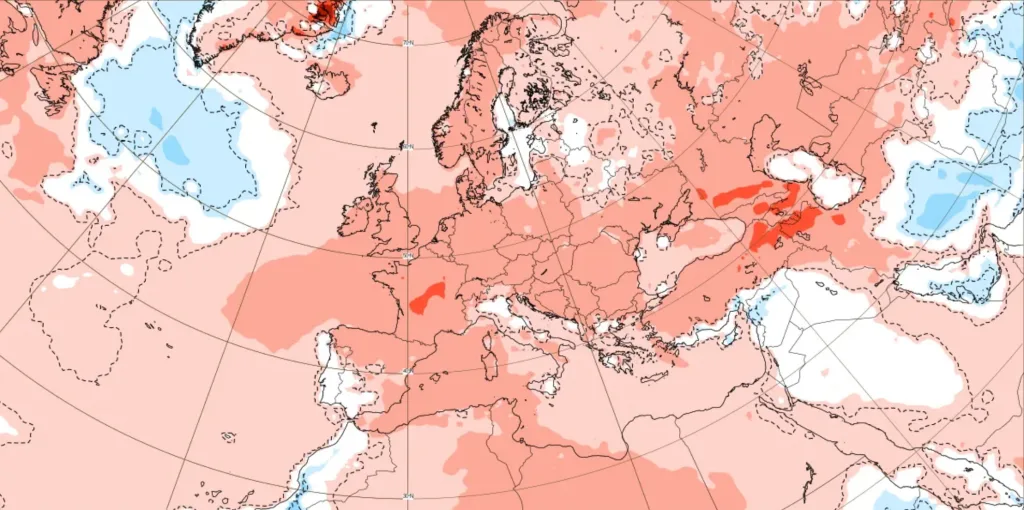
Sharp heat waves are expected to recur across the European continent this summer, which will peak during the beginning of August in a rare occurrence, caused by a significant weakening of the subtropical jet stream in the western Atlantic Ocean and the Mediterranean Sea region, which will become more pronounced during the middle and end of this summer.
This unusual arrangement in atmospheric circulation will result in increased rainfall rates in wide areas of the Sahara Desert and southwest Saudi Arabia at the end of this summer, and possibly the extension of rainfall to areas near the southern and eastern Mediterranean in a manner north of Saudi Arabia and Iraq in an off-seasonal way.
Long-range numerical models show the continuation of this atmospheric arrangement until the end of summer, while the climate model of the WASM Regional Center indicates an increase in the likelihood of hot periods occurring in the Eastern Mediterranean region before the end of the current summer.
The WASM Regional Center continues to monitor this unusual atmospheric circulation during the coming period and the expected impacts on weather conditions affecting the Arab region.