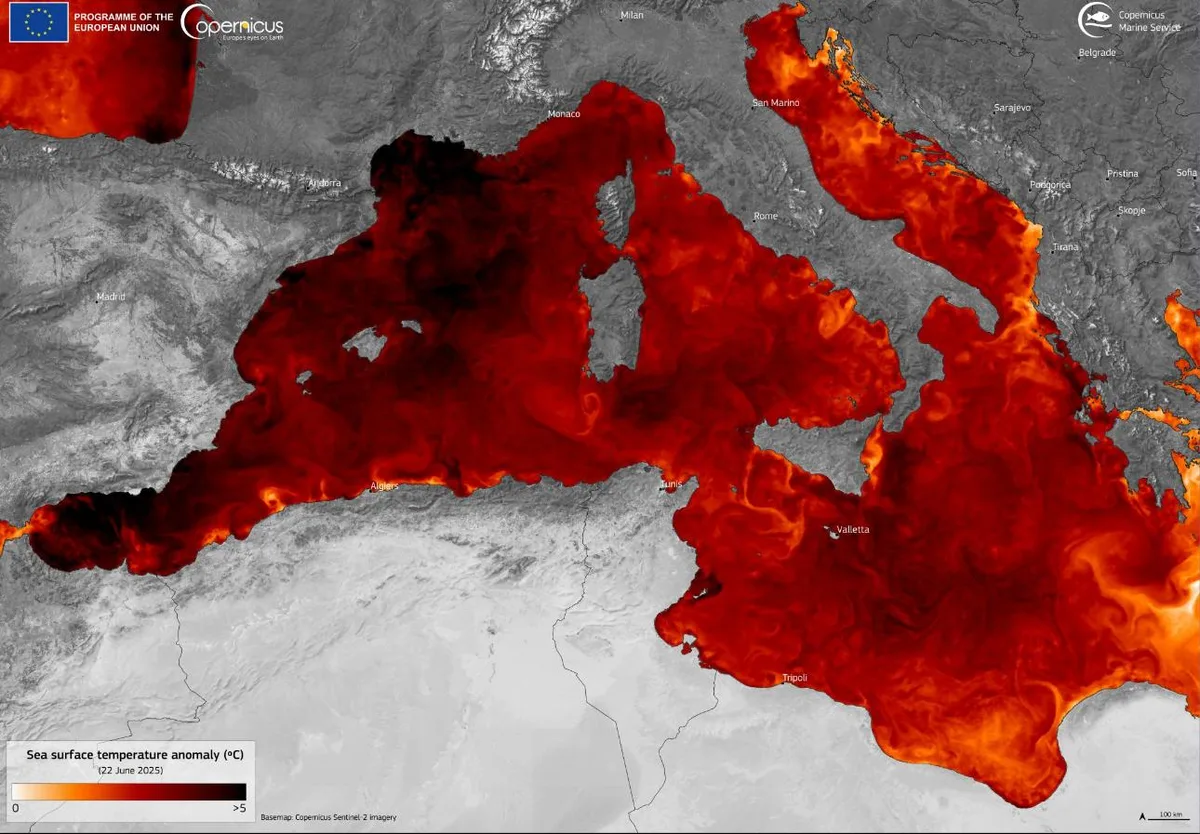
WASM- Temperatures in the Mediterranean region, particularly the western and central parts, have risen to record-breaking levels that are unusual for this time of year, exceeding seasonal averages by over 5 degrees Celsius. Although this increase enhances the enormous latent energy in the region, it does not necessarily mean an increase in the number of storms in the region, even if they become more powerful should they occur. Rather, it leads to an increase in hot and dry waves and rainfall suppression in the western Mediterranean region.
This is due to atmospheric circulation and its response to many complex climatic factors, especially in the tropical regions of the oceans, which play a crucial role in the path of jet streams in the upper atmosphere and their impact on weather conditions.
The increasing heat of the Mediterranean Sea in its western part has caused prolonged periods of stability or consecutive dry periods in the western Mediterranean region and a decline in the number of atmospheric lows or winter storms during rainy seasons.
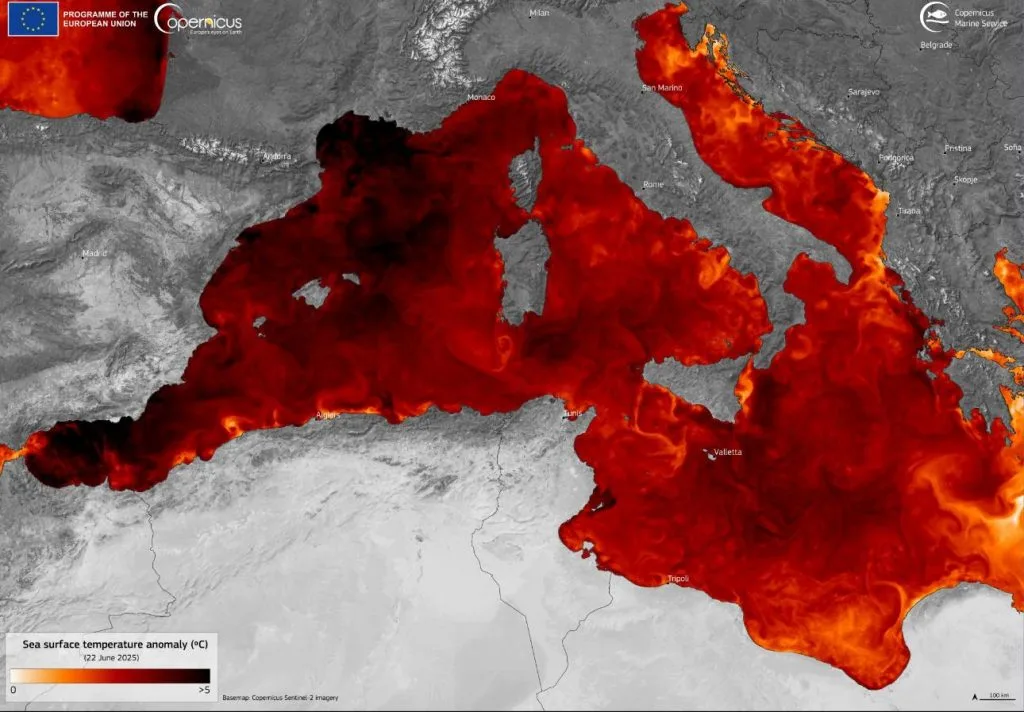
High heat in the western Mediterranean signals long drought waves|
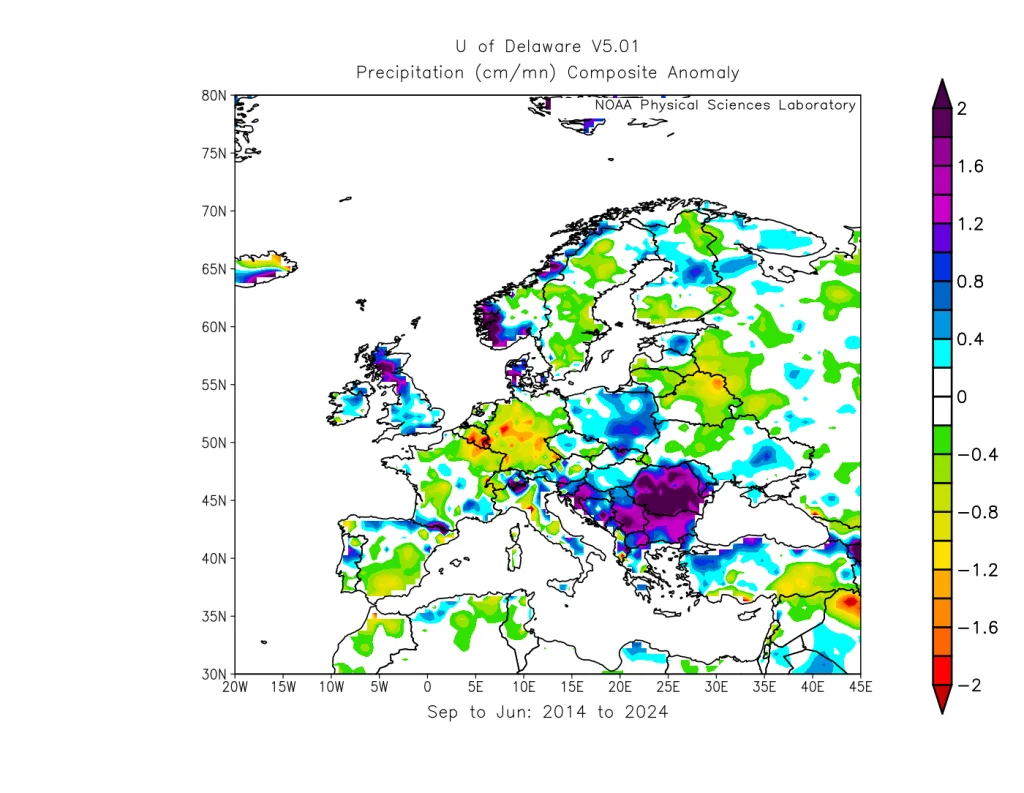
Western and central Mediterranean regions have suffered from temperatures above seasonal averages for 10 years, intensifying over the last 5 years with an increase in marine and oceanic heat waves due to factors mainly related to ocean water circulation and global temperature rise.
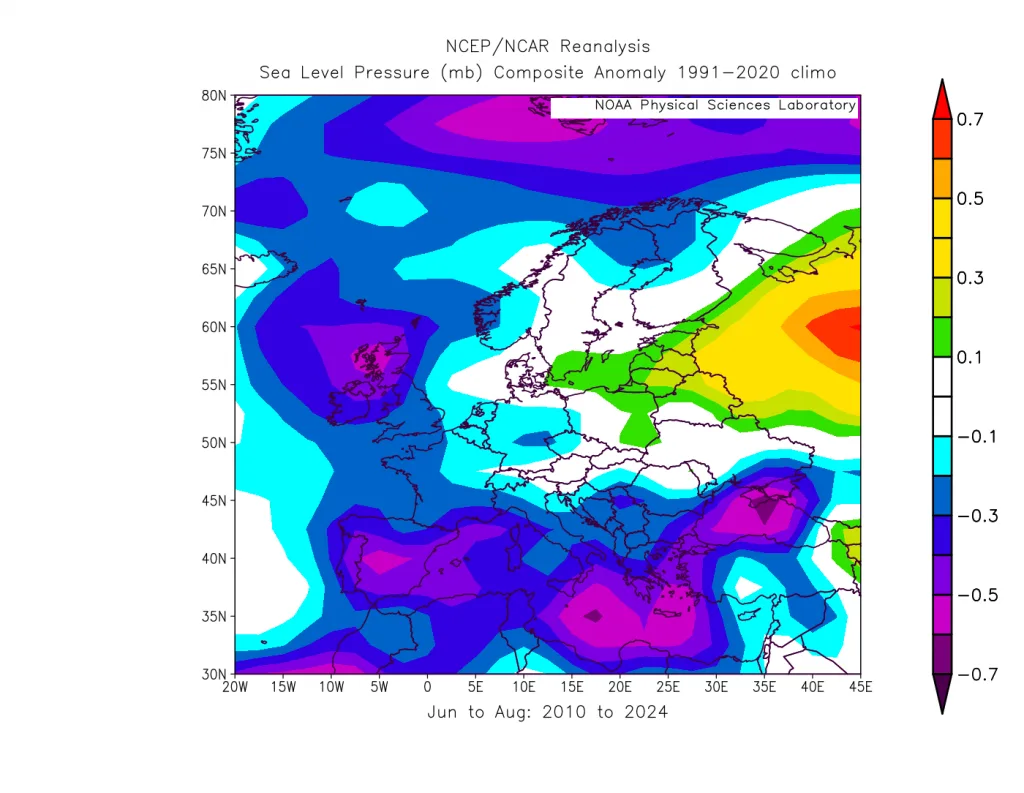
An increase in dry waves and drought seasons in those areas and a significant and noticeable decline in winter storms have been observed, which is contrary to what happens in the eastern Mediterranean region. Additionally, heat waves have intensified considerably in the western Mediterranean and Western Europe regions, as water heating has directly affected surface atmospheric pressure values and weakened the seasonal summer high pressure system over the western Mediterranean, which has increased the ease of heat wave surges toward Europe since 2010, as seen in the attached map.
Major impact on jet stream paths|
Through studying specialized maps, a sharp weakening of the subtropical jet stream between 300 and 200 millibars (upper atmosphere layers) can be observed, due to a significant influence from the Atlantic Ocean region.
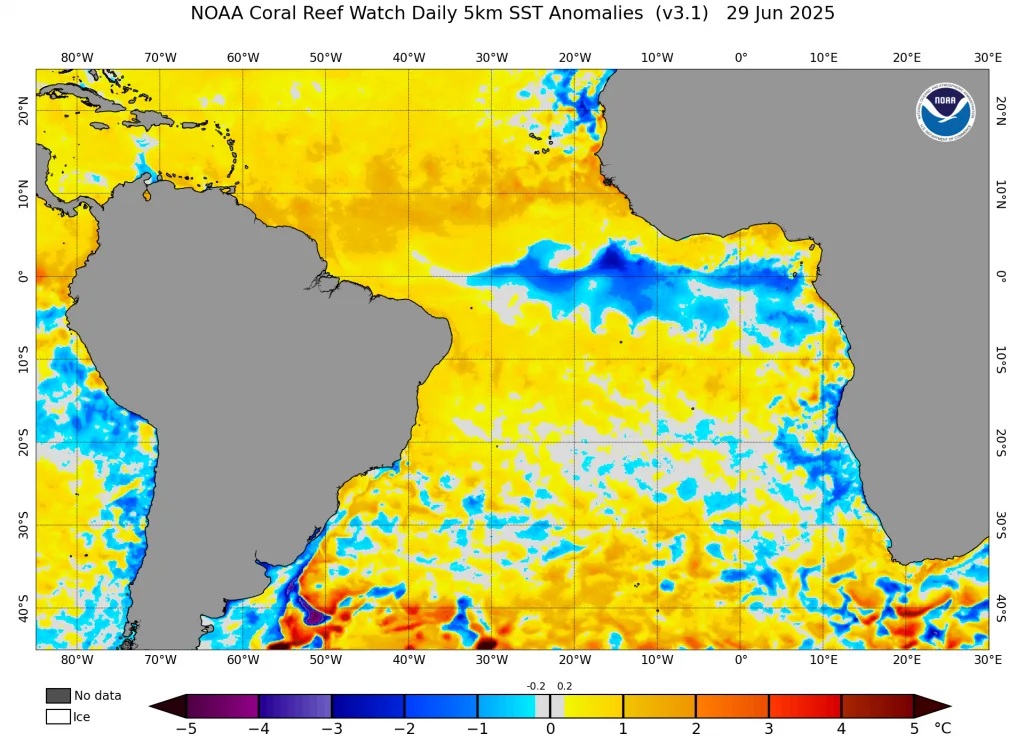
The cooling of the tropical Atlantic Ocean region will greatly reinforce the weakening of this current during the coming period, which will increase the likelihood of extreme weather conditions in central and eastern Mediterranean regions as well as western Maghreb and Spain during the coming years, and the emergence of severe but widely spaced storms in the southwestern Mediterranean region.
The weakening of the jet stream in those areas increases the ease of hot wind flow toward Western Europe and increases the number of heat waves. And that is not all; this weakening of the jet stream has caused this current to split toward Western Europe and contribute to pushing hot air repeatedly toward parts of eastern Britain in the form of heat waves or long stable and dry periods.
Due to other acute results that have emerged on polar circulation (it has become strong and intense as a result of intensification of the polar jet stream) as a result of severe changes to the temperature of the northern Pacific Ocean region.
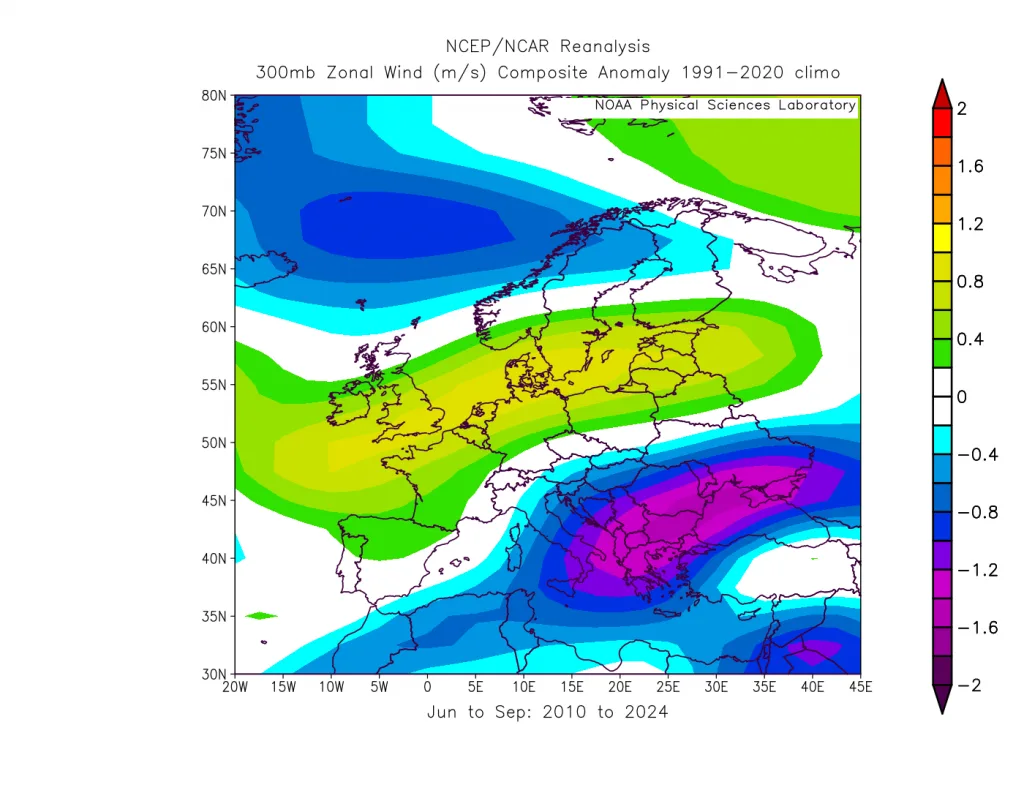
These factors resulted in intensification of the jet stream over southeastern Britain and northwestern Europe, which increased the strength of advancing Atlantic storms and further contributed to enhancing the push of hot air toward the European continent and a decline in the number of atmospheric lows in the western Mediterranean and increased severity of long dry waves. We must not forget the elevated heat of the northern Atlantic Ocean which increases the strength of these storms alongside the weakening of the jet stream in the western Mediterranean region.
Future Outlook|
Based on these data regarding the severe heat of the western Mediterranean and its connection to climatic factors, this will increase these atmospheric factors|
- Strong, intense and more persistent heat waves toward western and central Europe in summer.
- Long dry periods (which may extend for months) in central Europe and western Mediterranean regions, sometimes reaching toward central areas.
- Long and heavy rainy periods toward the eastern Mediterranean, especially its southeastern section, and the Arabian Peninsula region during the rainy season extending from September to May.
- Strong rainy storms during the beginning and middle of the rainy season in western and northern Saudi Arabia and Red Sea coasts.
- Increased likelihood of off-seasonal rainy conditions in the Arabian Peninsula region and eastern Mediterranean and Egypt, especially during early and late summer.
- Severe Atlantic storms toward Britain, northwestern Germany, northern Europe and even western France.
- Severe storms on wide areas of Spain but very spaced out interspersed with long dry periods.
The WASM Regional Center will issue more detailed reports on each climatic factor individually and its connection to other climatic factors, noting that the heating of water bodies does not necessarily mean more frequent or more powerful storms, but may herald long hot and dry periods in affected areas due to the behavior of the atmosphere with these climatic factors.