
WASM - The WASM Regional Center issues the seasonal weather bulletin for the 2020-2021 season
for the autumn period until the beginning of winter, which runs from October 2020 to January 2021
divided into two periods: the first October and November, and the second December and January, using
the climate model developed within the WASM Regional Center which is used for medium-range
and long-range forecasts.
General Situation..
The autumn season is expected to experience drier than normal conditions and higher temperatures, with several rainy weather systems expected, particularly in mid and late October. However, atmospheric conditions are expected to change gradually in the region, with increased weather activity beginning from mid-November through mid-December, and strong weather systems becoming pronounced from the end of December.
- Autumn Season (October and November)..
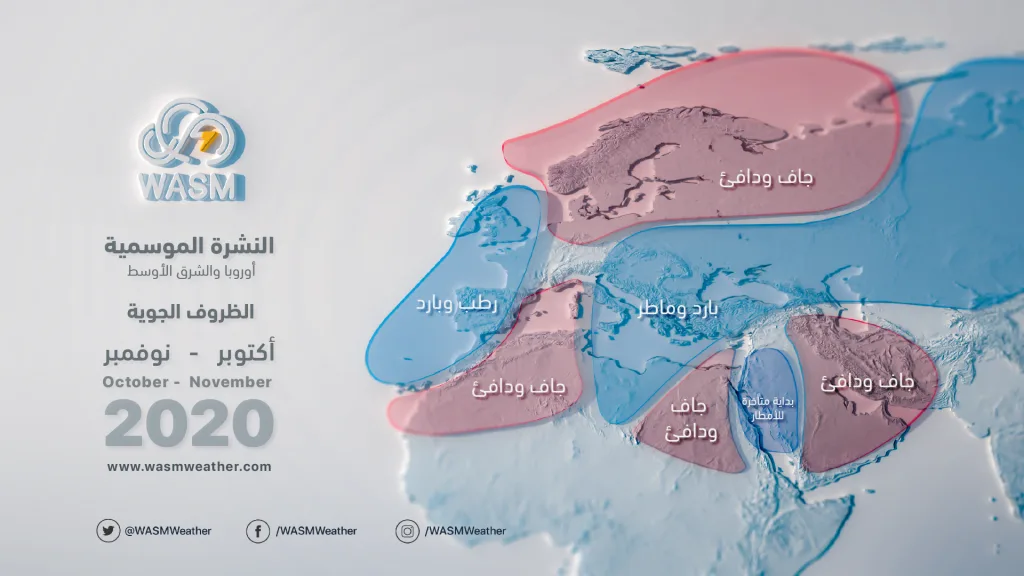
Generally dry and warm atmospheric conditions with limited rainfall expected in some areas. A strong high-pressure zone is concentrated in eastern and northern Europe, with a strong high-pressure ridge over northwestern Africa, which forces cold air to surge far toward the central Mediterranean, passing through Turkey and Greece. This causes limited rainy weather systems in autumn, which also affect western Saudi Arabia during certain periods.
Beginning from the second half of November, atmospheric conditions are expected to change gradually with an increase in rainy weather systems affecting the region, which are expected to primarily impact the Levant, Egypt, Jordan, and western Saudi Arabia.
- Winter Season (December and January)..
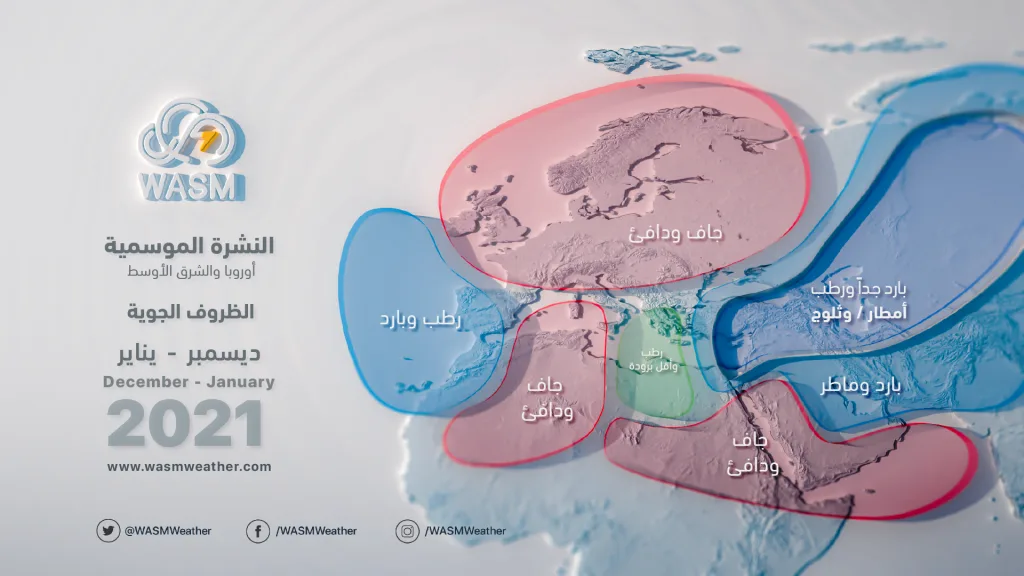
Generally cold and humid atmospheric conditions in the region with scattered rainfall expected, particularly in the second half of December and throughout January. Weather systems are concentrated in the Levant, Jordan, Egypt, Iraq, central and eastern Saudi Arabia, the State of Kuwait, the Arab Gulf states, and to a lesser extent in the UAE and the Sultanate of Oman.
The atmospheric circulation is expected to be dominated by a strong high-pressure zone over central, northern, and eastern Europe, extending from North Africa, with atmospheric lows over southwestern Europe and the far northwestern Africa and the Atlantic Ocean region. This circulation pattern causes the activation of the Mediterranean front, upon which Mediterranean sea lows form over the eastern Mediterranean region and these lows surge toward the Levant, Iraq, and northern Arabia.
Summary..
A drier and warmer beginning to the season followed by an increase in rainfall systems in the region beginning from the second half of November and intensifying later during the winter season. The Arabian Peninsula region will be characterized this season by rainfall events during the winter season, contrary to recent previous seasons which were characterized by autumn and spring rainfall.
Scientific Data..
A weak to moderate La Niña condition is expected to decline in strength during the end of autumn, a negative oscillation of the Arctic region in general with strong changes expected in oscillations between positive and negative values, weak to average North Atlantic activity at times, warming of tropical Atlantic Ocean waters and gradual cooling in the northern Atlantic Ocean during the season, and neutral to negative values in the Indian Ocean.