
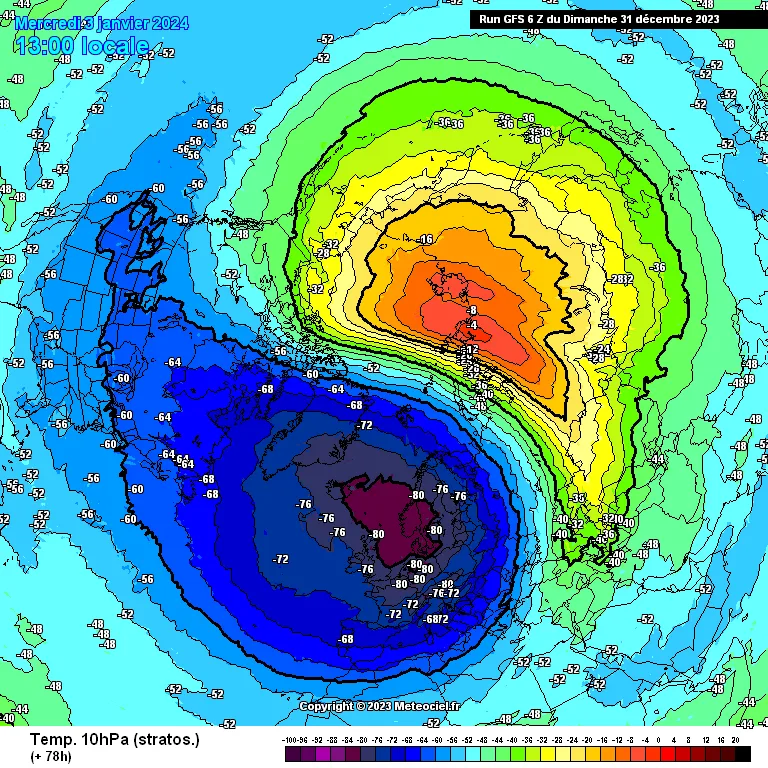
WASM – There has been much discussion about a sudden warming of the "stratosphere" layer of the atmosphere, which is the layer containing ozone gas important for absorbing harmful ultraviolet rays. In recent years, this phenomenon has been constantly discussed and attempts have been made to link it to atmospheric circulation, especially polar circulation. However, WASM Regional Center does not see any evidence at this moment of its direct impact on atmospheric circulation.
-Upper atmosphere warming (stratosphere)..
This event has recurred over the past years, and with monitoring of analyses regarding its impact on atmospheric circulation, we found a success rate of 20% from various sources regarding the possibility of its impact on atmospheric circulation, while 80% of analyses on its effect on atmospheric circulation did not succeed. The most important occurrence was in 2020, and despite numerous research and studies issued from European centers specifically, its impact still remains a mystery on atmospheric circulation. WASM Center is issuing an important study proving that stratosphere warming is a result of what happens in the troposphere layer (which is the layer where major weather systems occur).
.
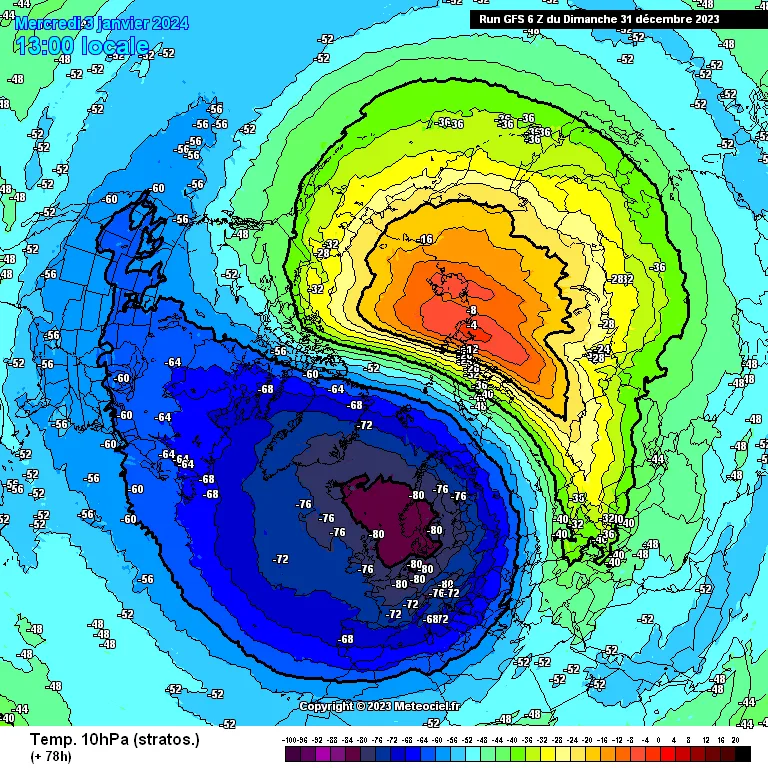
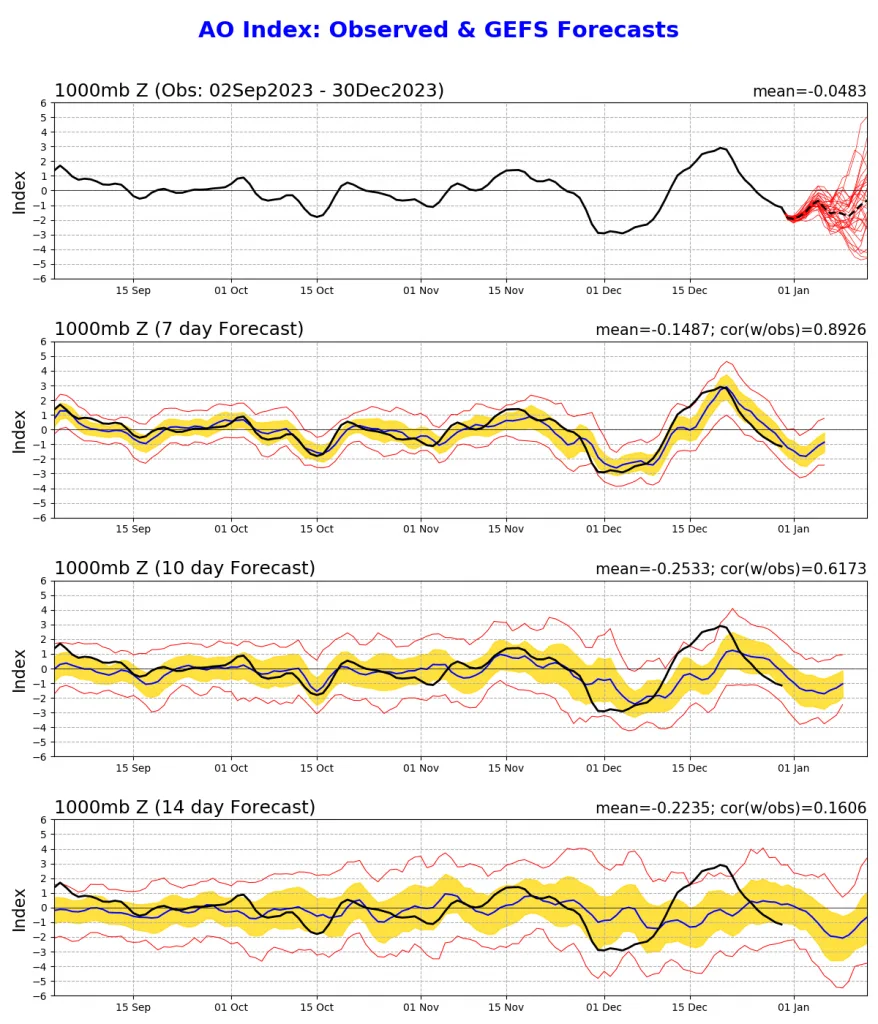
- Recurrence of this layer warming following sharp fluctuations in polar atmospheric circulation..
It was observed that this layer warming recurs with increasing frequency of polar atmospheric circulation fluctuations. Since warm air is lightweight and rises gradually with the activity of warm air fronts advancing towards the North Pole horizontally as a result of the nature of these air fronts, this causes reverse circulation of the atmosphere in the North Pole region, which is called AO-, this causes a sharp weakening of Rossby waves responsible for winter storms in the mid-latitude region, and accumulation of polar air towards mid-upper latitudes and polar air circulation in reverse (from east to west) causes damage to weather activity over mid-lower latitudes and weakening of weather conditions in general, and this may coincide with high-effectiveness activity with subtropical regions in some periods as a result of significant weakening of the subtropical jet stream.
It was observed that this fluctuation is followed by a sudden rise in stratosphere temperature after several days, which is explained by the rise of warm air from subtropical regions towards the North Pole. Here, the rise in stratosphere temperature may be a result of what happens in the troposphere layer, the highly dynamic layer, and the effect of this is minimal.
.
The biggest reason for focusing on it is attempting to solve the mystery of sharp atmospheric pressure fluctuations in the North Pole region, which changes the results of all "long-term" global climate models and reduces their accuracy. However, WASM Regional Center expects that North Pole fluctuation is more complex than attempting to link it to a specific phenomenon or to unproven hypotheses so far, and most analyses on its results are not accurate at a rate of 80%. The effect of North Pole fluctuation results from tropical activity circulation and its connection to mid-latitude systems, and this requires more careful and detailed studies to attempt to link these results together in order to reduce the error rate of long-term climate models especially regarding the nature of influential weather conditions.
More than 99% of the atmosphere's mass exists in the troposphere layer, more than 50% only in the lower 6 km of the atmosphere, and linking these phenomena or confirming their impact on polar circulation requires more careful studies and understanding of the failure of most long-range forecasts that are linked to this phenomenon.
WASM will issue a detailed and precise study clarifying the effect of the troposphere layer on the stratosphere layer and how it increases the activity of this layer's warming phenomenon, which results from increasing sharp atmospheric pressure fluctuations in the North Pole region that affects the nature of polar air circulation in the pole region.
Therefore, from our perspective, we do not recommend following analyses or results of "stratosphere layer warming" and its effect on the atmosphere because this is linked at an 80% rate to the failure of this study in accurately predicting atmospheric circulation especially polar circulation.