
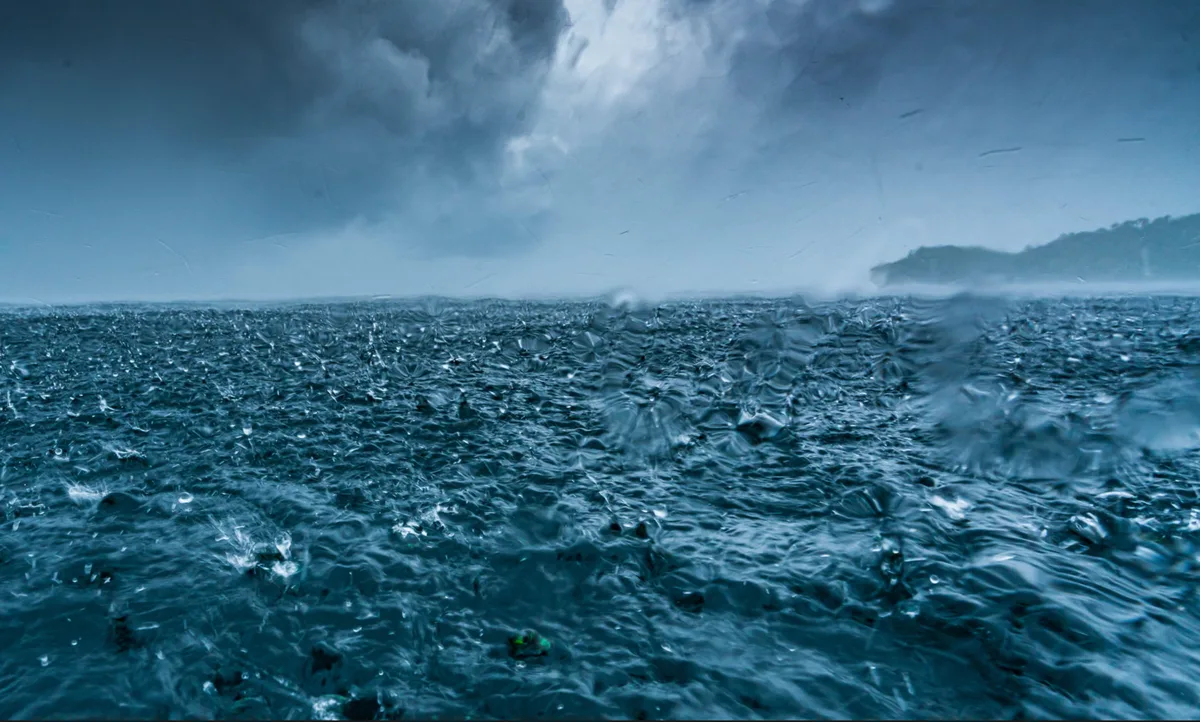
WASM- The North Atlantic Ocean is recording the strongest cooling in more than 25 years, as a result of important changes occurring in its water circulation and the beginning of a new climate cycle linked to greater chances of dry and hot waves in Europe and colder winters in the Middle East.
- Current Monitoring|
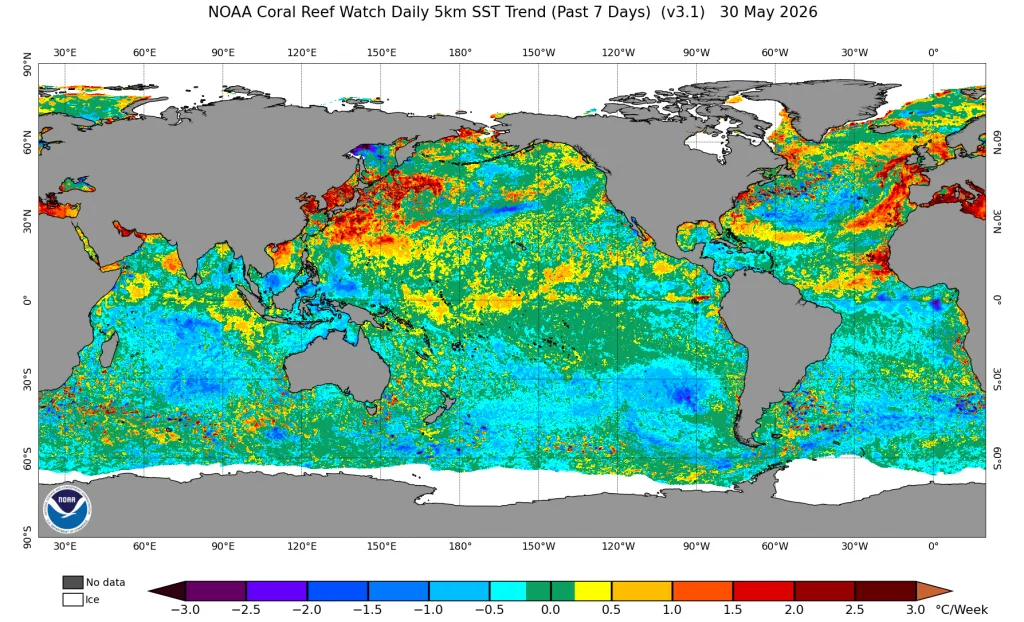
Through monitoring satellite imagery and recorded temperatures, there is almost a disruption in the movement and path of the warm Gulf Stream and perhaps a relative slowdown, causing the existence of a large cold water basin in the North Atlantic region.
Very cold temperatures were observed below the average reaching less than -3 to -4 degrees Celsius, which is a very large number for climate value levels. These figures are expected to intensify in the coming years, as this climate phenomenon is long-term and one cycle lasts more than 25-30 years at least.
With the warming of oceans globally, we expect the "relative" impact on atmospheric circulation to be severe, especially with the presence of very hot water pockets near the North Pole region, which increases ice melting and slows down the warm Gulf Stream and magnifies the impact of this climate phenomenon in the coming years, and perhaps the new climate cycle will last longer than the usual situation clearly.
- Impact on the Atmosphere|
This climate phenomenon is the most influential on long-term atmospheric circulation, especially for the European continent, North Africa, the Eastern Mediterranean basin, the Middle East, and North America as well.
The beginning of the impact of the cold cycle, and according to the results of statistical modeling, increases the chances of dry and hot waves toward the European continent, especially with their increase in recent years.
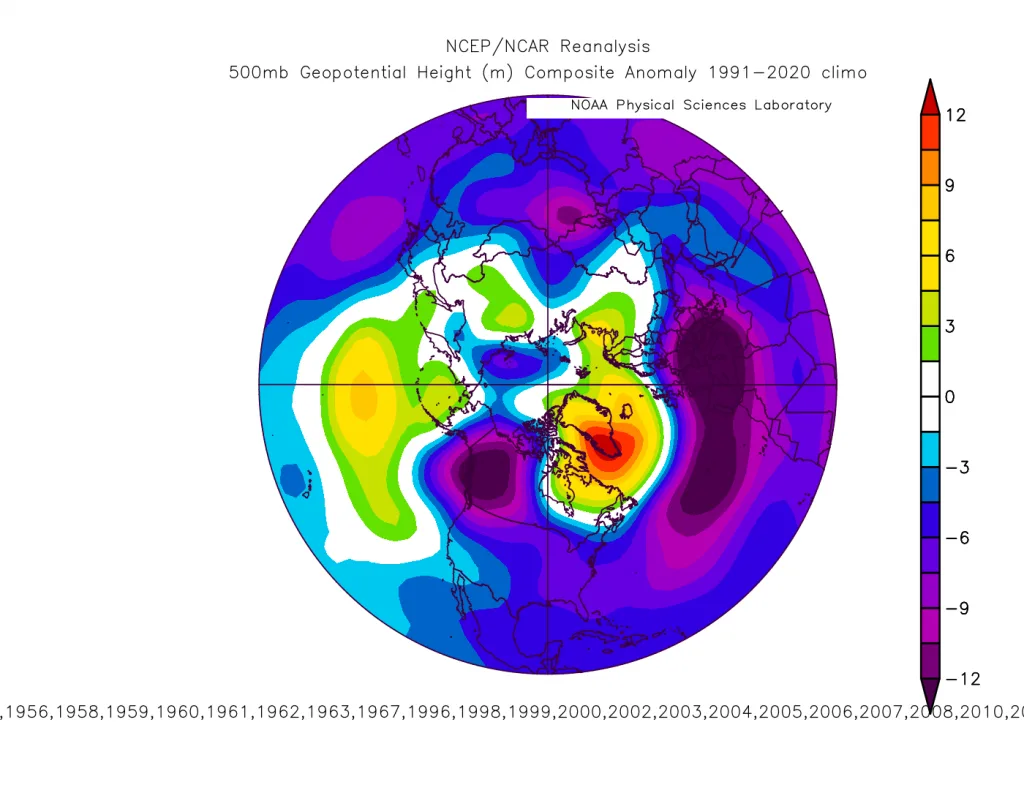
This new climate cycle will lead to increased aridity and rising temperatures in the western region of the European continent, as it causes a weakening of Atlantic westerlies toward broad areas of Europe due to the weakening of the jet stream over the North Atlantic region, and in light of the collapse of the jet stream over the western Mediterranean, this will reinforce the weakening resistance to hot winds rushing from the Sahara Desert, causing continuous heat waves.
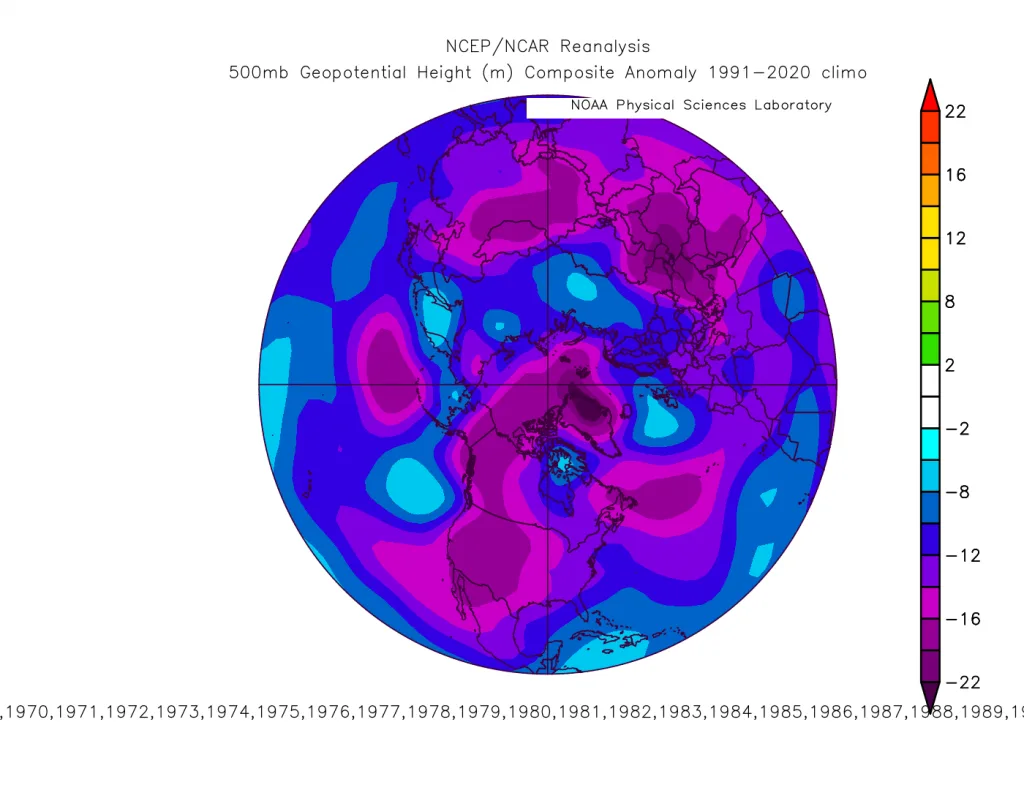
This Atlantic climate cycle will lead to the beginning of the collapse of the "polar jet stream" over North America on average, but the collapse will be strong over the Atlantic Ocean and Eastern Europe, causing continuous and more intense cold waves especially in the Middle East region, and shorter and weaker summer seasons with scarcity in heat waves (which is what has been observed in recent years).
The cooling of the Atlantic Ocean reinforces this type of climate change that we have begun to observe in recent years as a result of the weakening of the subtropical jet stream in the Mediterranean Sea and eastern Atlantic region through the collapse of the polar jet in the coming years and starting from next year.
The results of this on the Middle East region: colder winters and more rainfall, and an increase in precipitation rates in the region by an additional percentage exceeding 20%, especially with the scarcity of dry seasons during the last 12 rainy seasons due to climate change.
Connection to the El Niño Climate Phenomenon|
The cooling occurring in the North Atlantic, and even sometimes in its subtropical regions, will coincide with an exceptional El Niño phenomenon during the coming months, which increases the magnification of the impact of climate changes globally and especially the European continent and the Middle East region.
The El Niño climate phenomenon leads to directly affecting the jet stream and reducing its strength over the eastern Mediterranean region, the Levant, and the Arabian Peninsula. The cooling occurring in the Atlantic Ocean reinforces this phenomenon greatly, especially through the polar jet stream. This reflects longer rainy days and continuous cold periods.
This leads to the ease of hot African winds reaching Europe, weakening of Atlantic westerlies important to prevent this, increasing periods of drought, warmth, and heat over Europe, causing the continuation of coldness and continuous rainy conditions more than usual over the eastern Mediterranean, the Levant, and the Arabian Peninsula.
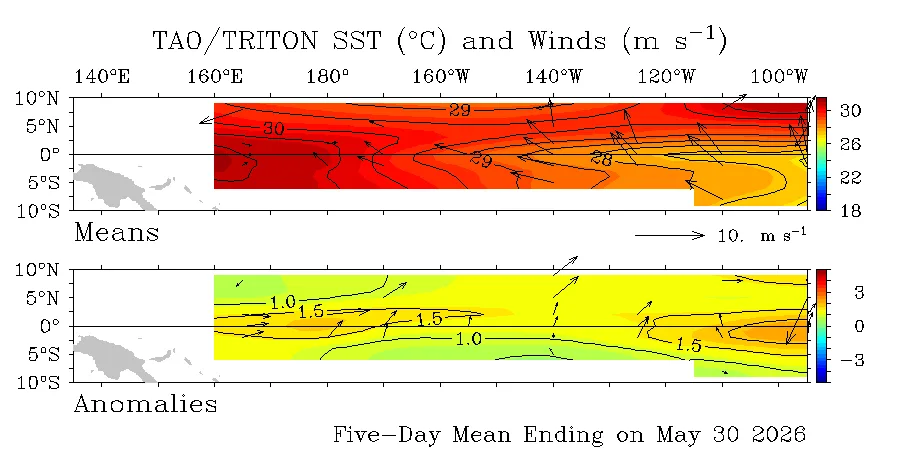
The El Niño climate phenomenon coinciding with an important change in the temperature of the North Atlantic Ocean may lead to an acceleration of the impact of climate changes and their continuation for many years even after this change, threatening the European continent with dangerous climate change and then magnifying heat waves and their continuation for long periods with intensification of rainfall interruptions in those areas.
The climate phenomena that have begun to appear in Europe for years will increase in intensity and strength in the coming years, which is reflected in climate changes (positive) for the Middle East by increasing precipitation rates and cooler weather during rainy seasons, especially with the scarcity of dry seasons in the region.
This is similar to the strong 1998 El Niño, where the cold climate cycle in the North Atlantic Ocean changed to warm, which caused extreme results on the atmosphere, but what will happen is the opposite – the transformation from warm to cold, which will lead to extreme results but with different details that will be issued through new reports soon.
Dealing with Climate Change|
Many Arab countries suffer from a major weakness in infrastructure, especially that responsible for water harvesting and flood containment and reducing their damage to affected areas.
Waves of floods and torrents strongly affect our Arab regions, especially during the last 15 rainy seasons, and with an increase in rainfall rates exceeding 30-40%, the resulting damage is significant, especially in 2015, 2016, 2019, 2020, 2022, 2023, 2024, and 2026 seasons, and with an expected additional increase exceeding 20% in rainfall rates during the coming years.
The percentage of water harvesting in many Arab countries does not exceed 1-2% only of the total rainfall that can be harvested, and compared with many countries that easily exceed 10-30%, which reflects the lack of preparedness for these positive climate changes.
Improving infrastructure and expanding dams and working to improve water harvesting is the most important thing that must be done to benefit from large amounts of rainfall and positive climate changes in order to get rid of water deficit problems, leading to improved agricultural and water production and the energy sector and many other sectors, then reducing losses resulting from weather conditions.
Misunderstanding of climate changes in the Arab region has caused major damage to infrastructure and serious water deficit, the lack of specialized bodies in understanding climate changes and the weakness of national meteorological centers caused great damage to the meteorological sector and infrastructure in Arab countries, and this is unlike European and global countries that were able to predict the nature of climate changes in their regions and reduce the levels of losses.
Dealing with climate change in a scientific and correct manner and improving infrastructure and preventing illegal monopoly from local meteorological circles and completely restructuring them is the correct way to deal with expected climate changes in the coming years, which leads to reducing damage resulting from extreme weather conditions and benefiting from climate changes and reducing the financial burden on governments in large percentages.
WASM Regional Center will issue several scientific reports and detailed studies on climate changes and their reality, as the center has succeeded in predicting many weather and climate conditions, especially during the last season, due to our correct use of climate data and its correction and our development of a special climate model to understand the reality of these changes.