
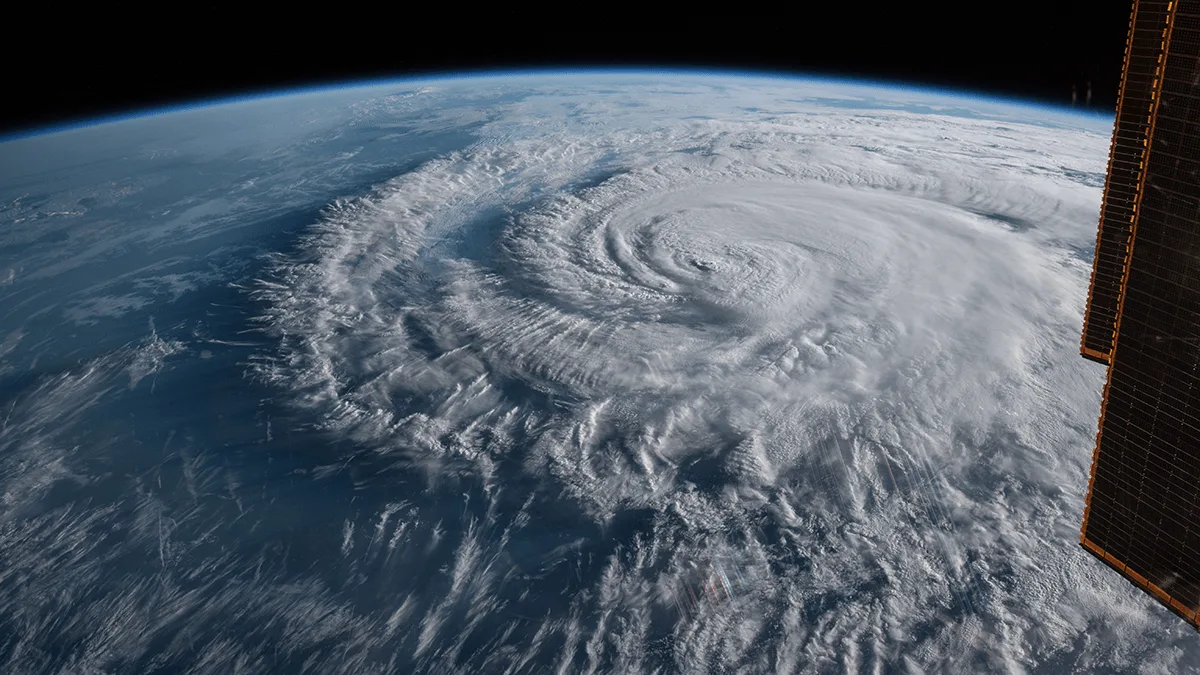
WASM – The La Niña phenomenon that has dominated global climate has begun to collapse and retreat, but without the Pacific Ocean expected to pass through a neutral phase. Instead, the "El Niño" climate phenomenon is growing rapidly and unexpectedly, which will result in extremely extreme climate conditions in various regions of the world including floods and strong storms, and later global heat waves during the summer season.
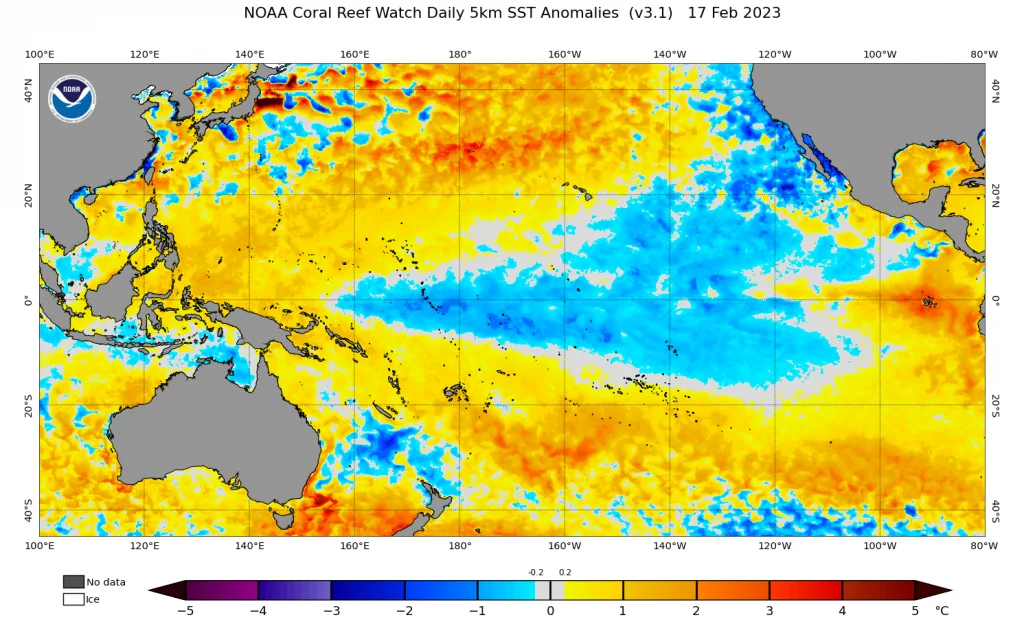
The "El Niño" climate phenomenon..
It is a rise in temperatures in the tropical region of the Pacific Ocean, causing sharp changes and variations in the direction, speed, and curvature of the subtropical jet stream - Subtropical Jetstream - which contributes to the formation of major weather systems around the world. The El Niño climate phenomenon causes severe dry waves in the Amazon rainforest region and later Australia, and a significant increase in rainfall rates in East Africa, the Arabian Peninsula, the Levant region, Jordan, and Egypt.
Despite the non-traditional response to the La Niña phenomenon "which has continued for three years" due to climate change, the WASM Regional Center expects a strong response to the El Niño phenomenon, as the effects of the strong El Niño climate phenomenon since 2015 continue to this day on different scales around the world. The El Niño climate phenomenon has caused severe drought waves and strong fires in the European continent and parts of North America and the Amazon rainforest, and severe flood waves in the Arabian Peninsula, Jordan, Iraq, and Egypt.
What are the expected impacts during spring and early summer?
With the operation of the WASM Regional Center's climate model, which relies on its equations on the rate of "Climate Teleconnection Variation," extremely extreme weather conditions are expected, particularly in the Arabian Peninsula and East Mediterranean region, as well as areas in southern Arabia and later during late spring in the Arabian Sea region.
It is expected that several waves of strong floods will occur in Saudi Arabia, Arab Gulf countries, Iraq, the Levant region, Jordan, and northern Egypt, with high probability of high tropical activity in the Arabian Sea region during late spring (May and June). Therefore, the WASM Regional Center advises various sectors in the Middle East to prepare for extreme climate weather conditions and strong and sudden weather conditions.
On the other hand, the WASM Regional Center expects acute weather extremes in large parts of the European continent, and strong drought and heat waves during the summer season in those regions. Climate change has caused a significant increase in rainfall rates in the Middle East, Jordan, and the Arabian Peninsula region in recent years, reaching 150% compared to their normal rates.
High rainfall rates "rarely" in the Middle East region in recent years..
Rainfall rates have increased "rarely" in the Arabian Peninsula, Saudi Arabia, Kuwait, Jordan, and Egypt regions in recent years, exceeding 150%, and the WASM Regional Center expects rainfall rates to continue increasing to figures that may approach 170% in the coming years with the growth of the El Niño climate phenomenon and the intensification of climate change. This will cause an increase in flood and torrential rain rates in the region, which poses an increasing danger to lives and causes significant damage to infrastructure. Therefore, there will be a great need for high-precision weather forecasts.
Forecasts for late winter and spring season..
Unstable weather conditions in the East Mediterranean and Jordan region during late winter, with expectations of "late" polar waves accompanied by large amounts of precipitation. Later, with the beginning of spring, the push of a humid subtropical air mass is expected towards a wide range of the Arabian Peninsula, Arab Gulf countries, and Saudi Arabia, which will cause significant amounts of heavy rainfall in a wide range resulting in widespread floods and torrential rain waves.
High tropical activity is expected in the Arabian Sea region during late spring, which will cause a high probability of the appearance of tropical storms affecting the southern Arabian Peninsula region.
The Middle East region has been affected by extremely extreme weather conditions during the previous months, which resulted in one of the strongest flood and torrential rain waves that extended widely from northern Egypt passing through Jordan and Palestine to a wide range of Saudi Arabia, Iraq, Kuwait, and the Arabian Peninsula region. The weather conditions were characterized by "unusual" amounts of rainfall in specific time periods.