
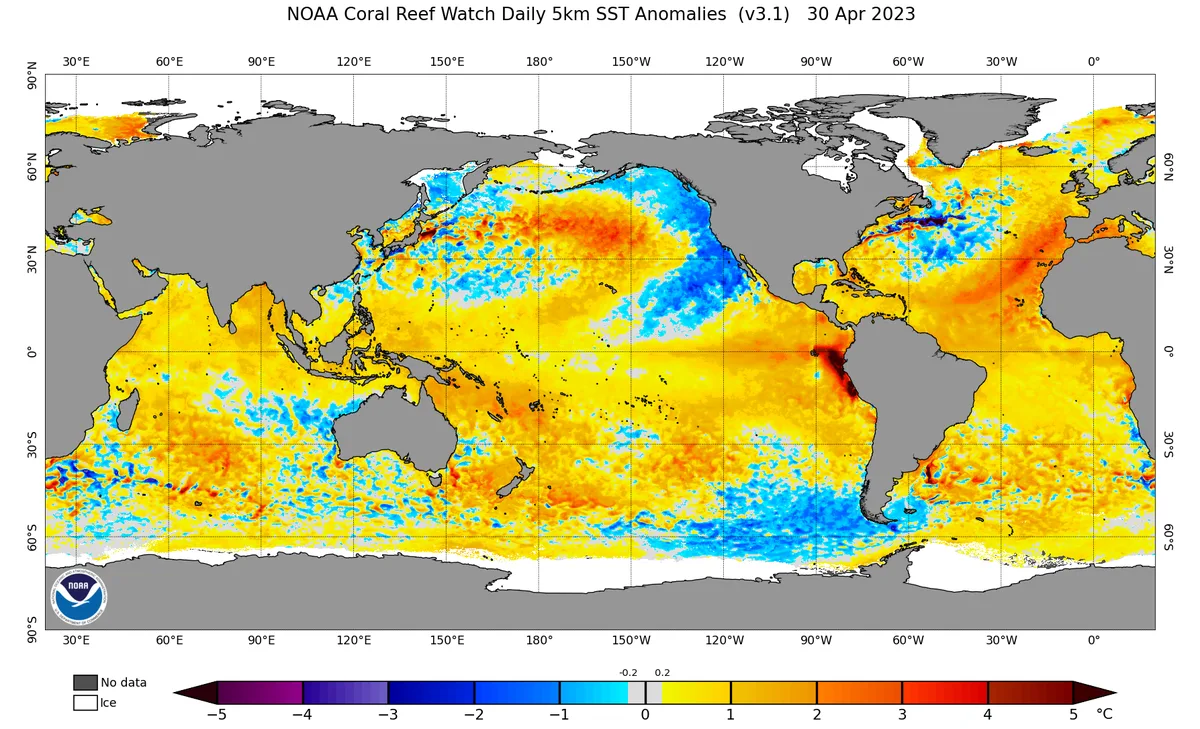
WASM- It is expected that an important climate phenomenon called the "El Niño climate phenomenon" will develop, which means a rise in temperatures in the tropical region of the Pacific Ocean, causing a sharp change in major weather patterns, and a sharp decline in the strength of the jet stream over southeastern Europe and northern Arabian Peninsula, which results in the surge of cold air masses towards the Arabian Peninsula and Middle East region more frequently and forcefully compared to the normal situation.
El Niño Climate Phenomenon..
Major development of the "El Niño climate phenomenon" is being monitored, which is considered one of the most influential climate phenomena on world climate, which usually causes reversals in weather and climate phenomena around the world and increases the rates of floods and torrents in the Middle East region to more than 3 times the normal situation, especially in Kuwait, Iraq, Saudi Arabia, Egypt, Jordan, Palestine, and southern Syria and Lebanon.
This phenomenon causes a decline in the strength of the jet stream in southeastern Mediterranean and northern Red Sea region, therefore this allows polar air to expand towards the south and southeast more strongly than usual, which causes increasing activity in cases of baroclinic atmospheric instability and the emergence of deep frontal low pressure systems and causes strong, wide-scale rainy conditions in the Middle East region.
The latest El Niño phenomenon developed between the 2015 to 2020 seasons, and caused a rare increase in rainfall rates in the Middle East region where it exceeded approximately 200% in many areas and reached 300% in other areas, and Jordan recorded in the 2018-2020 seasons an increase in rainfall rates around 200% (double) and this caused most dams and valleys to flood.
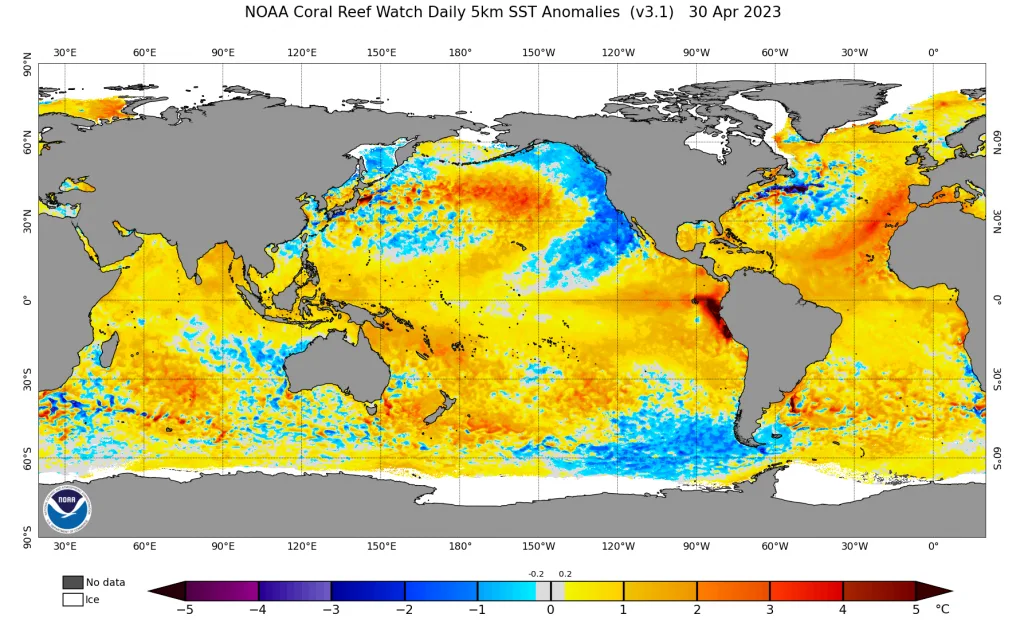
El Niño Climate Phenomenon will increase the intensity of climate changes which have caused a significant increase in rainfall rates..
Jordan and Middle Eastern countries are affected by sharp climate changes that have caused a significant increase in rainfall rates in recent years, especially since the 2014-2015 season, and rainfall rates in Jordan and Middle Eastern countries have increased to more than 40-50% since the 2018-2019 season, and among 9 previous rainfall seasons, the Middle East and Jordan region recorded 7 strong rainfall seasons in an unprecedented manner in the history of modern climate records.
Torrent cases in Jordan and Arabian Peninsula region have increased significantly, where an increase in their number of around double was recorded compared to the period before 2014, as Kuwait recorded a significant increase in torrent and rainfall rates of more than 3 times the normal situation, and Jordan recorded an increase in the frequency of torrent waves around 2.5 times as a result of these climate changes.
These climate changes and the increase in rainfall rates in Jordan and Middle Eastern countries are due to a significant rise in temperatures in the Mediterranean region by around 2 degrees Celsius above their normal rates, as the water cycle in the Mediterranean region occurs from west to east, and the increase in the rates of intense hot and dry waves in North Africa and southwestern Europe caused an increase in Mediterranean sea temperature rates.
El Niño climate phenomenon will work to intensify these strong climate changes, and it is expected from the results of the climate model of WASM Regional Center, the only one of its kind in the Arab region, that strong rainfall seasons (unprecedented) are expected in the region which are expected to record large amounts of rainfall which could be the highest in the history of modern climate records during the upcoming rainfall seasons, and summer rainfall is expected to fall in an off-season and rare manner as a result of a reversal and deviation in the movement of monsoon winds in subtropical and tropical regions over the Arabian Sea and Indian Ocean region, as it is expected that an important part of these monsoon winds will shift towards the Arabian Peninsula during the summer season, and this coincides with the approach of a more moderate and humid air mass from the eastern Mediterranean region towards northern Egypt.
These changes are due to expectations of a change in the course of the subtropical jet stream over central and southeastern Europe and the eastern Mediterranean region, where it will take a rare path for the summer season, this is reflected in a rapid change in the temperature of the western Indian Ocean region which causes its increase to activate great activity in the rotational movement of "Hadley tropical and subtropical cell", this results in building a strong high pressure system over North Africa and central and western Europe and a significant intensification in the movement of the jet stream over those regions, as the increasing thermal energy released from the activity of the tropical cell in those areas will increase the strength of the European high pressure system due to the increasing dynamic activity from this counter-rotating cycle.
The rapid change in the movement of polar jet streams over North America will reflect in a sudden change also in the movement of the polar jet stream over eastern Europe, causing its weakening and recession which reflects on the expansion of polar and sub-polar air towards the Black Sea region causing disturbed summer weather conditions over those areas which will extend towards the eastern Mediterranean in a rare occurrence, these disturbances will become more apparent from the end of the summer season and the beginning of autumn season which will also reflect an early and strong beginning of the upcoming rainfall season.
El Niño climate phenomenon is expected to develop into a strong El Niño climate phenomenon during the 2023-2024 season, causing harsh climate conditions around the world from severe flooding waves in the Peru region and southern United States, California and Texas, as well as the Arabian Peninsula region, eastern Mediterranean, Jordan, Iraq, Turkey and Iran.
The coincidence of this with an emergency heat rise in the western Indian Ocean region reflects a rapid positive cycle of the Indian Ocean cell and the activity of strong tropical waves in the Arabian Sea region and increases the chances of strong hurricanes over southeastern Arabian Peninsula especially with the beginning of summer and becomes more apparent and stronger in the autumn period, where all sectors in those areas are advised to prepare and plan due to the expectation of extremely extreme weather conditions in the Arabian Sea region especially during the autumn season.
The World Meteorological Organization and Australian Meteorological Services continuously monitor the strong El Niño phenomenon, as these climate phenomena are the strongest on world climate, which are expected to last for more than two years at least.
The Reality of Climate Changes in the Region Between Reality and Local Media..
WASM Regional Center succeeded uniquely in the Middle East region and surpassed by using its own climate model developed by the calibrated statistical method (Analogue method- Calibrated formulas-), succeeded in predicting the current strong rainfall season and its early start with accuracy exceeding 70%, and Jordanian local media suffer from acute weakness in publishing weather forecasts and great misunderstanding of climate changes especially in the last two seasons which caused severe losses in various sectors especially agricultural, tourism and electricity sectors, and WASM Regional Center will work on addressing this problem during upcoming seasons through developing protocols in weather forecasting for the public and facilitating the access of accurate information to them away from rumors launched through local media outlets which suffer greatly from poor forecast accuracy in recent times and the absence of precise alert levels that caused severe losses in many sectors, as the meteorology sector needs urgent organization before the problem escalates and losses increase during upcoming rainfall seasons with the expectation of intensification of weather conditions and increased extremes.