
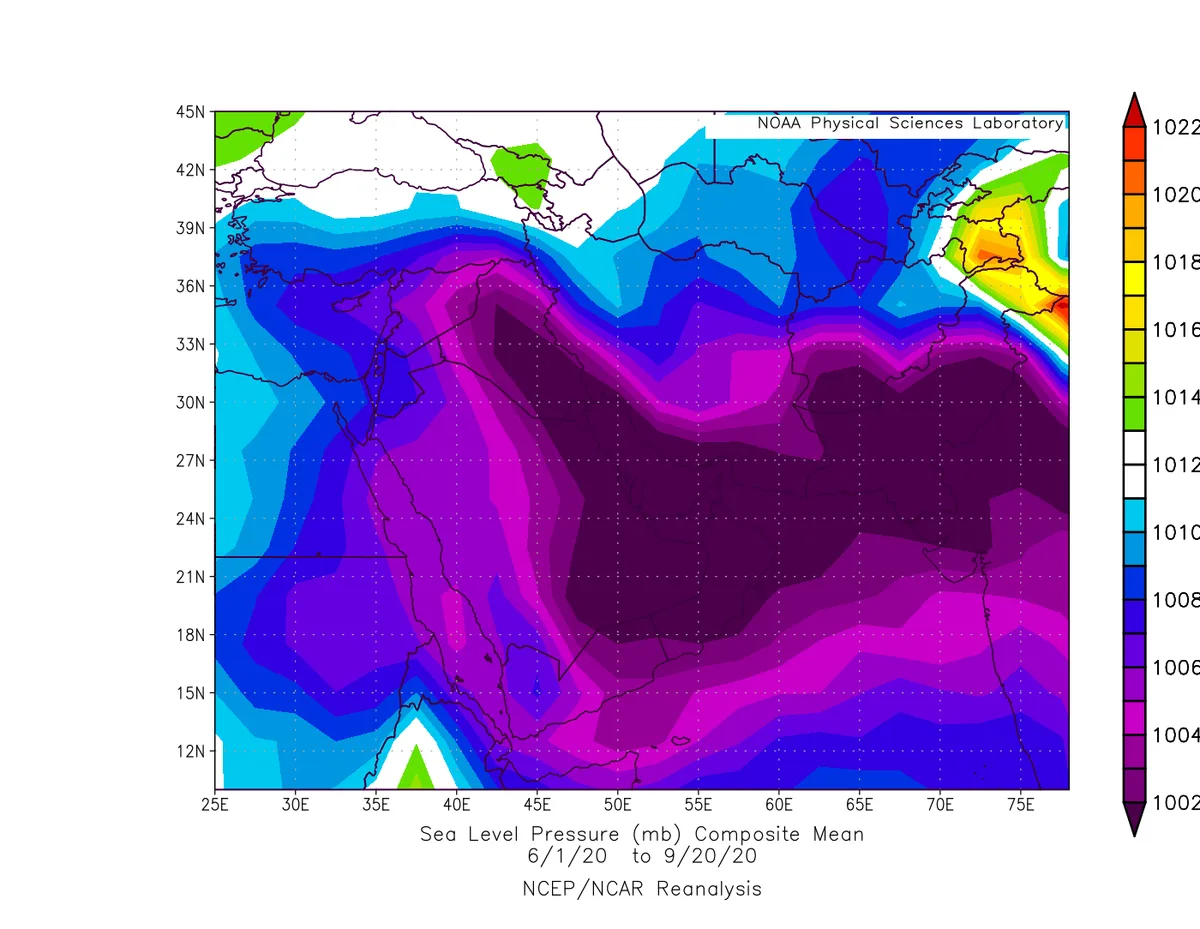
WASM – The Arabian Peninsula and the Levant region are affected by a distinctive summer weather system that causes special weather conditions in the region with dry waves and severe heat in most areas, moderate weather in the Levant, and heavy rainfall in southern Saudi Arabia, Yemen, and Oman.
The Indian Monsoon Low is considered the primary cause of these distinctive and varying weather conditions for the Arabian Peninsula, and weather conditions change successively according to the shape of this weather system from one summer to another. Since it is a shallow yet massive thermal system that extends toward three continents, it is greatly affected by weather systems and weather patterns in the mid-to-upper latitudes that continue with partial activity during the summer season.
The Indian Monsoon Low causes heat waves toward the Levant and Turkey regions during many periods, which are characterized by moderate summers compared to surrounding areas.
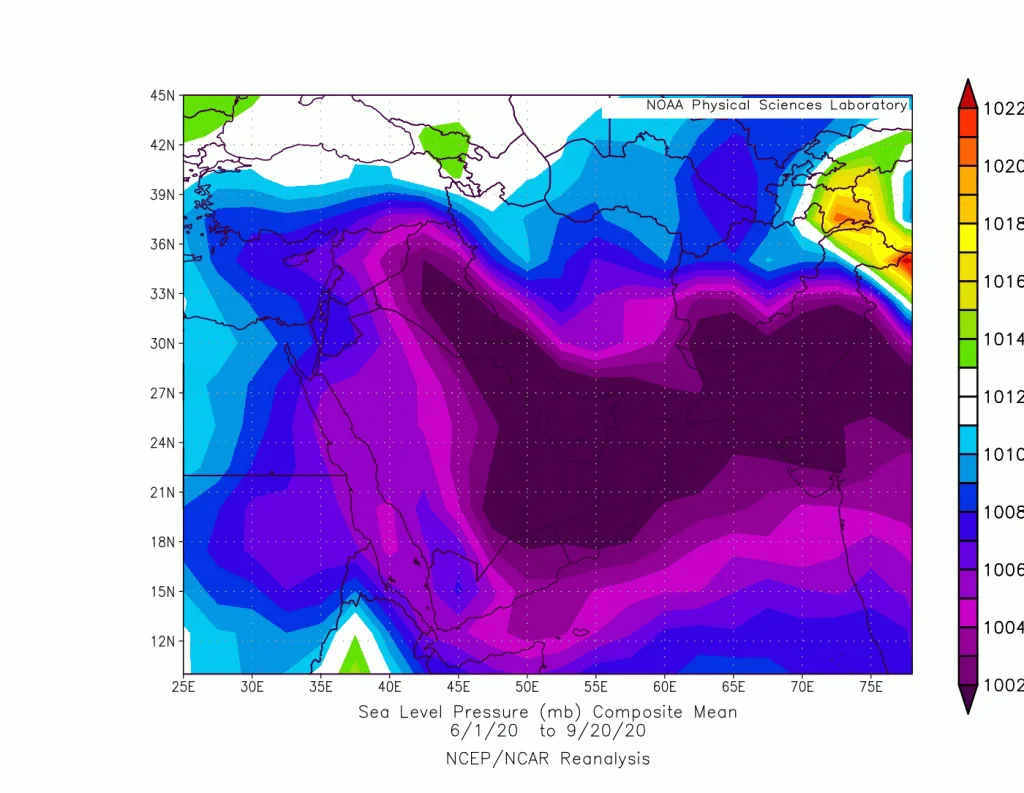
The Indian Monsoon Low..
A massive thermal weather system that extends toward three continents, with its main center located behind the Himalayan Mountains. It extends toward the Arabian Peninsula from the eastern and southeastern directions, and at the peak of its influence reaches the African continent and the southeastern part of the European continent. This system is characterized by vertical shallowness as it is a thermal system, with its thickness reaching approximately 900 meters from the ground as a general average.
This system coincides with an extension of the Azores High-pressure system from the Mediterranean Sea. Since it is a thermal system, it cannot extend toward the Mediterranean due to water heat compared to the hot land. Therefore, specific heat plays a major role in the existence of this system with this magnitude, in addition to numerous dynamic reasons in atmospheric circulation.
The perpendicular and near-perpendicular rays of the sun heating vast areas of India and the Arabian Peninsula reduce air density compared to the adjacent water surfaces that are characterized by high specific heat, of course due to their ability to distribute heat among their parts, unlike land. The center of the Indian Monsoon Low is due to reasons related to air descent and its adiabatic heating behind the Himalayan Mountains and the nature of the Indian Peninsula, which is surrounded by water bodies on three sides extending into the depth of the Indian Ocean region.
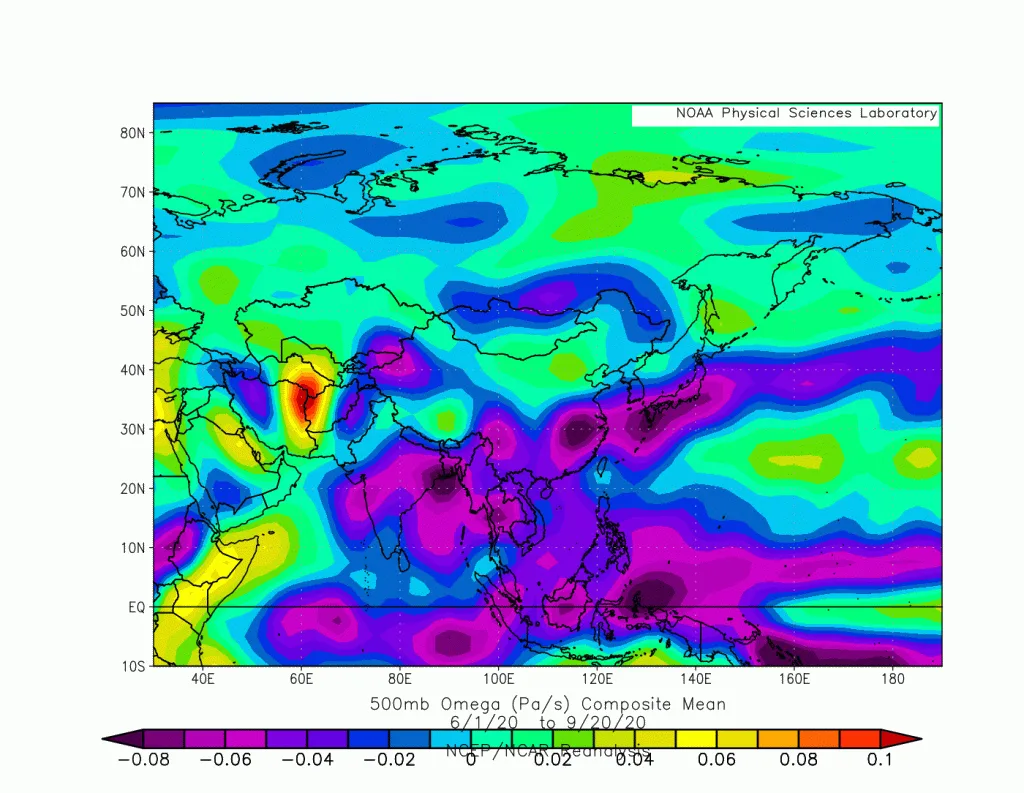
The Indian Monsoon Low strengthens and deepens for dynamic reasons related to the intensification of the tropical Hadley circulation cell and because of the monsoon winds it causes toward India. The moist seasonal winds and their high instability resulting from coinciding with tropical activity due to the Intertropical Convergence Zone (ITCZ) and its massive water vapor content cause strong upward vertical air movement over Indian lands, forming severe thunderstorms and heavy rainfall, releasing enormous thermal energy in the upper atmospheric layers. As a result, air that has lost its moisture and whose temperature has risen expands, especially toward the north, then descends from top to bottom along the subtropical latitudes and above the Arabian Peninsula region in particular, causing great dynamic heating from the upper layers, which naturally coincide with very hot and dry winds rising from the surface layers. This results in the high thermal pressure phenomenon, causing air particles to converge at the friction layers, specifically, and sometimes at the surface level to increase their speed and then their high temperatures, reflecting the phenomenon of intense dynamic heating above the Arabian Peninsula.
These reasons also coincide with counterclockwise wind circulation. Since it is a massively thermal system extending toward three continents, it causes the moist seasonal winds to be pushed in the form of southwesterly winds toward India. At the same time, it causes the surge of very hot and dry winds that have exhausted their moisture and high latent energy into intense sensible thermal energy (which may sometimes exceed 4,000 joules per kilogram of air). These extremely dry winds move toward the Arabian Peninsula in the form of northerly-northwesterly to northeasterly winds and across the Anatolian and Iranian mountains. As a result of their descent from the mountain peaks, they also undergo adiabatic heating.
This massive and distinctive seasonal thermal system is thus accompanied by two types of air masses: the first very moist and unstable from the Arabian Sea, and the second very dry and extremely hot, affecting the Arabian Peninsula and extending to the southeastern part of the European continent.
Since this distinctive thermal system changes its centers and shifts between west and east due to its influence by atmospheric circulation and possibly even local factors, it may cause part of the moist monsoon winds to be pushed toward southern Arabia. If this system shifts westward and deepens toward the Empty Quarter Desert with its secondary center, it causes part of the monsoon winds to be drawn toward the Sultanate of Oman and Yemen.
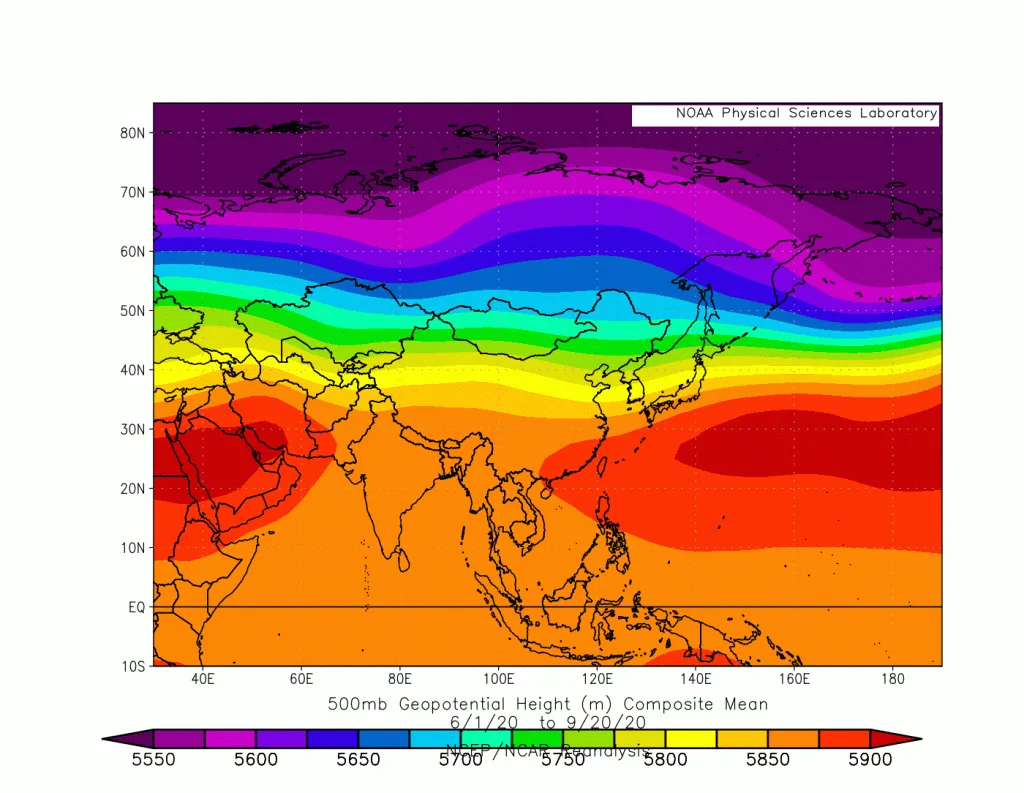
This weather system extends to East Africa and connects with local thermal systems to completely dominate the region's climate and push an important portion of monsoon winds across the Red Sea and the Arabian Sea toward Sudan and areas of southwestern Saudi Arabia and its highlands, causing extremely heavy rainfall in those regions.
As a result of strong and sharp thermal heating at the friction layers and the activity of moist monsoon winds toward the southern coasts of the Sultanate of Oman, especially Salalah, it causes the thermal inversion phenomenon, where clouds and very high humidity are confined below the low layers and below the hot friction layer as a result of weather conditions affecting the Arabian Peninsula.
The heating phenomenon that occurs at the friction layer of the atmosphere has a very significant effect on the extent of weather stability in the Arabian Peninsula region, which is caused by dynamic heating as a result of the natural circulation of the Hadley cell of the atmosphere and the mountains and high topography affected by this phenomenon, which increases the heat of this layer and enhances dynamic heating continuously.
How does the Indian Low cause heat waves?
After learning that the Indian Low is accompanied by a moist air mass that surges toward India causing heavy and continuous monsoon rainfall and another extremely hot and dry air mass resulting from several reasons related to dynamic and adiabatic heating along with the addition of radiative heating, as this thermal system extends toward northern Saudi Arabia and the Levant, it causes the very dry and hot part to surge toward those regions, leading to a temperature rise and the occurrence of heat waves.
If this thermal system deepens strongly and sharply westward, especially if it coincides with a weakening of the Azores High-pressure system in the Mediterranean due to reasons related to atmospheric circulation, and also coincides with hot descending winds from the upper and middle atmospheric layers, this causes a strong heat wave and temporary weather conditions above the Levant regions similar to what occurs above the Arabian Peninsula throughout the summer. This causes the intensification, displacement, and strong westward extension of this system. These conditions also coincide with local humidity confined to the lower layers due to air stability and as a result of the heat of the friction layer in the regions of eastern Saudi Arabia and Kuwait, and possibly extending to the Riyadh region sometimes. This organization also coincides with the transfer of heavy rainfall even to the regions of Mecca and Medina and possibly some interior parts of Saudi Arabia.
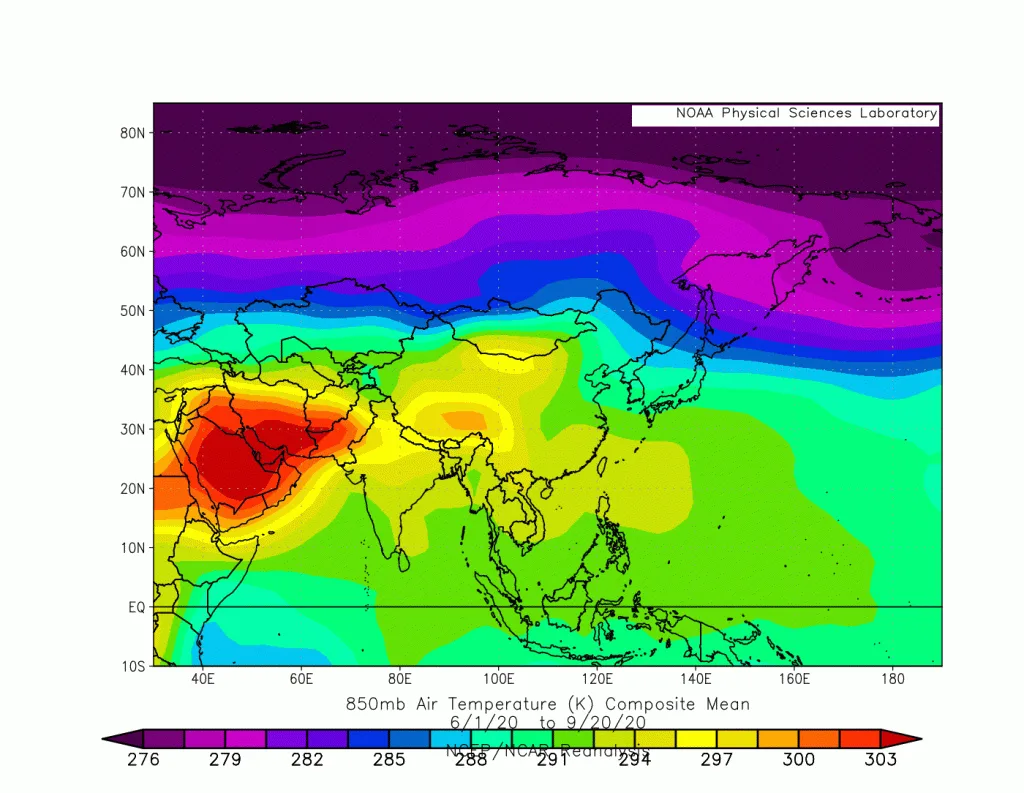
Changes in the Indian Low system..
With rising temperatures in recent years, a more intense deepening and extension of the Indian Monsoon Low has been observed, reaching its peak between 2010 and 2021. It caused the pushing and reaching of moist monsoon winds sometimes even to the depths of the Arabian Peninsula, which is a rare occurrence, causing unusual and heavy rainfall in many interior regions. This resulted in a change in the direction of monsoon winds toward the Arabian Peninsula.
Because of this weather organization, heat waves reached their peak impact on the Levant region during these years, with the strongest in 2020. Due to the intensification of strong heat waves toward Europe, specifically Central and Western Europe since 2021, the center of the Indian Low has extended more forcefully toward the southeastern and southern parts of the European continent, causing a decline in heat waves in the eastern Mediterranean region since that date and the blowing of more unusually warm and humid westerly winds.
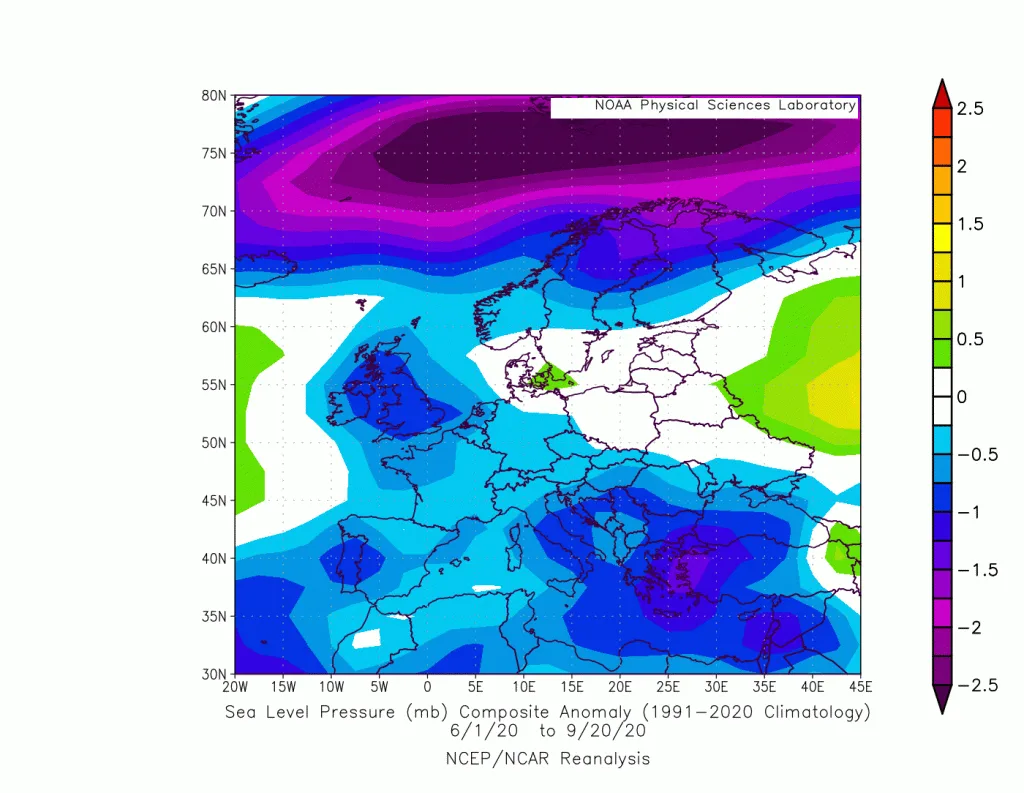
The warming of the Mediterranean Sea, many of whose causes remain unknown and which may be a result of very active geological movement, has caused an increase in the concentration of the seasonal low above Turkey and the Cyprus Basin, causing an increase in the intensity of humidity waves toward the Levant and even its interior regions, as observed in recent years, where the intensity of heat waves has declined and the intensity of humid waves toward the eastern Mediterranean has increased.
Weather systems subordinate to the Indian Low..
After learning that the Indian Monsoon Low is a distinctive, massive, and large system that affects three continents during summer and causes different weather conditions, there are thermal systems subordinate to it, the most important being the Arabian Thermal Low, which is centered above the Empty Quarter, as well as the Iraqi Thermal Low, which is centered above southern Iraq and northeastern Saudi Arabia. This center forms as a result of strong adiabatic descent behind the mountains of Turkey and Iran, which enhances the strength of its center.
With the end of the summer season, another center is formed called the "Saudi" Thermal Low, which is centered around northern Saudi Arabia and even eastern Jordan and sometimes causes sharp heat waves during the second half of July until the end of August.
The Indian Monsoon Low is one of the most important thermal weather systems during summer, covering a large portion of Asian regions, southeastern Europe, and even East Africa, coinciding with the most important circulation in the atmosphere, which is the circulation of the Hadley cell. Its effect reflects not only on these regions, but its influence later extends to different parts of the atmosphere and in a different way due to the nature of atmospheric circulation and its interconnectedness.
This system is also affected by the heat of the Indian Ocean region and the way heat varies between its different parts and its effect on tropical activity and the movement and activity of monsoon winds. It also causes strong activity of tropical waves, especially with the beginning and end of summer, causing tropical storms and hurricanes in the Indian Ocean region.
Linking the activity of this system with the activity of the main tropical waves that rotate with atmospheric circulation and the heat of water bodies reflects much in the way of its extension, deepening, and causing heat waves or rainfall rates.
It was observed during El Niño years a greater extension of this thermal system toward the west and even to eastern Europe, causing strong heat waves. Due to excessive activity greater than the usual activity of tropical activity on both sides of the Southeast Asian tropical region (over the Pacific Ocean and over the western and central Indian Ocean areas except the Somali coasts due to the cold water circulation caused by monsoon winds), this causes more intense dynamic heating above the Arabian Peninsula and the Middle East and toward eastern Europe, as well as enhancing atmospheric heating and increasing rainfall rates significantly above India and regions located to the west and center of the Indian Ocean.
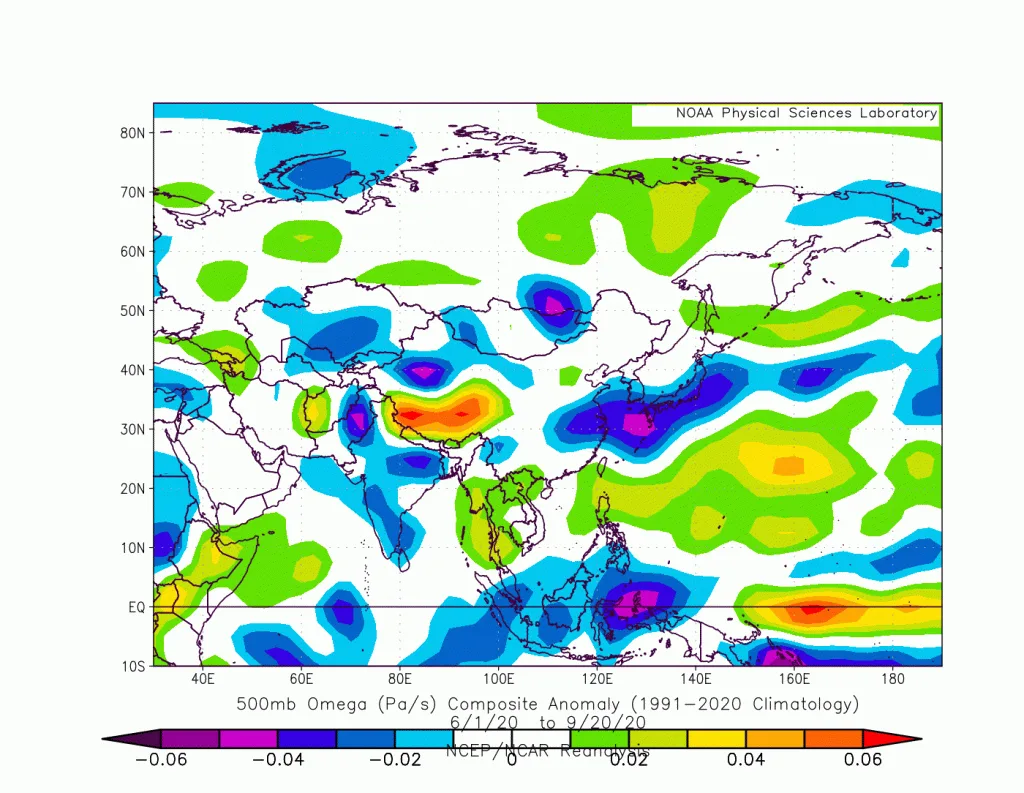
Summer 2020 was identified as an important example for this scientific report and a condensed study as the best example of the nature of the Indian Low and the changes that have occurred to it in recent years, and to facilitate the study of the results that occurred in recent years.