
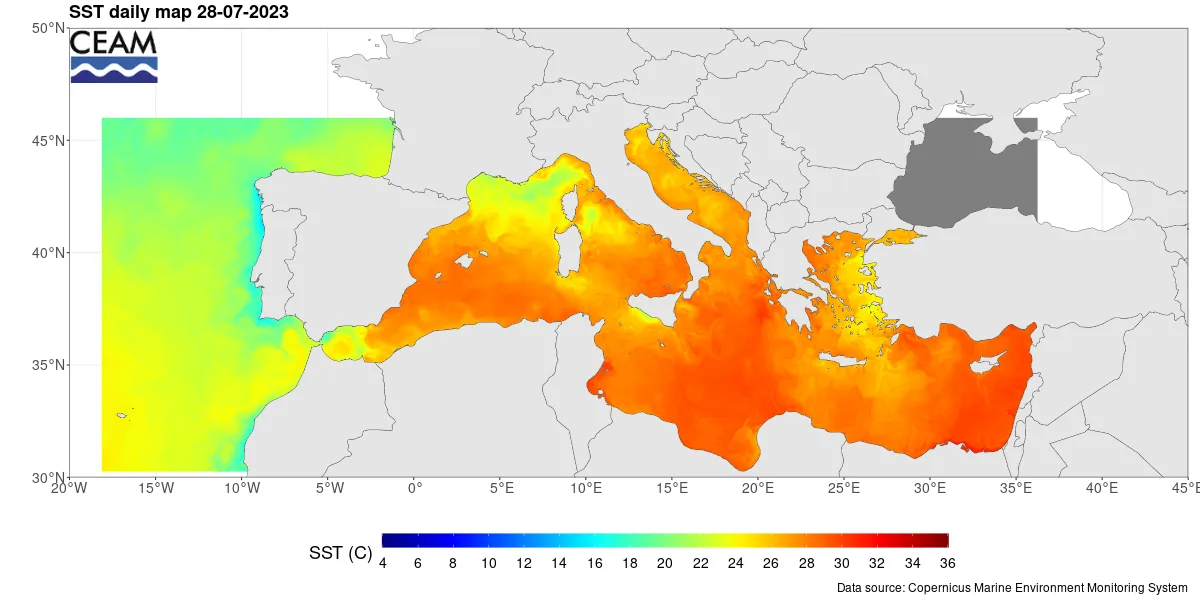
WASM- Regions of the western and central Mediterranean were affected by "severe and unprecedented" heat waves that caused temperatures to reach record levels in Algeria, Tunisia, southern Europe, and parts of Greece.
Temperatures reached approximately 50 degrees Celsius in Tunisia and 49 degrees Celsius in parts of southern Europe. These severe and unprecedented heat waves in modern climate records caused a rise in Mediterranean Sea water temperatures (this does not mean they did not occur before modern climate records).
Reasons for this severe heat wave..
With the analysis by experts from the WASM Regional Center regarding the cause of this severe heat wave, there are reasons stemming from atmospheric circulation, and other dynamic causes arising from a sudden change that occurred in the tropical region.
- Extreme atmospheric patterns in the far north of the Atlantic Ocean..
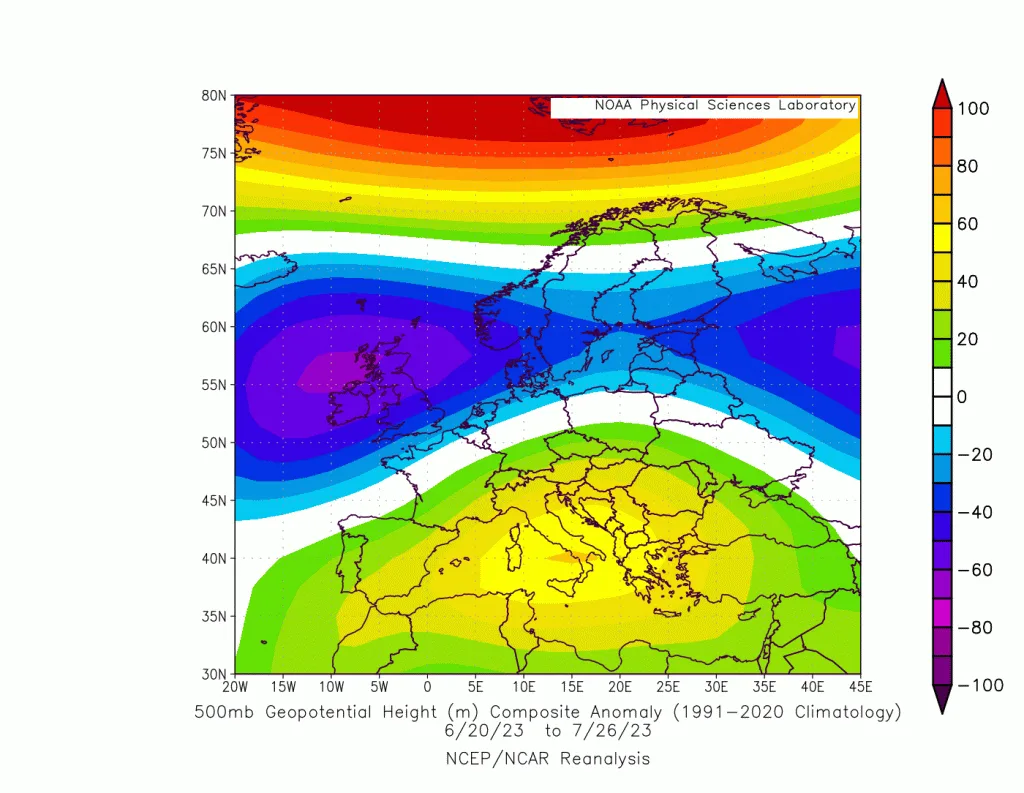
The consequences of rising temperatures in northern Atlantic Ocean waters caused the formation of unusually strong storms for the summer season in the far north of the Atlantic Ocean region that were intensifying toward the west and northwest of the European continent at speed. This caused extremely hot winds originating from the Sahara region to be pushed toward the western and central Mediterranean. This reflects a strong positive Arctic Oscillation around the North Pole region and continuing in certain periods since the previous season with extremes occurring in some periods.
This coincided with intensification in the speed of the jet stream (which are strong currents that blow at high altitudes separating different air masses). This resulted in trapping the hot air mass in vast parts of the western and central Mediterranean and even parts of Greece and southern Turkey, and southern Europe, with temperatures rising to record levels. Although these severe heat waves did not extend to the Levant and the eastern Mediterranean, they caused temperatures to rise above their seasonal averages in some areas.
- High (dynamic) activity in the tropical region ..
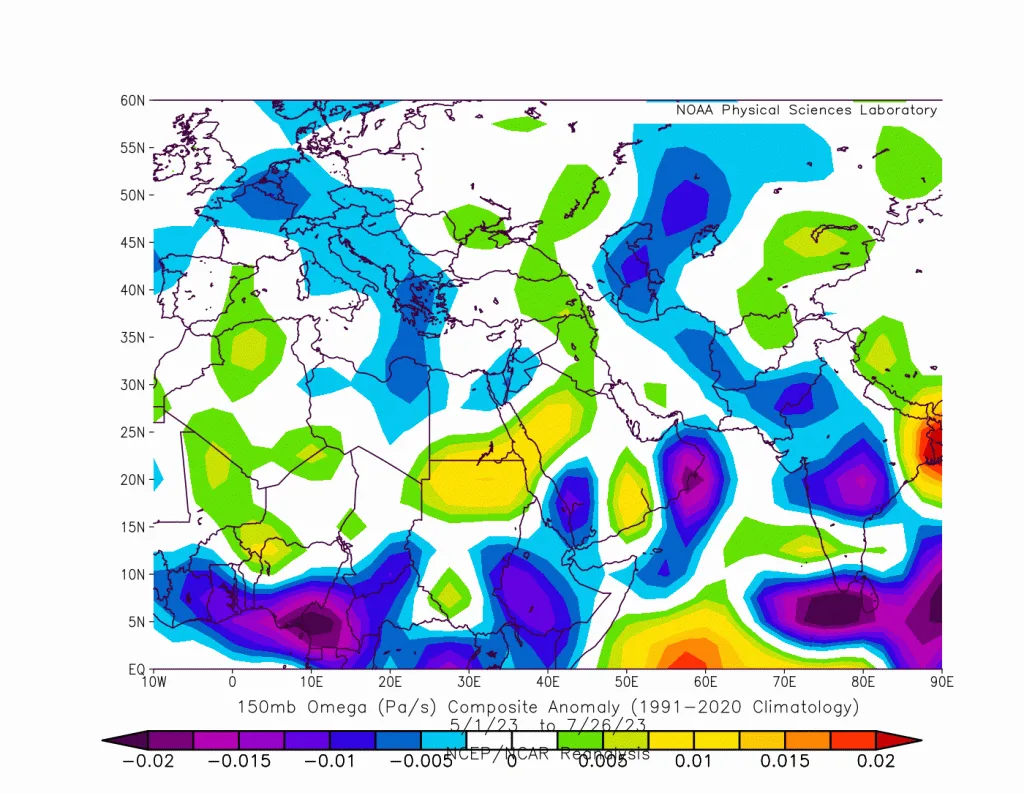
There has been much discussion about the El Niño climate phenomenon causing intensified heat waves. Despite some exaggeration in describing hot weather events in various parts of the world as if they are occurring for the first time, the El Niño phenomenon does indeed cause very high tropical activity in numerous tropical bands, the most important of which are the Pacific Ocean region and then the Arabian Sea region. This results in acceleration of tropical circulation or what is called (the tropical Hadley cell).
The activity of this cell causes a sharp descent in the currents descending from the equator to both sides of this line. This causes "dynamic" thermal elevation, meaning that excess tropical activity causes a strong descent of currents on both its sides from latitude lines. This discharge occurs in subtropical regions, specifically over the Sahara Desert, the Arabian Peninsula desert, southern United States, and several other global bands.
The increasing tropical activity in the Horn of Africa region and parts of the Arabian Sea at the beginning of summer caused strong dynamic heating in the Sahara Desert region and the formation of a strong atmospheric high over the western Mediterranean and southern Europe. This activity coincided with the strength of Atlantic storms, resulting in an amplification of the severe heat wave in southern Europe and North Africa.
The problem is not only heat waves but thermal extremes in the atmosphere..
Although many media outlets focus only on heat waves, the main problem in the atmosphere is more complex and more dangerous than (heat waves). There is a sharp thermal extreme in the atmosphere that increases the danger of climate change.
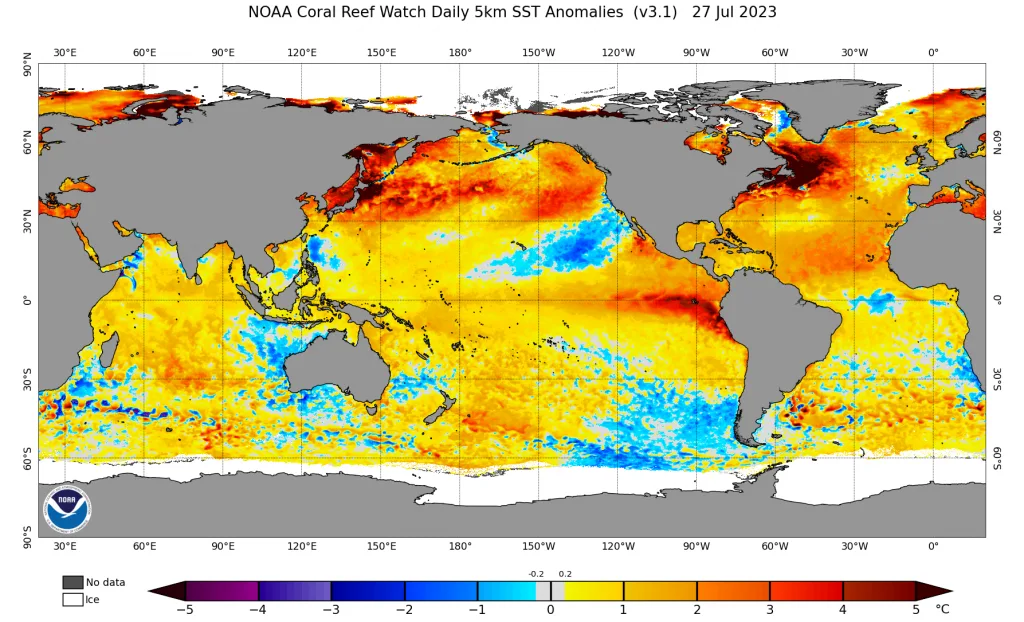
Many regions of the world are experiencing cold and rainy summers, and in some areas it has reached snow falling in an unprecedented and rare manner. The reason goes back to the atmosphere's inability to perform thermal balance due to sharp changes that occurred to it because of rising temperatures in the oceans and surrounding seas. Rising temperatures in the ocean and sea world causes a disruption in thermal balance.
Rising temperatures in the Atlantic Ocean region have caused a strong and sharp development in northern Atlantic storms. The same applies to the northern Pacific Ocean region. Thermal extremes in various oceans on Earth will cause an increase in the intensity of winter storms at a later time and will become more complex with the expected sharp atmospheric waves which will cause extreme thermal transfer between the North Pole and subtropical and tropical regions. This will result in "bad and extreme weather conditions around the world".
The problem is not the appearance of severe heat waves, but the coincidence of these severe heat waves in lower mid-latitudes with strong cold waves and rare summer occurrences in higher mid-latitudes, which reflects a disruption in the thermal transfer process in the atmosphere.
Will severe heat waves repeat in the western Mediterranean?
Severe heat waves will strike the western Mediterranean region but will begin to extend toward higher latitudes during next August, signaling a change in the shape of the atmosphere, especially with the amplification of the El Niño climate phenomenon. It is expected that this will coincide with the amplification of tropical activity and the extension of seasonal rains to areas that do not usually experience such heavy rains, and the extension of severe heat waves to distant areas in higher latitudes that may reach the North Pole region, and cold and rainy waves to mid-latitudes and subtropical regions in other areas.
These climate extremes will suggest bad climatic conditions during the upcoming rainy season in many parts of the world, which will concentrate in the south and west of the United States and the far northwest of the European continent, and the eastern and central Mediterranean region, the Levant, and the Arabian Peninsula, and vast parts of eastern and northern Asia, while other regions will experience very warm and severe dry waves that will concentrate in the western Mediterranean region and the southwest of the European continent.