
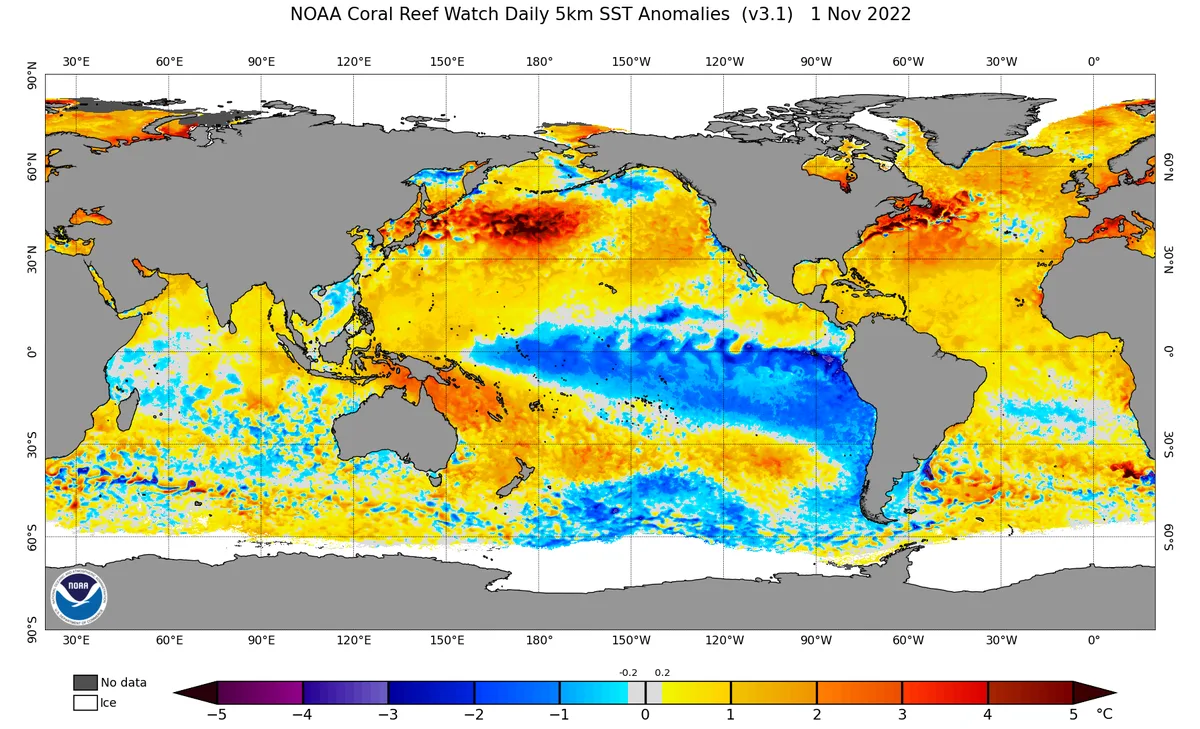
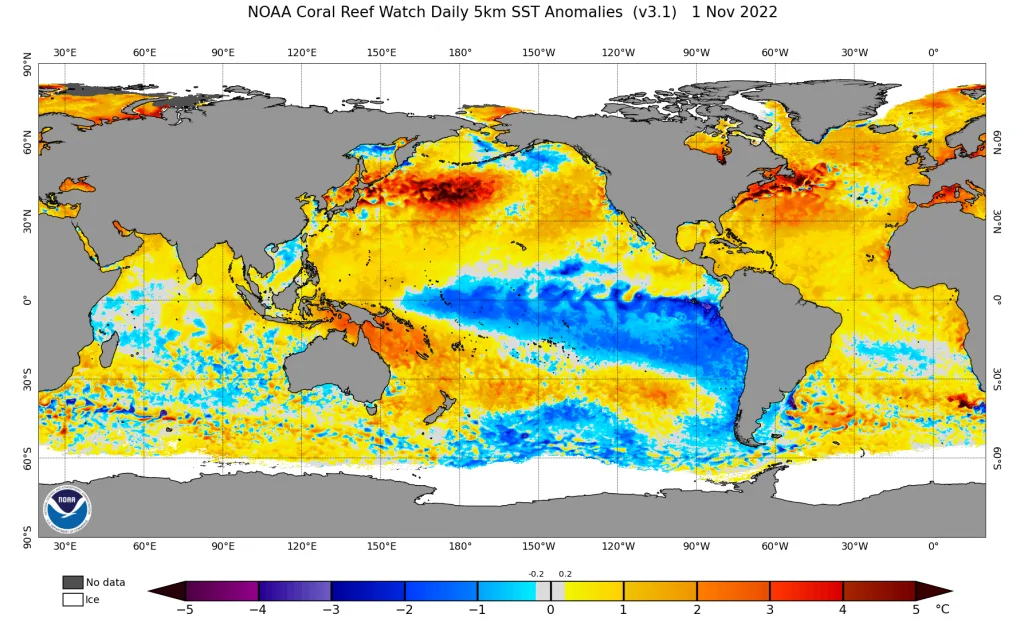
WASM- The North Atlantic region recorded the highest temperature rate in the history of modern climate records, with an increase of 0.668 degrees Celsius above its average and recorded 23.9 degrees Celsius based on data from the U.S. National Oceanic and Atmospheric Administration –NOAA- in September 2022.
Many oceans and seas around the world also recorded large and historic temperatures, most notably the North Pacific and the Mediterranean Sea, as a result of rising global temperatures, which resulted in sharp climate changes in many regions of the world.
This is calculated using a method called AMO – Atlantic Multidecadal Oscillation Index - between latitudes 0 and 70 north in the Atlantic region through NOAA, the U.S. National Oceanic and Atmospheric Administration.
Its regional and global impact..
High temperatures in the North Atlantic region cause high and significant activity on North Atlantic storms, or what are called "sub-polar storms" that strike areas south of Greenland, Iceland, the British Isles, and northern Scandinavian regions.
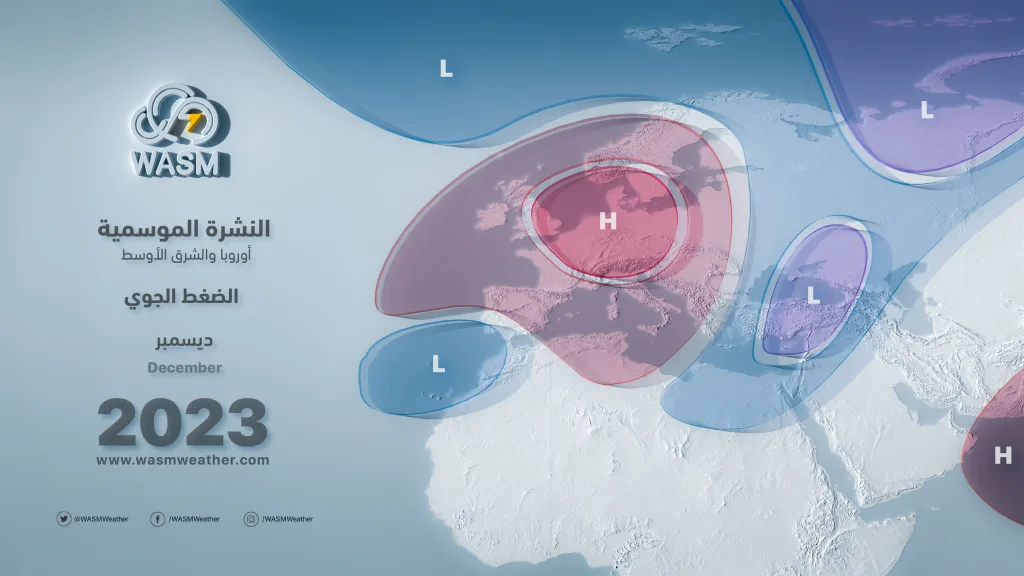
The strength of North Atlantic storms increases the activity of warm currents in the sub-tropical Atlantic regions and northwest Africa, which in turn strengthen and fortify the Azores High pressure system over the European continent, which originally derives its strength from dynamic causes.
The strength of the Azores High pressure system means preventing moist Atlantic westerlies from advancing toward wide areas of Europe, the Mediterranean, and the Arab Maghreb, which results in long dry and warm periods, or successive severe heat waves during summer.
What originally enhances the strength of this high-pressure system is the temperature differences between the coasts of the European continent and the European interior, and the high original dynamic activity. The warmth of the Atlantic Ocean and strong Atlantic storms multiply these factors, which portends "long-term" climate changes on the European continent and severe activity of sub-polar Atlantic storms in the future, and will also warn of the direction of tropical storms toward the coasts of Western Europe and the British Isles.
It will also lead to a change in tropical wave activity in North America to surge from the tropical region to the east Atlantic and the Gulf of Mexico, making tropical storms worse and more powerful over North America.
Local impact..
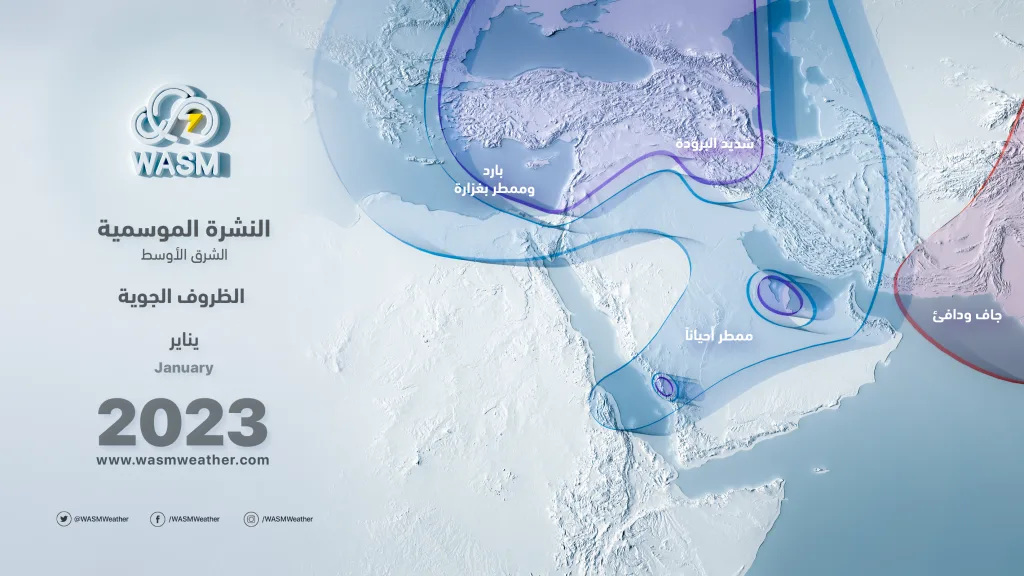
With the strength of the high-pressure system over the European continent, this will lead to strong and direct polar surges from the Arctic region and Scandinavian Islands toward eastern Europe and Siberian regions. This in turn leads to these polar air masses reaching the Black Sea and Turkey and then the eastern Mediterranean region.
The increasing warmth of the eastern Mediterranean in recent years enhances the activity of the Mediterranean front or the maturation process of Mediterranean lows more rapidly than in previous years. This in turn leads to the speed of polar air arrival and the jet stream surge far from Jordan and the southeast Mediterranean, causing a greater number of Mediterranean depressions to reach and a significant increase in rainfall rates in wide areas of Jordan, Palestine, northern Egypt, the Tabuk region, northern Saudi Arabia, and Iraq.
Indeed, Jordan, Palestine, and northern Egypt have recorded "high" rainfall rates in recent years that exceeded 150% of their normal averages, and this figure is expected to rise to approach 200% in the coming years as climate change in the region intensifies.
Therefore, it is not permissible to link climate changes only to droughts and heat waves, as climate changes differ from one region to another. What happens in Europe does not mean it will happen in the Middle East, southern United States, or Siberian regions. Therefore, WASM advises caution regarding media outlets' misunderstood coverage of climate changes, and recommends only following scientific sources to understand these changes.
Its impact on the Arabian Peninsula region..
Given the approach of cold and polar air masses to the Arabian Peninsula region, this means sharp extremes in weather conditions, especially an increase in the number of dust and sand storms, which has been observed in recent years, but at the same time an increase in the number of "extreme and powerful" rainy seasons and an increase in the chances of strong and sudden flood cases.
This leads to an increase in the variation of rainy seasons "large rainfall oscillation" and the power of dust storms. In recent years, there has been a deepening of monsoon winds in summer toward the Arabian Peninsula, coinciding with rising global temperatures.
Linking rainfall rates in the Arabian Peninsula with increased polar air flow toward the Arabian Peninsula is more complex, especially since rainfall rates depend heavily on tropical circulation in the Indian and Pacific Ocean regions, which has become more extreme in recent years, which will reflect a large variation in rainfall rates in the coming years
.
What are the solutions?
It is difficult to stop sharp climate changes in the world, but it is easy to adapt to them and find solutions that can benefit from these climate changes through "adaptation".
It is possible to make more use of renewable energy in the European continent, especially with the decrease in rainfall, rising heat, and an increase in dry waves, which will reduce emissions and help improve the climate in the future, but this will require a long period of time that may exceed 100 years.
With increasing rainfall rates in the Middle East and Jordan, it is possible to change agricultural crops and build more dams for good water harvesting.
Adaptation is the best solution to face the current "climate crisis," concurrent with finding solutions that reduce emissions gradually.