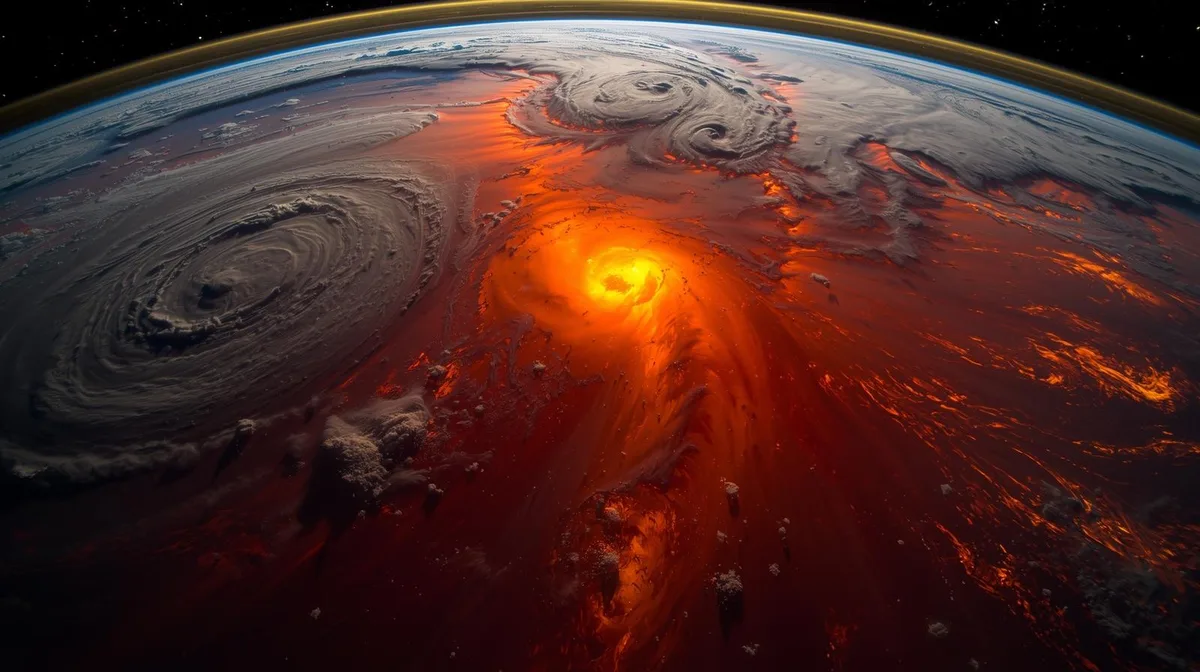
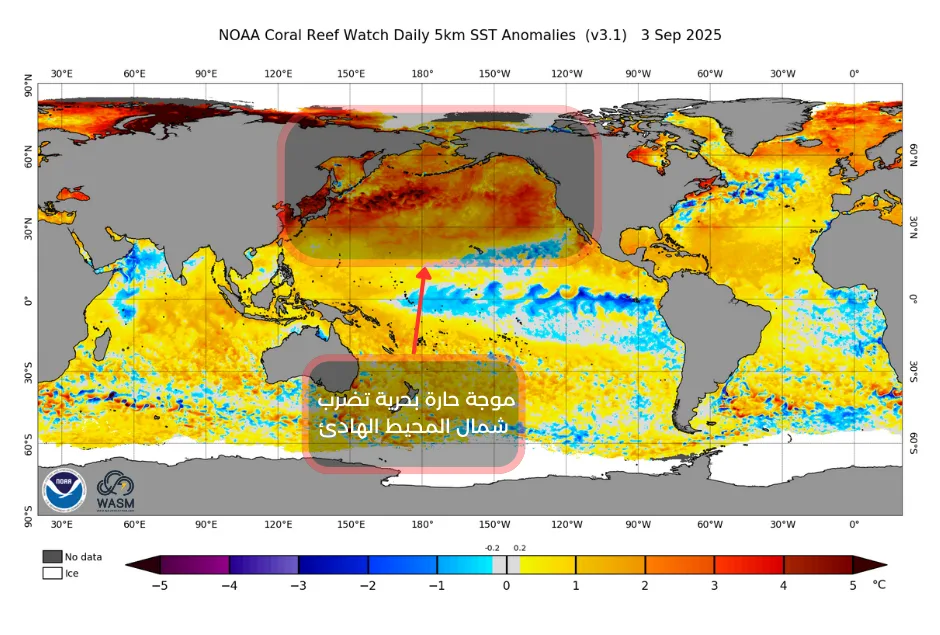
WASM – The North Pacific is experiencing the worst heat wave in modern climate records, with temperature rates exceeding +3 degrees Celsius above seasonal averages, and this marine heat wave covers an area of more than 75 million square kilometers, extending from the coasts of China to the western coasts of North America.
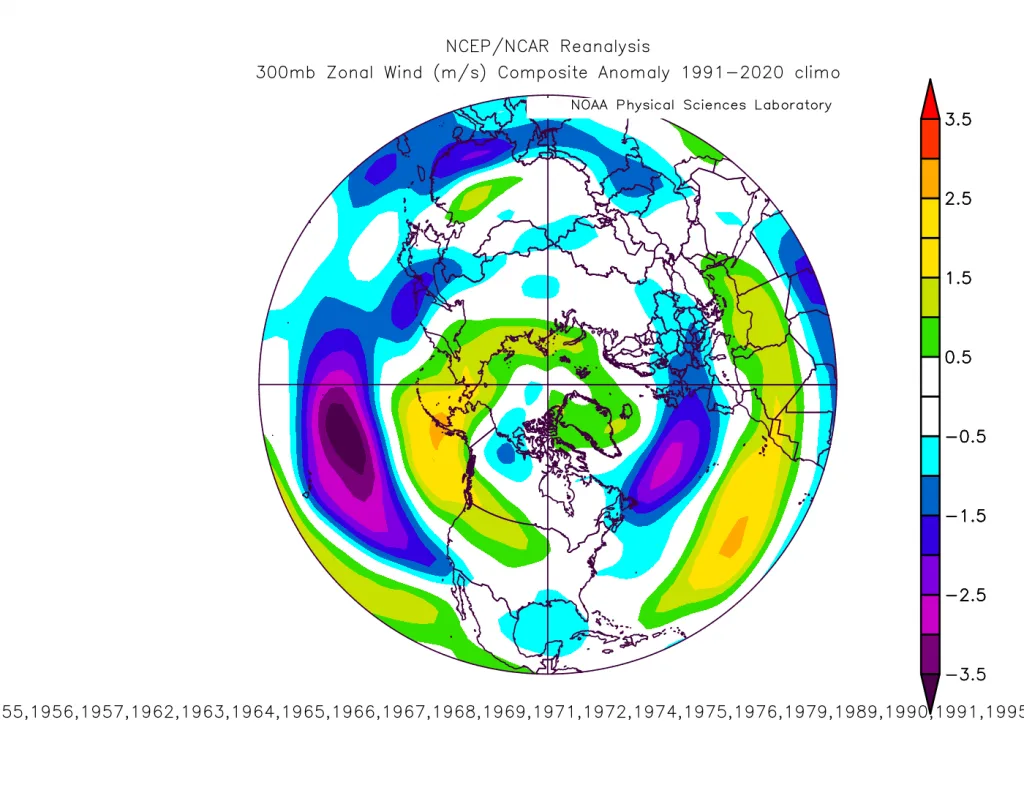
This massive marine heat wave, which is not expected to end soon, is causing a significant intensification of the polar vortex over the North Pacific region and even the United States, causing a major disruption in the thermal balance process in the atmosphere.
The causes of this massive marine heat wave remain unknown, and global warming may be a factor in this heat wave, but this cannot be scientifically determined.
Pacific Ocean Records Lowest Thermal Oscillation Since 1880|
The thermal oscillation in the North Pacific Ocean is recording the lowest oscillation since 1880 (the lowest in modern climate records), and the PDO value reached below -4.0 in July 2025, a historic figure resulting from the marine heat wave in the North Pacific.
This heat wave was covering the North Pacific but did not include the coasts of western America. The strange event that occurred during August 2025 was the extension of this marine heat wave to the coasts of Canada and western America.
With the extension of this heat wave to the coasts of Canada, this caused a significant impact on the level of thermal oscillation, which began to decline. In reality, this does not reflect the disappearance of this wave but rather its extension and unprecedented magnitude.
Impacts|
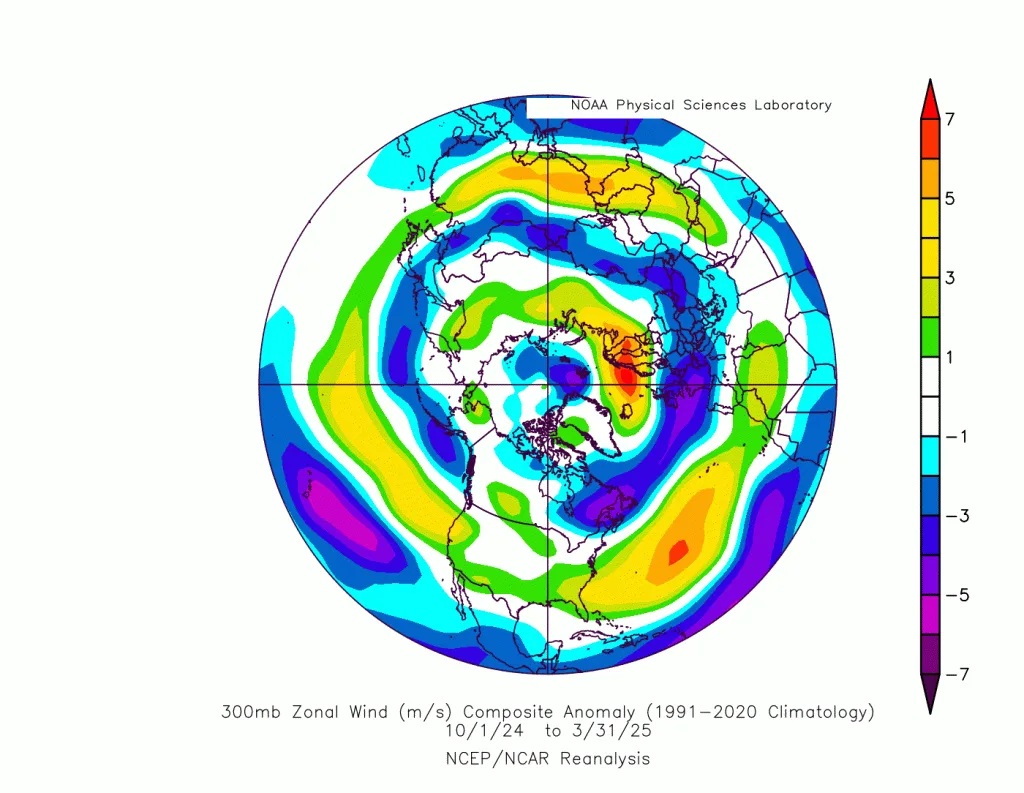
The WASM Regional Center issued an important study on this important climate factor, which had a major impact during the previous rainy season 2024-2025, and this marine heat wave causes a significant intensification of the polar jet stream and traps polar air to rotate intensely around the North Pole region, exposing the mid-latitudes to warmer weather conditions.
And due to expected and overlapping climate factors during the upcoming season, especially regarding the failure of La Niña development expected for the second consecutive season and forecasting a sudden development of the "Modoki Niño" phenomenon during the second half of the upcoming season there will be a sharp weakening of the polar jet stream for the first time in years, causing strong winter storms during the upcoming season in various regions of the Northern Hemisphere.
Tropical Cooling Continues in the Atlantic and Pacific Oceans|
The WASM Regional Center observed that cooling continues in the tropical part of the Atlantic and Pacific Oceans, this may be due to oceanic water circulation and a response to significant ice melting in the Arctic region due to massive marine heat waves in the North Pacific and Atlantic oceans.
This tropical cooling, especially in the Atlantic Ocean, will have a dangerous impact on the subtropical jet stream and the warm Gulf Stream in the future (possibly during the next 5 years) and may cause sudden and dangerous global cooling. The WASM Regional Center will issue an important study on the possibility of this.
This will be reinforced by rising temperatures in the western tropical region of the Pacific Ocean (dangerous development of the Modoki Niño phenomenon) which will have a major impact on the polar vortex in the coming years and increase the extremity of global weather conditions.
Its Impact on the Arab Region|
- Intensification of drought waves in the Maghreb region, especially northern Algeria.
- Large and record rainfall rates in the Eastern Mediterranean region, the Levant, Jordan, Palestine, Egypt, and the western and northern parts of Saudi Arabia and the Arabian Peninsula region in general over the next 5 years.
- Retreat of drought waves in northern Syria and Lebanon compared to previous years.
- Decline in the number of heat waves in the Eastern Mediterranean in summer, but they will be more severe and shorter in duration if they occur.
- Increased chances of snowfall in northern Saudi Arabia, the Levant region, and Iraq during the upcoming rainy seasons.
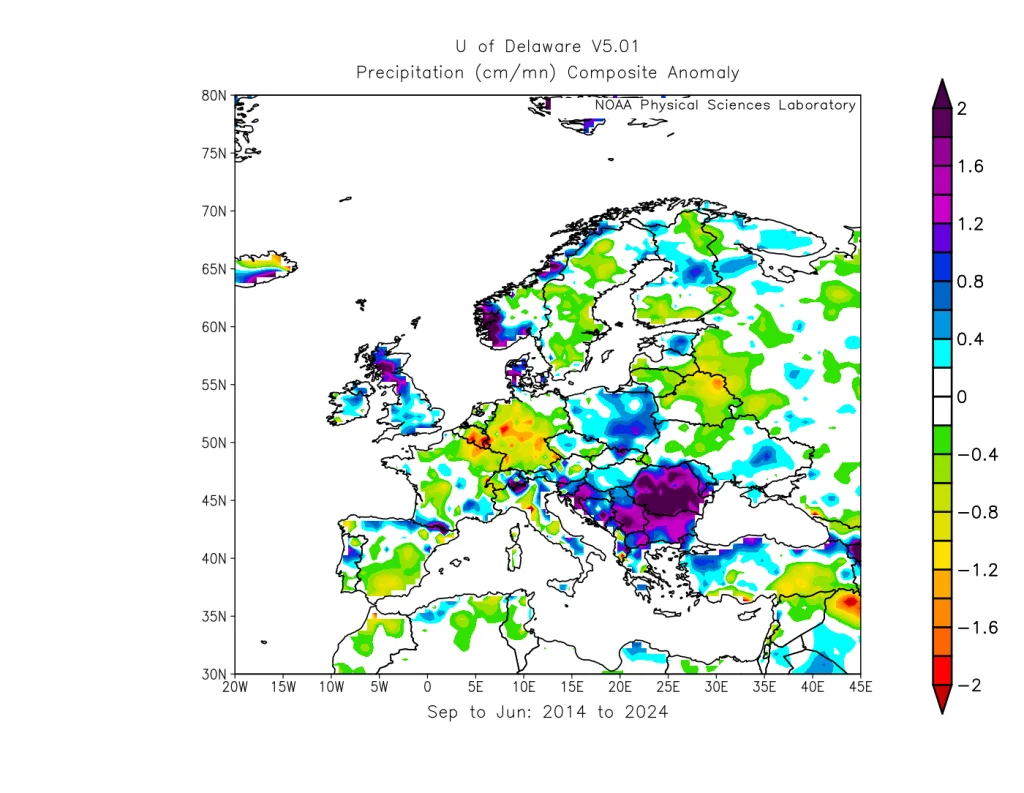
- Intensification of drought and heat waves in a wide range of Europe, especially the western and central parts.