
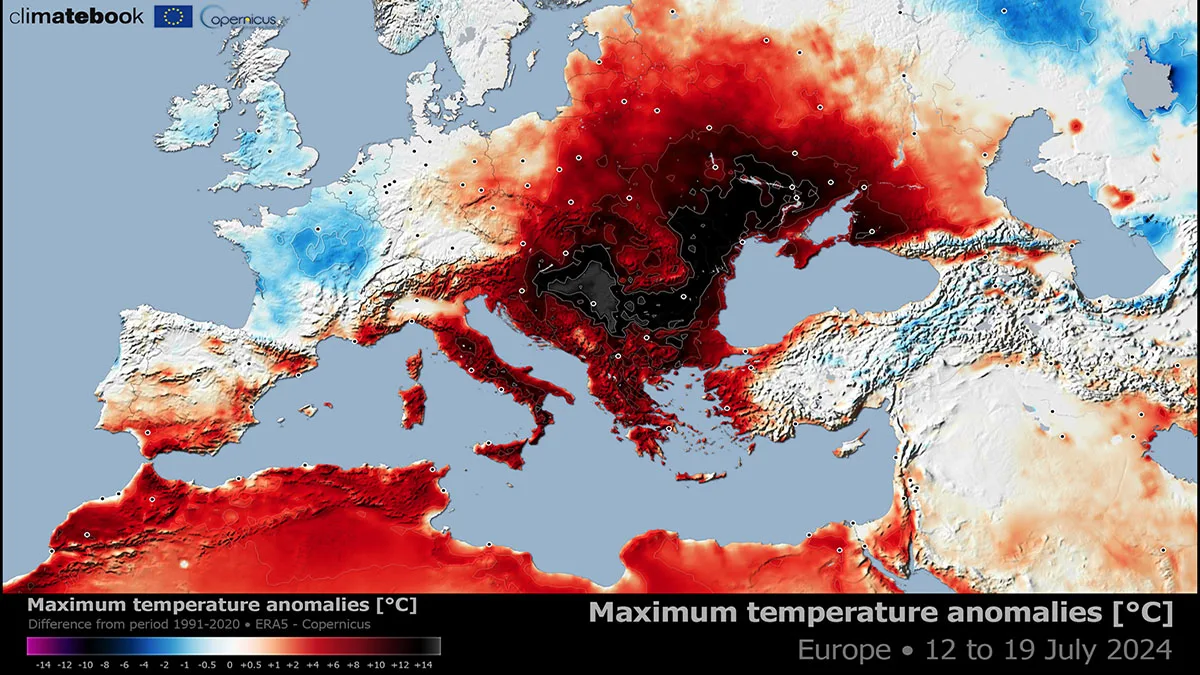
WASM - The WASM Regional Center is monitoring new heat waves expected to move toward the European continent starting next week and lasting for an extended period, concentrated over western and central Europe. This will cause temperatures to rise to levels in the forties in many European cities.
- A strong heat wave affecting the Arctic..
The WASM Regional Center has issued an important report on a strong heat wave striking the Arctic region from western Canadian territories. WASM predicts that the strong heat wave over the Arctic will cause adverse results over Western Europe from the beginning of the impact of severe heat waves toward it during the end of July and until August. Although this is considered bad in those areas, the results of this matter cause cooler summers in the Mediterranean region and the Levant, with the exception of the western Mediterranean region.
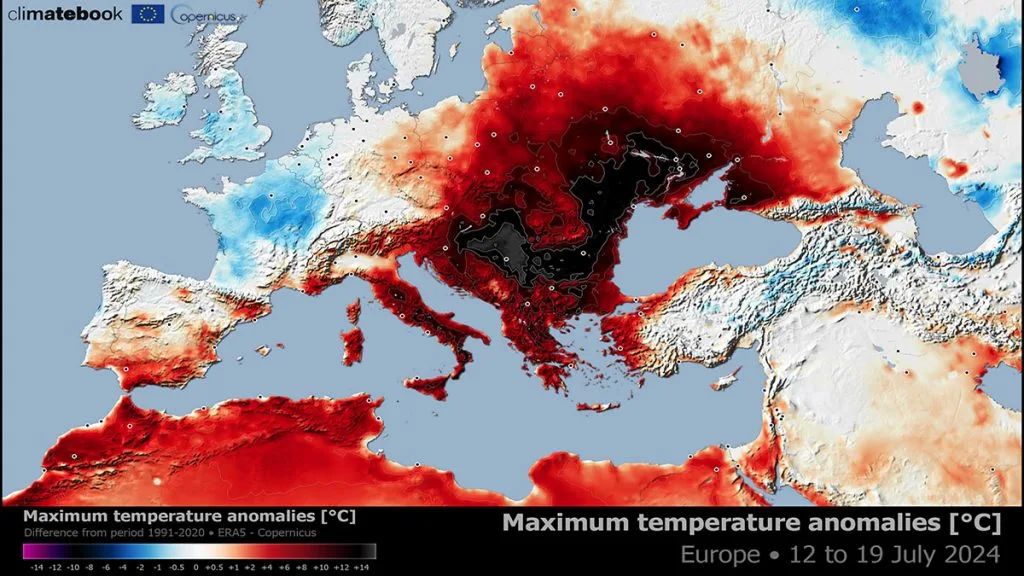
Heat waves will reach the British Isles, France, and Germany..
It is expected that these heat waves will affect western European regions clearly this time and unlike the previous period which concentrated on central and eastern Europe. At the same time, temperatures are expected to decline noticeably toward southern and southeastern Europe, eastern Europe, and even the eastern and central Mediterranean region, Turkey, and unusually for the season, as this period is considered the hottest seasonally in this region.
Heat waves will continue until the end of August in the European continent..
Temperatures will be very high over a wide range of Europe, especially central and western Europe, which sometimes extend to eastern Europe, while areas of southeastern Europe and the eastern and central Mediterranean remain far from these heat waves.
Scientific Analysis..
The WASM Regional Center issued its report forecasting a strong heat wave toward the Arctic region, which is expected to cause this major change in atmospheric organization. A very significant weakening of the polar jet stream was observed, which had been strong since the end of July 2023 and reached its peak strength during winter. This caused strong polar circulation in polar and sub-polar regions, resulting in trapping of polar air more toward those areas and isolating this circulation in many cases from circulation in tropical, subtropical, and mid-latitude regions.
With the impact of the El Niño climate phenomenon, which causes significant dynamic heating in subtropical and lower mid-latitude zones resulting from high tropical activity in the Pacific Ocean region, which also reinforced the strength of the polar jet stream ultimately, this caused significant heating in the mid-latitude zones specifically and resulted in delaying snow storms from many regions of the world, which clearly affected Jordan, the eastern Mediterranean region, and Saudi Arabia. Those areas were affected by a warm and heavy rainy season.
With the expected end of the El Niño climate phenomenon and the decline in heat near Canadian coasts and also the tropical and subtropical Atlantic Ocean region, this caused a major impact on polar jet stream activity, and a "near collapse in its circulation" was observed over western Canadian territories and also central and eastern Europe. This sharp weakness is expected to shift to different regions of the world, resulting in alleviating the major heat pressure concentrated in mid-latitude and subtropical zones toward the Arctic and upper latitudes, which is what caused severe heat waves toward Europe, North America, China, and the Arctic region.
The analysis of these results and their study through the results of the climate model at WASM has been clear since the beginning of summer, but temperatures higher than their seasonal averages result from the heat of the seasonal northwest winds affecting Saudi Arabia, Iraq, Jordan, and the Levant. These winds were hotter than usual by approximately one and a half degrees Celsius in some periods due to the Mediterranean Sea being hotter than its averages by approximately 4-5 degrees Celsius, which increases humidity levels and cloud cover in some areas, especially northwestern Saudi Arabia and Levantine countries and northern Egypt. With the intensity of heat waves over eastern Saudi Arabia, Iraq, and Kuwait, this caused the intensification of northwest winds in many periods toward northwestern Saudi Arabia and the eastern Mediterranean region, in addition to the acute heat wave that occurred in mid-June.
The seasonal temperature rate will drop noticeably during the coming period with increased humidity levels, which will reflect on high agricultural production in some areas of the eastern Mediterranean, Jordan, and northern Saudi Arabia.