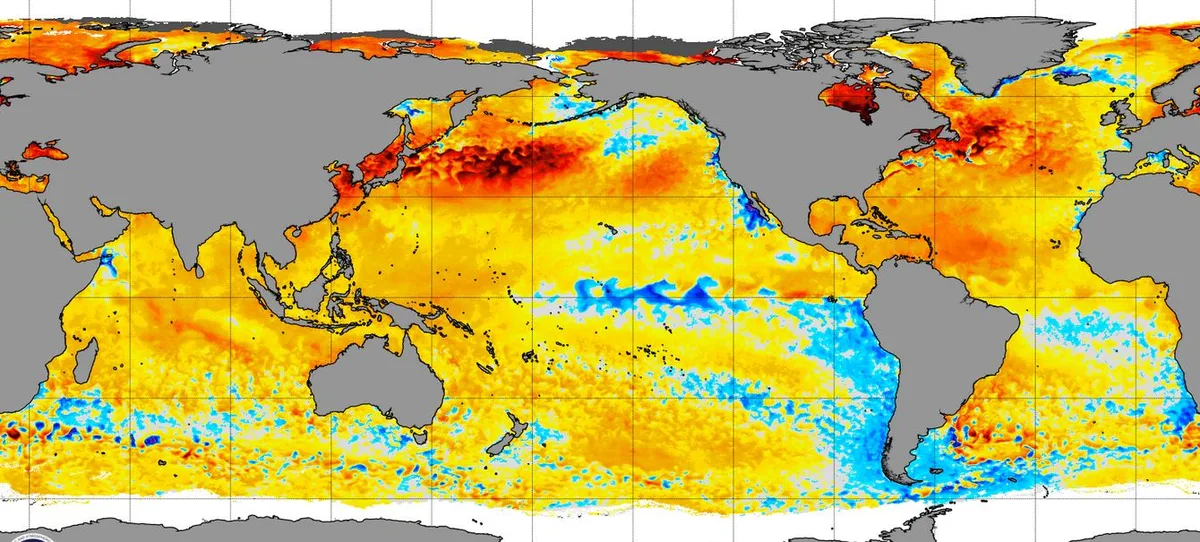
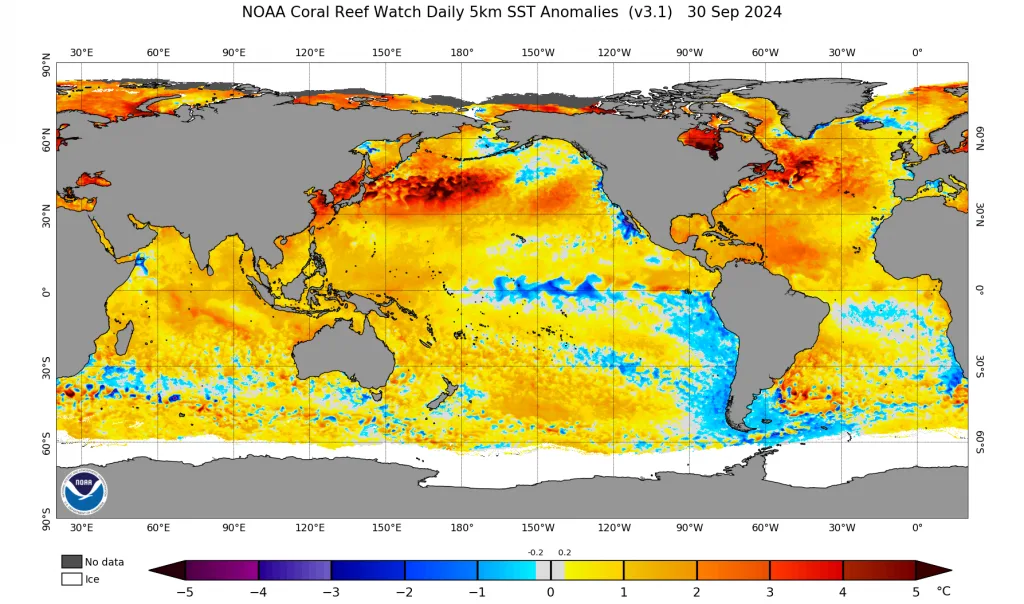
WASM – WASM Regional Center is monitoring a significant increase in temperatures in the tropical region of the Pacific Ocean and in record time. Contrary to expectations from American climate models that pointed to the development of a "strong La Niña phenomenon," matters have now begun to move in the opposite direction. WASM Regional Center issued a scientific report during the summer ruling out significant development of the La Niña phenomenon for several scientific reasons!.
Temperatures in the tropical region of the Pacific Ocean play a very significant role in atmospheric circulation and affecting the subtropical jet stream primarily, which causes different global weather conditions and different atmospheric circulation patterns.
Trade winds collapse and westerly wind bursts in the tropical region|
Trade winds were studied over the last 10 days and a rapid collapse of these winds was observed after they had improved relatively, to the extent of westerly wind bursts occurring in the western region of the tropical Pacific Ocean in a completely unexplained manner, as this type of wind blows during El Niño phenomena. This resulted in the appearance of hot water anomalies in both the eastern and western regions of the tropical Pacific Ocean reaching values of +1.5°C above seasonal averages according to NOAA data and TAO points.
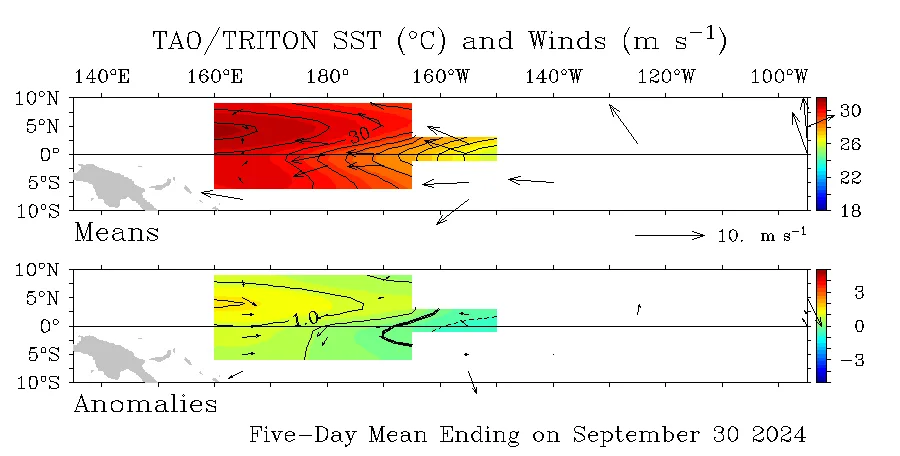
This weakness is expected to continue over the next 5 days as well, after which a slight and relative recovery of trade wind activity is expected around the mid-October period, with neutrality or a balanced state expected to dominate the tropical Pacific Ocean region with the presence of significant hot water anomalies in both the western and eastern regions of the tropical Pacific Ocean.
Climate models remain volatile and American models are still inaccurate|
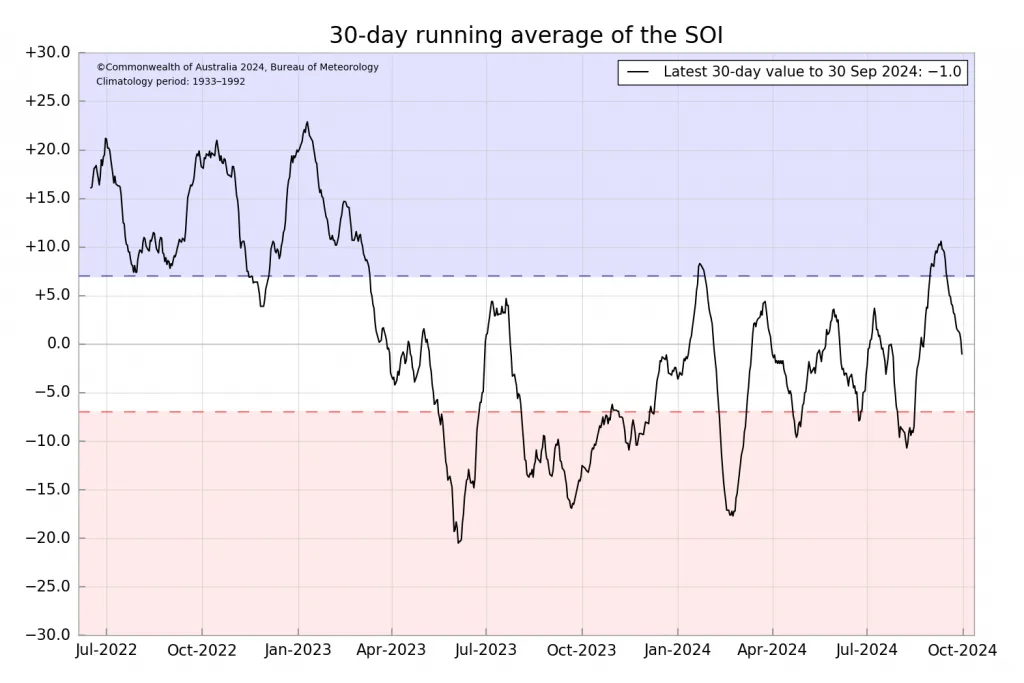
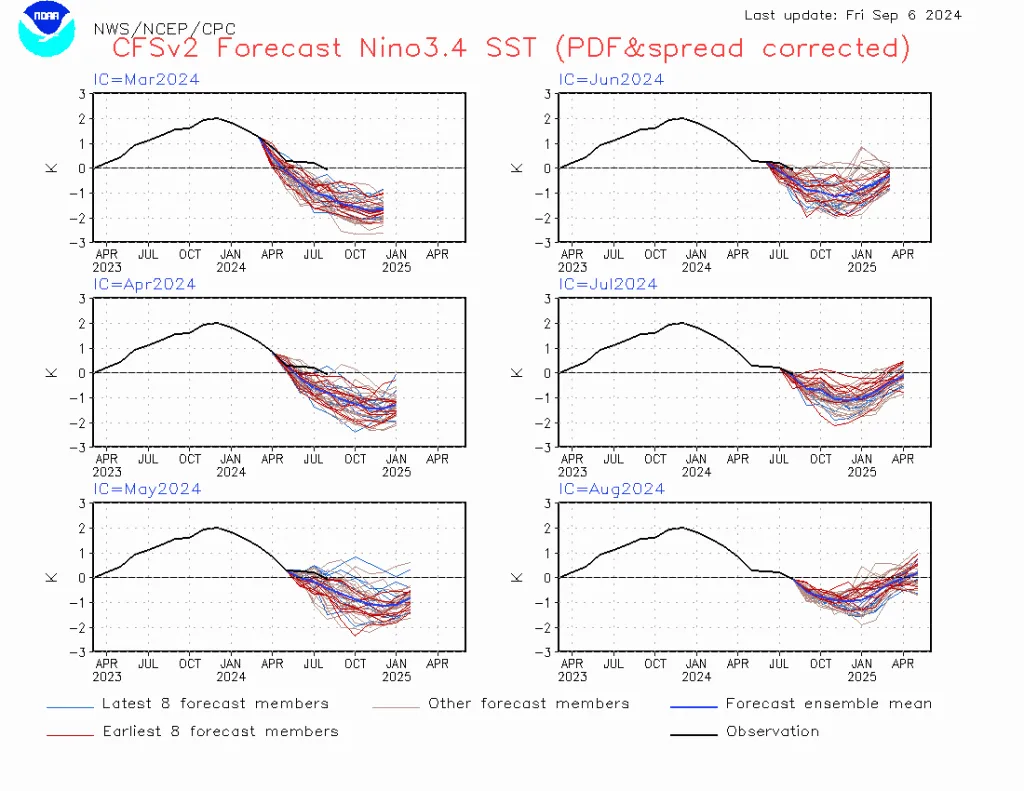
The correction factor continues to work in American climate models constantly, as these models had predicted the gradual development of a strong La Niña phenomenon by the end of spring, but the results were the opposite. WASM Regional Center observed the superiority of the Australian and European models significantly over American climate model data.
Away from the noise caused by American long-range data in the tropical Pacific Ocean region, it is expected that the probability of developing a "weak and short" La Niña phenomenon will not exceed 40% during autumn, then decline rapidly with the beginning of winter.
Southern Annular Mode affected by acute negative condition|
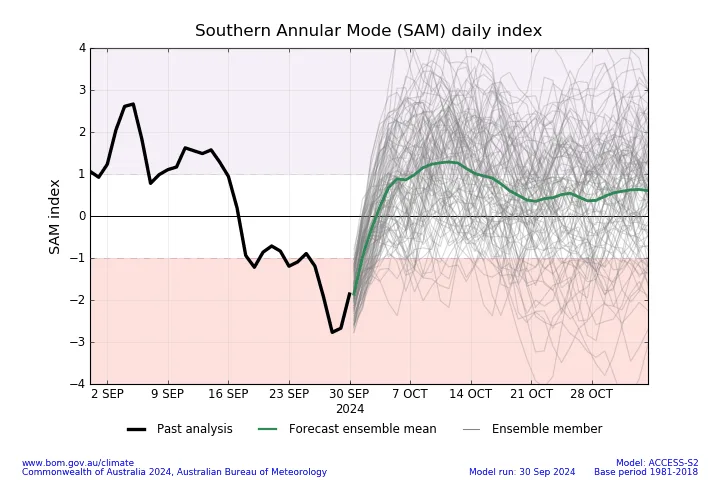
Due to the influence of the Southern Annular Mode (SAM) by a sharp negative oscillation, and based on statistical results and according to Australian meteorological studies, the negative SAM oscillation increases the chances of El Niño development or weakens the La Niña phenomenon. The negative phase continues to dominate this phenomenon for most previous periods, and is expected to shift to positive for a short period during mid-October, which may slightly improve trade wind activity in the tropical Pacific Ocean region.
Atlantic La Niña in continuous development..
WASM Regional Center monitors the Atlantic La Niña phenomenon, which continues to develop slowly. This phenomenon means cooling of the tropical Atlantic Ocean region, and its impact intensifies with increased warming of the northern Atlantic Ocean region in the early stages of its development according to statistical results.
This phenomenon has a significant impact on atmospheric circulation, and it appears that its impact may even exceed the effects of tropical Pacific Ocean phenomena at times.
WASM Regional Center Analysis|
WASM Regional Center issued a scientific report during the summer season about the difficulty of La Niña phenomenon development, and if it develops it will be weak and short-lived, based on selecting accurate data away from noise, studying major climate factors, and data from WASM Regional Center's climate model which predicted that the monthly 3.4 index would reach -0.5 during autumn. Therefore, we do not expect significant development of the La Niña phenomenon during the coming season, and if it develops it will remain weak and short-lived. Thus, neutrality will dominate the tropical Pacific Ocean region with significant hot water anomalies, especially in the western tropical part of the Pacific Ocean.
The inaccurate results of American climate models have caused extremely low accuracy for long-range forecasts of global climate models. According to the correction system at WASM Regional Center, climate data for long-range forecasts had poor accuracy during the summer period, while data from WASM Regional Center's climate model had superior accuracy due to its avoidance of the noise caused by data from American climate models regarding the behavior of major climate factors.